

Table of Contents:
Development, Releases, and Technology
General News
Events and Meetings
Exchanges and Merchants
Community Crowdfunding
Trading and Speculation
Network Metrics
Entertainment
Development, Releases, and Technology
Monero developers have released version 0.18.4.5 of both the Monero GUI and CLI wallets, bringing important fixes and small improvements. This update resolves a Ledger hardware wallet crash, adds support for the new Ledger Nano Gen5, updates P2Pool to v4.13 in the GUI, and includes stability and reliability fixes across the daemon and wallet. While not a major feature release, it is a recommended update for Ledger users and anyone running Monero day-to-day, with verified downloads available via getmonero.org.


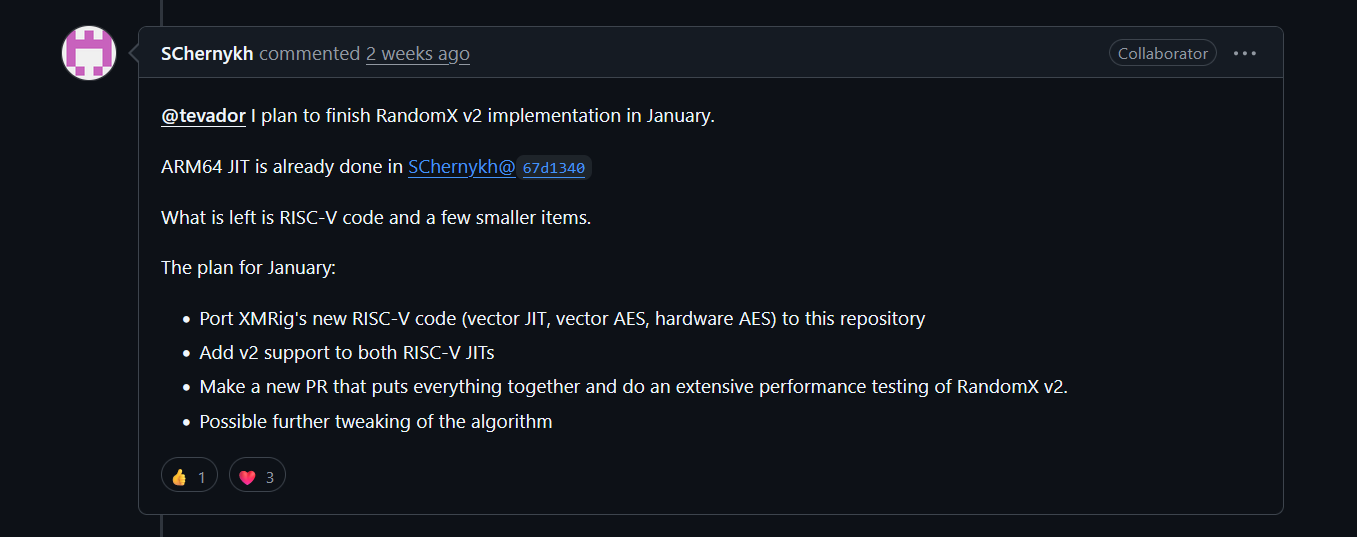
sech1 provided a RandomX v2 update confirming the upgrade is not abandoned and is still planned for the next Monero network upgrade. The change focuses on making mining more efficient on modern CPUs by removing bottlenecks in the current algorithm and adding new RandomX commitments that make block verification faster. Regular computers should get more useful work done per unit of power, while specialised Bitmain X9 machines are expected to lose around 30 percent of their efficiency, with development aiming to finish in January ahead of an early 2026 release. More information can be found here and here.
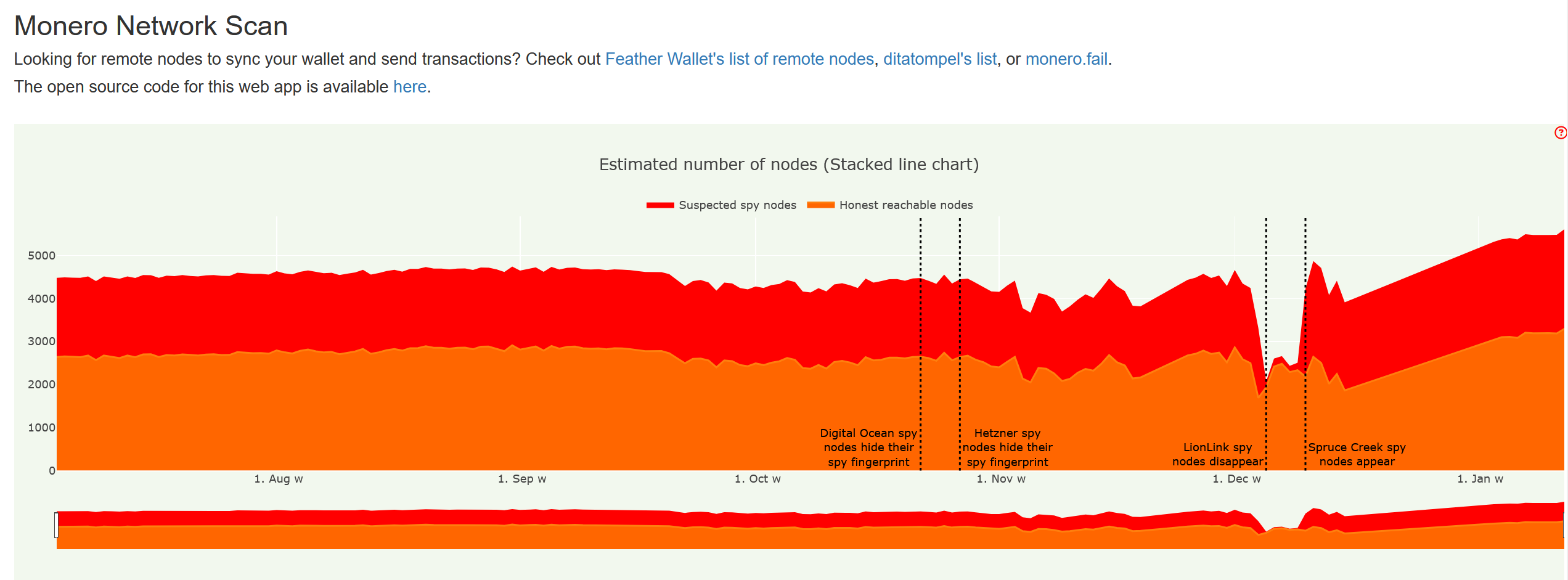
The Monero Research Lab continues steady, behind-the-scenes work on network privacy, resilience, and long-term scaling. Recent meetings covered improvements to spy node detection and monitoring, ongoing FCMP stress testing that is already pushing Monero far beyond today’s transaction limits, and efforts to stabilize the alpha network before broader testing. Importantly, researchers reached consensus that the upcoming FCMP++ upgrade will not include a hard block size cap, instead relying on Monero’s long-term median block growth to scale naturally over time, giving developers years of headroom if usage accelerates. Alongside this, the focus remains firmly on reliability, decentralization, and privacy-first design, with longer-term scaling ideas being explored in parallel. You can follow the unofficial Monero Research Lab X page to stay informed if reading chatlogs is somewhat cumbersome for you.

Rucknium has confirmed that the updated Monero network monitoring site moneronet.info is now live and working. The refreshed webapp follows recent fixes to the network scanner and database issues, and better integrates the finalized spy node ban list once signatures are complete. The tool gives users clearer visibility into remote Monero nodes and network health, supporting ongoing efforts to strengthen privacy and resistance to surveillance.
freigeist-m released the Monero Multisig GUI v0.1.3, bringing a round of usability improvements aimed at making multisig easier to use. The update adds clearer warnings and labels, better defaults for first-time users, the ability to choose signing order, and simple wallet creation directly in the app, with the full changelog available on GitHub. Two short walkthrough videos were also published covering basic multisig setup and transfers, plus a merchant style setup with trusted peers and notifications. Watch them here and here.
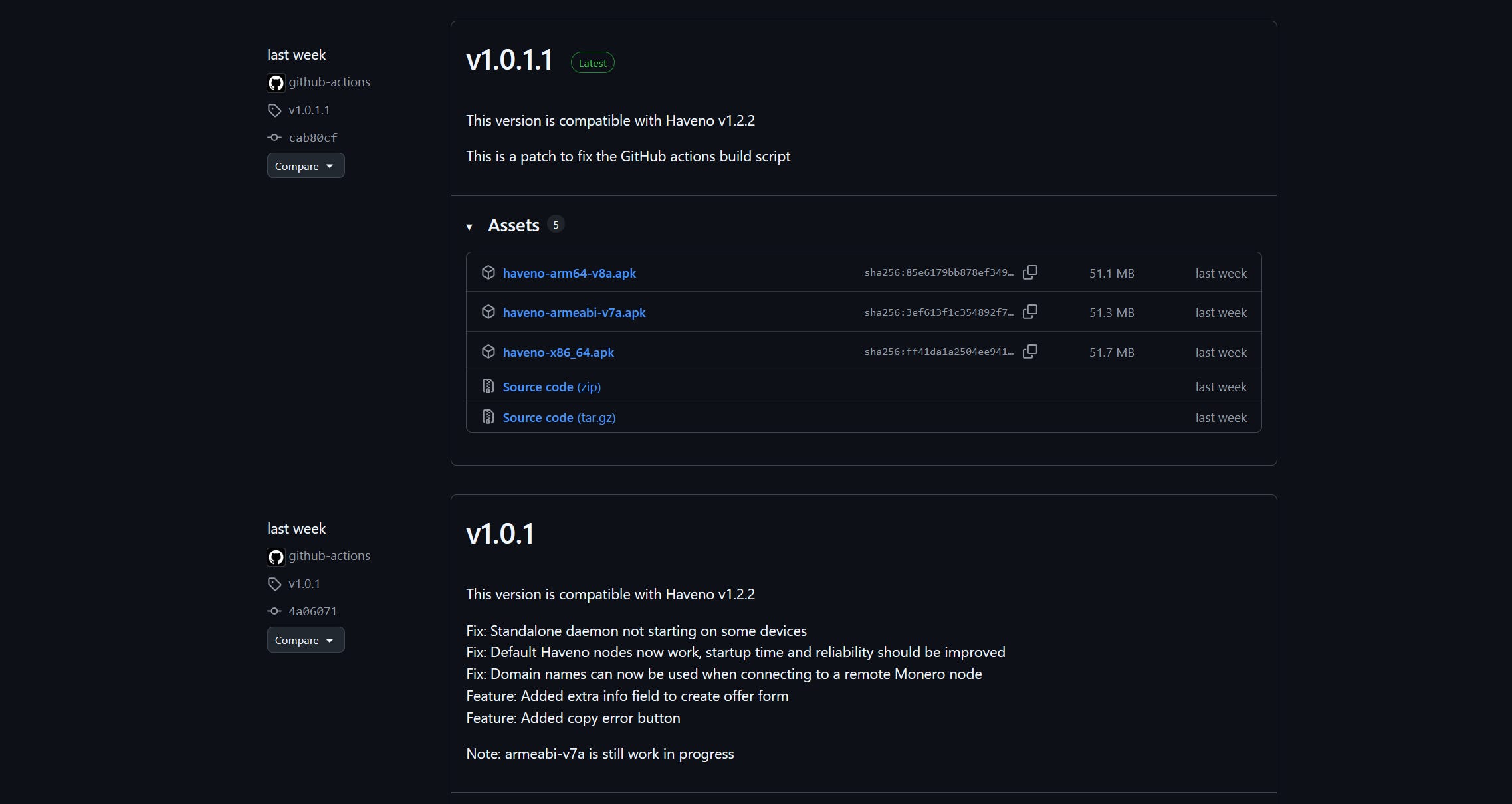
A new Android release of Haveno App v1.0.1.1 is now available, bringing small but important fixes for mobile users. The update is compatible with Haveno v1.2.2 and mainly patches the build system while following on from recent improvements to startup reliability, default node connections, and remote Monero node support. Multiple APK builds are available. More information can be found here.
woodser has released small but useful updates to core Monero developer libraries monero-java and monero-ts. The latest monero-java-v0.8.41 update allows connection status to be set externally, while monero-ts-v0.11.8 improves error and stack trace handling in the thread pool, making debugging more reliable for apps built on top of Monero. These libraries are widely used across the Monero ecosystem, so even modest changes like this help improve stability for wallets, services, and developer tooling.
Forward_Science released XMRCheckout, an open source Monero checkout designed to be simple, non-custodial, and easy to self host. It lets merchants accept XMR with funds sent straight to their own wallet, never touches a spend key, and uses view-only detection to confirm payments, while also offering a BTCPay compatible API. The project is fully open source with code on GitHub. More information can be found here.

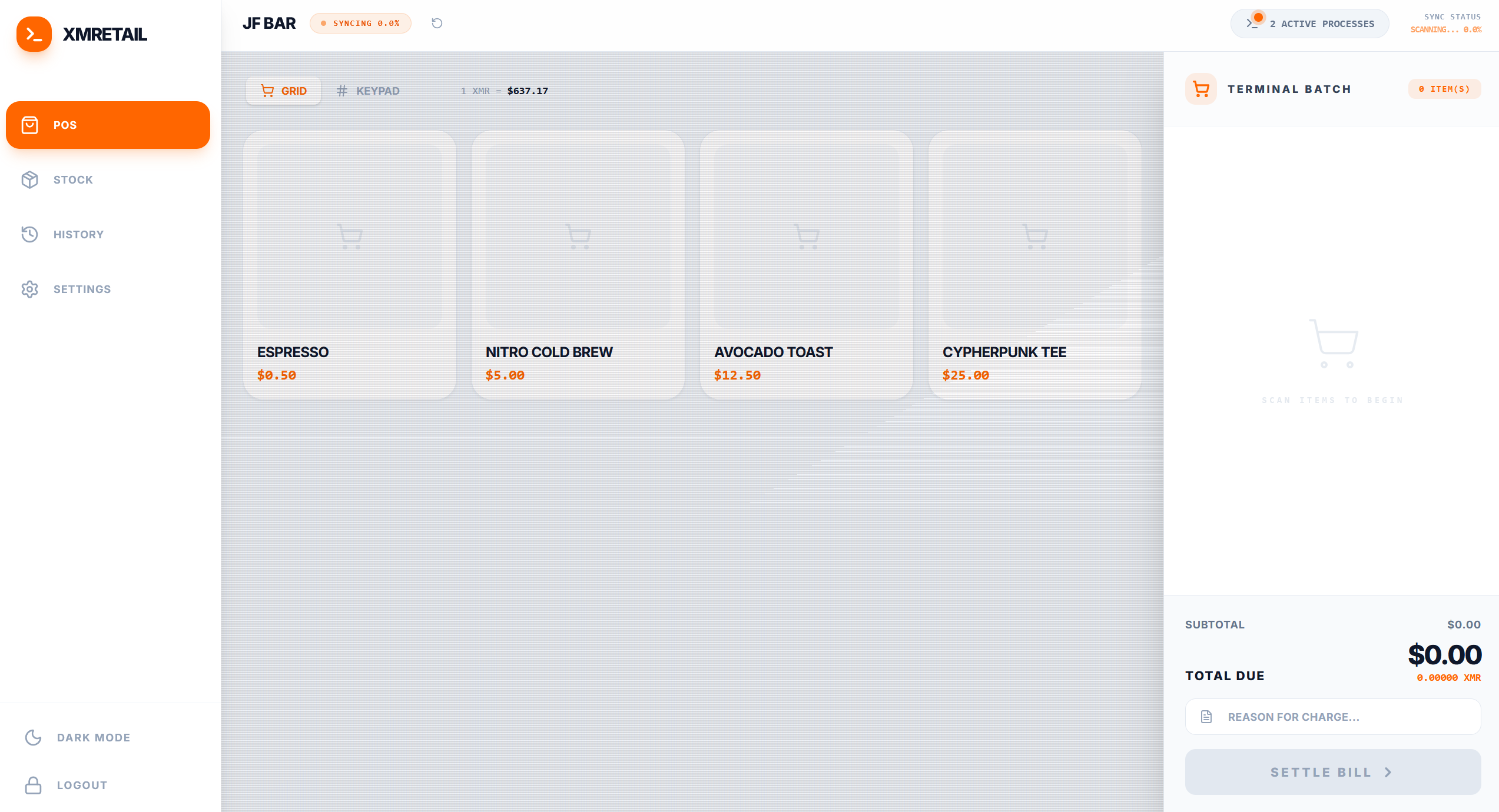
SlowBearDigger has also released an open source Monero point of sale system called XMRetail POS. The project runs entirely in your browser, never touches your spend key or seed, and uses a watch only setup to generate fresh subaddresses and monitor payments directly on the Monero network, with no servers, no middlemen, and no fees. The code is MIT licensed and available on GitHub. More information can be found here.
Monero miner VijitSingh97 shared a new open source setup that makes running your own mining stack much simpler. It bundles a Monero node, P2Pool mining, Tari merge mining, and a basic dashboard into one Docker install, with traffic routed through Tor by default. It is aimed at home users who want to mine privately and keep things simple, and the full setup is now available on GitHub.

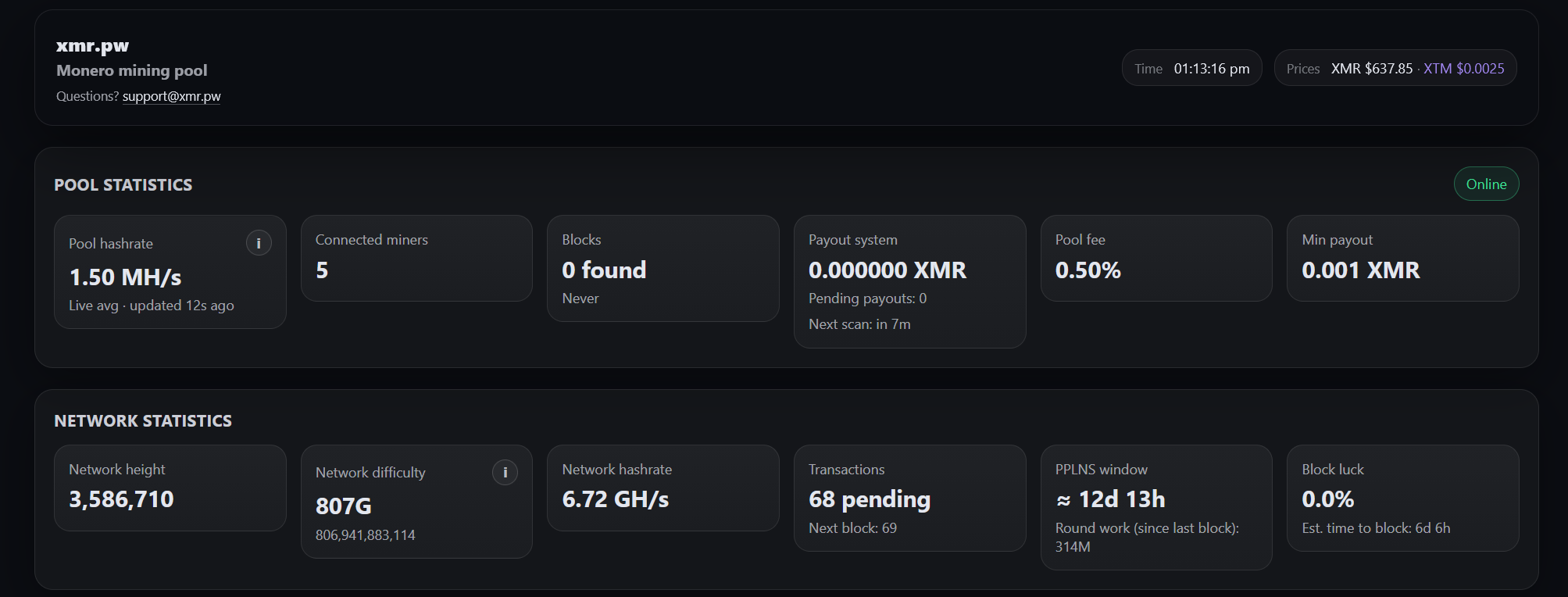
RealAleNet shared a new public mining pool called xmr.pw that focuses on a clean, modern dashboard and better visibility for miners. The pool is currently in beta, has around five miners connected at the time of writing, and not yet found a block at the time of writing. It supports Tari merge mining, allowing miners to earn XTM alongside XMR without splitting hashrate, and during testing the operator is renting hashrate and redistributing those rewards back to pool participants to help smaller miners get started.
DarkFi Squad announced that merge mining with Monero is coming soon, allowing miners to secure DarkFi while leveraging Monero’s existing network. The approach keeps mining peer-to-peer and private, without the security risks that come with launching and bootstrapping a brand new standalone blockchain.

Bitmain is claiming its new Antminer X9 can mine Monero at up to 1 MH/s, but the announcement mostly reinforces why RandomX exists in the first place. Monero’s proof of work is deliberately designed to favor general purpose CPUs and make specialized mining hardware expensive, inefficient, and risky. Many in the Monero community see the X9 less as a true ASIC breakthrough and more as a costly custom CPU attempt dressed up as an ASIC. With RandomX continuing to evolve specifically to resist vendor driven centralization, Bitmain’s move looks like another reminder that Monero is built to resist the control of a single hardware manufacturer.

It is highly recommended you run a node to help secure the Monero network. You can also solo mine via the official Monero GUI wallet which can be found here or partake in the decentralized and permissionless P2Pool. The official Monero website GetMonero.org or SethForPrivacy.com are fantastic places to find help to get started running a node or mining. You can also check out the YouTube videos below.
General News
Chainalysis published a new report in January 2026 titled “Crypto Crime Reaches Record High in 2025 as Nation-State Sanctions Evasion Moves On-Chain at Scale”. The report highlights a growing reality of the crypto landscape: stablecoins now dominate illicit on-chain activity, despite being easy to track, blacklist, and freeze at the issuer level. That same feature set should concern everyday users too. Funds held in assets like USDT or USDC can be frozen or seized with a single instruction, sometimes without meaningful due process.

Monero is fundamentally different. There is no issuer, no blacklist, and no mechanism for arbitrary freezes. How someone chooses to use their XMR is their own responsibility and no one else’s business, just as it is with physical cash. Monero’s design prioritizes lawful privacy, fungibility, and user autonomy, not surveillance. As financial controls tighten, the contrast becomes clearer: stablecoins trade convenience for control, while Monero preserves the principle that private money should remain private.

The Free Software Foundation announced it received nearly $900,000 in anonymous donations paid entirely in Monero, one of the largest private gifts in its history. The FSF says the funds will strengthen its technical infrastructure and advocacy work, highlighting how privacy-focused digital cash aligns with free software values like user control and ownership.

Monero Talk streamed Monerotopia episode #247 this week, featuring special guest Xenu alongside the regular Monerotopia crew. The show covered a full Monero price update, a roundup of the week’s news, and community discussion, with segments hosted by Bawdy and Tux.
Monero Talk episode #374 featured a deep dive into trustless atomic swaps between Monero and StarkNet with Omar Espejel from the StarkNet Foundation. The discussion explored a new swap design, allowing peer-to-peer Monero ↔ StarkNet swaps without bridges, KYC, or wrapped assets, using open-source code from the Monero ecosystem.
In case you missed it, Xenu’s Anti Moonboy News 56 dropped just before the end of the year with a packed rundown of privacy and crypto news. The episode covers the Samourai Wallet situation, ongoing attacks on privacy tech, Monerotopia 2026, FCMP++ scaling progress at the Monero Research Lab, the return of spy node monitoring, major Monero donations to free software, and plenty of sharp commentary along the way. It’s a solid catch up if you want a broad snapshot of where things stood heading into 2026.
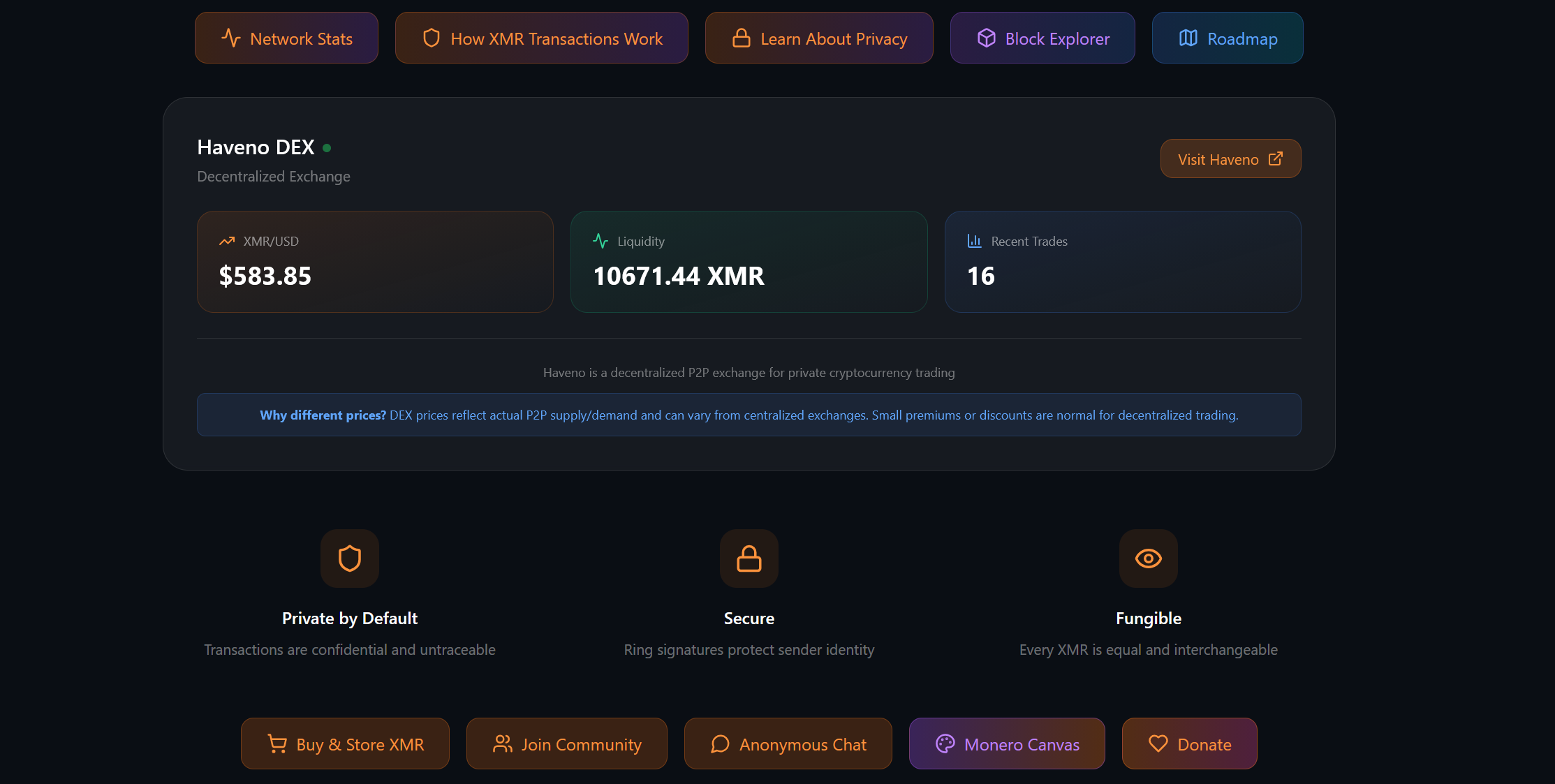
If you want a clean way to track Monero data in real time or simply learn more about it, check out monero-pulse.com. The site pulls together live XMR pricing, market stats, network information, and Haveno DEX data into a fast updating dashboard.
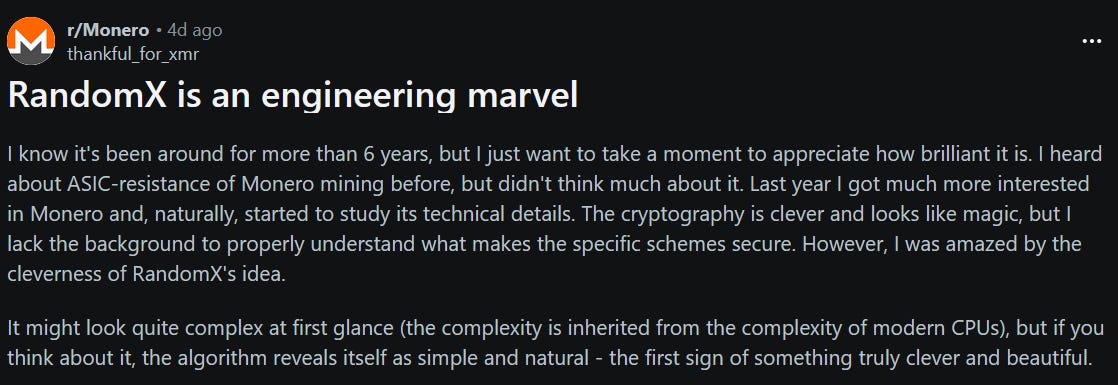
thankful_for_xmr wrote a post praising RandomX on the Monero subreddit, calling it one of the smartest mining designs in crypto. They explained how RandomX is built to run best on everyday CPUs, making it hard and expensive for specialized mining hardware (ASICs) to gain an advantage, while also refreshing parts of the system regularly to keep things fair. The post credits Monero devs for turning deep technical ideas into a practical way to keep mining open, decentralized, and resistant to control. Check it out if you want to learn more about RandomX.
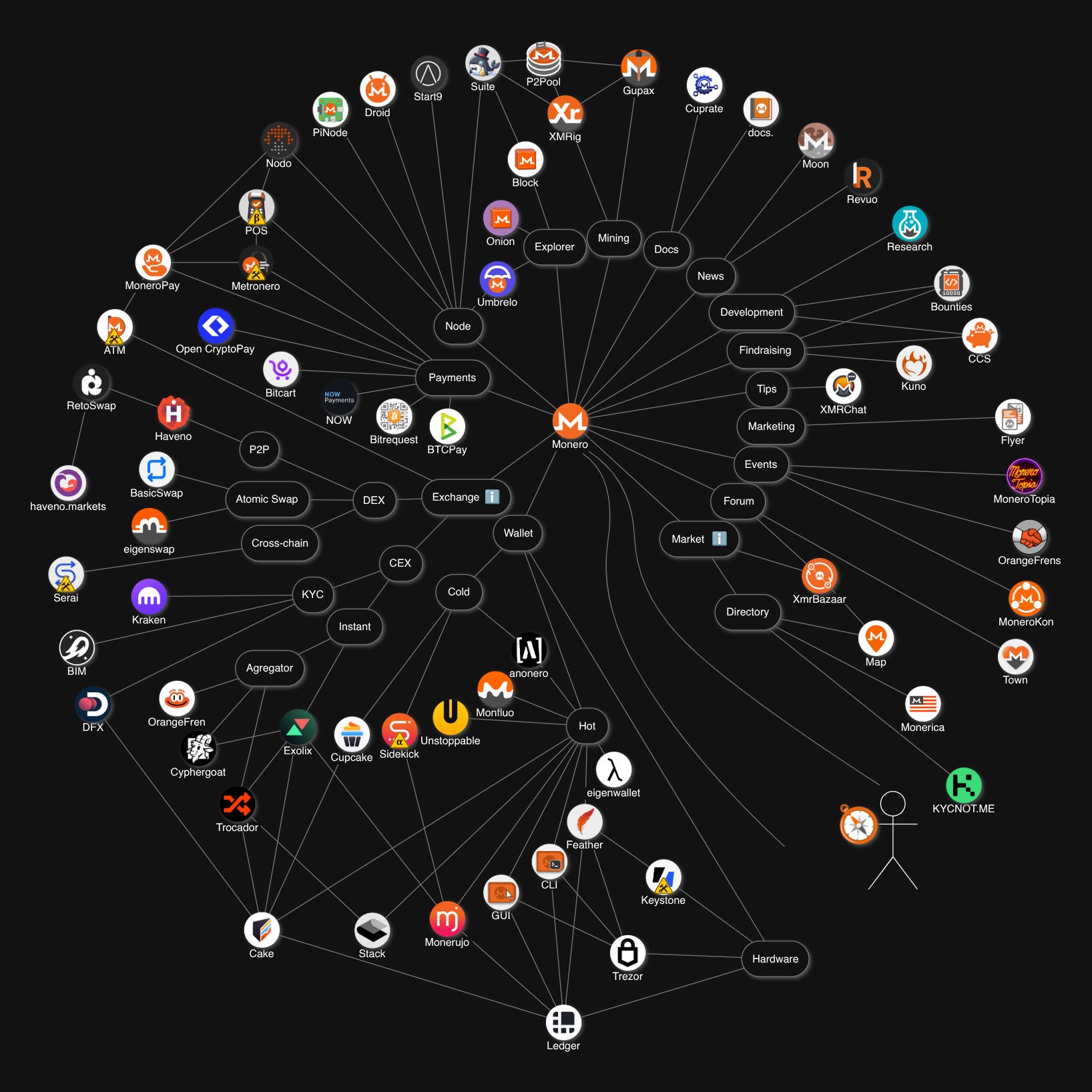
Monero Ecosystem v7.9 has been released, bringing a broad round of updates to the community maintained directory at monero.eco. The update adds new projects like MoneroDroid, restores Monero Moon, refreshes and redesigns multiple logos across the ecosystem, fixes links and naming inconsistencies, and updates the status of several tools as they move toward beta or stable releases. Check out the update notes here.
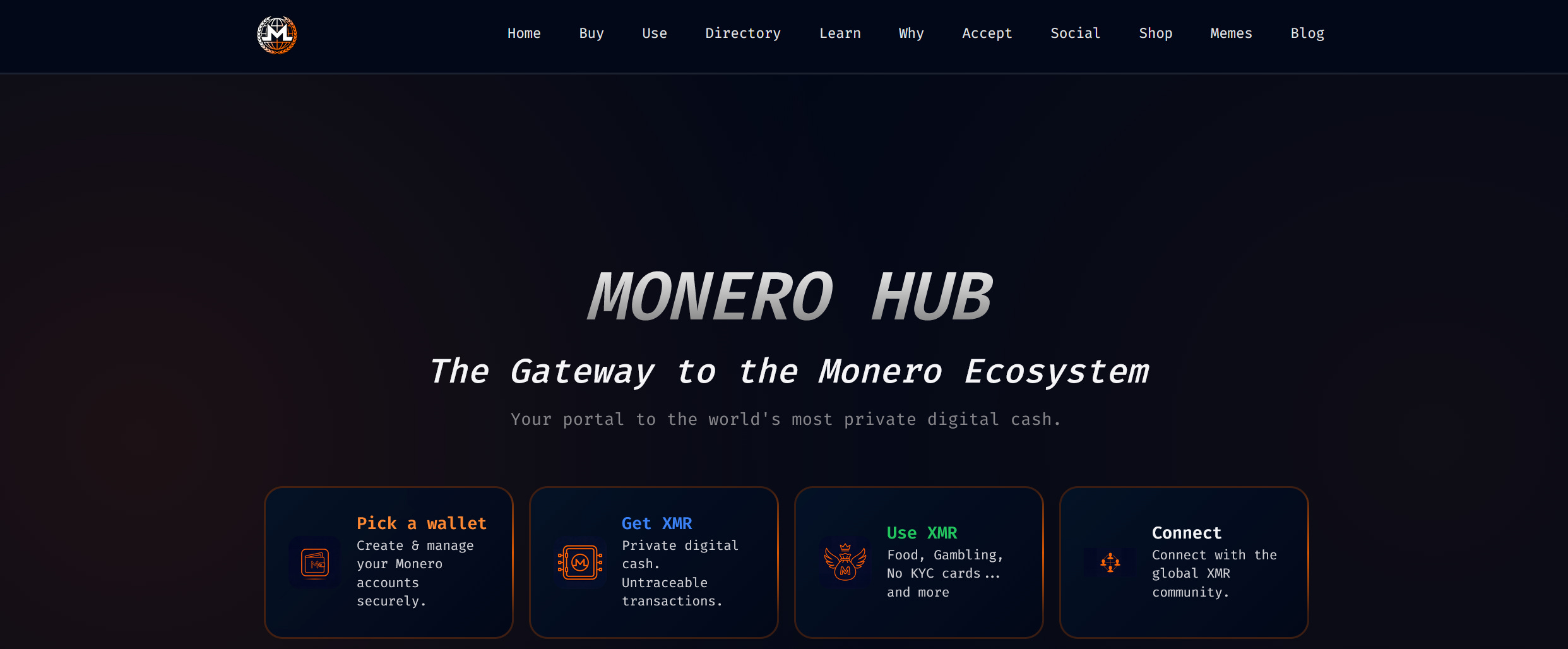
Mav announced the launch of XMR Hub, a new website aimed at making Monero easier to understand, use, and discover. The project aims to bring buying, storing, learning, and community resources into one clean place. They are actively seeking feedback for an upcoming v1.1 update.
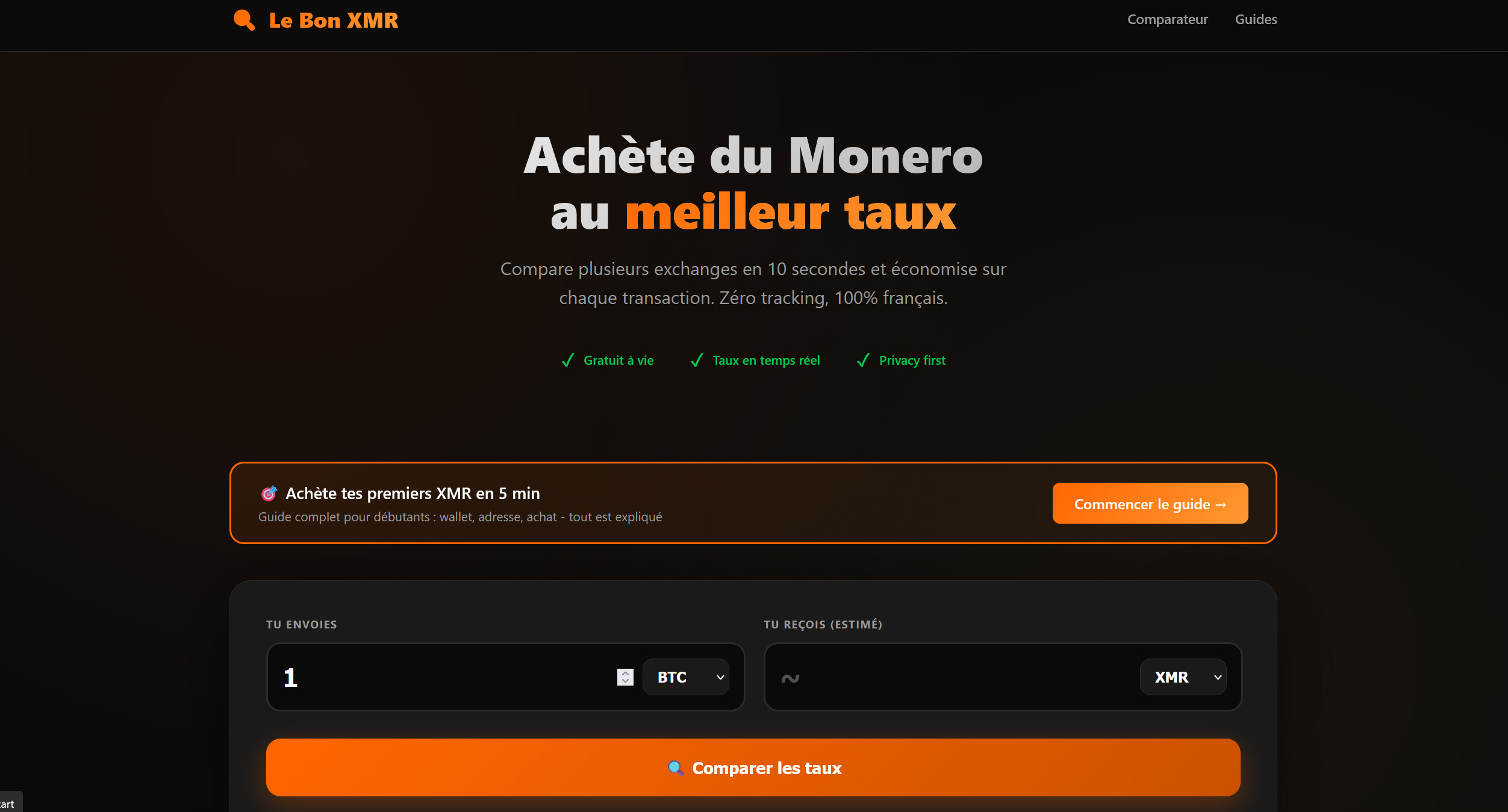
A Monero user shared a new tool called Le Bon XMR, a website that helps French speaking people compare XMR exchange rates in real time. Built to solve the common problem of hidden price differences, it checks rates from ChangeNow, StealthEX, and FixedFloat side by side so you can quickly see which one offers the best deal. The site is free to use, has no tracking or cookies, shows potential savings in euros, and is French first while still working for anyone. The creator is upfront about using affiliate links and is also publishing French language Monero guides to help grow local adoption. Check it out here.
CypherGoat published a new issue of This Week in Monero, covering the latest activity across the Monero ecosystem. You can check out the latest issue here.

Giallo has published a roundup of the most notable Monero news and developments from January 2026. The post pulls together key ecosystem discussions and launches, including debates around block size changes tied to FCMP++, renewed attention on RandomX and proposed v2 improvements, new privacy focused tools like GoXMR, emerging merge mining pools with Tari, the launch of monero.jobs, and community hubs such as xmrhub.org. It serves as a broad snapshot of how Monero is heading into 2026. Check it out here.

Voting is now open for the MAGIC Monero Fund 2026 committee election. Community members can vote up until January 20 to help decide who will fill one open committee seat for a two year term, guiding how Monero focused grants are reviewed and funded. Details on voting, candidates, and participation are available via the MAGIC Monero Fund election page, with results expected later in January.
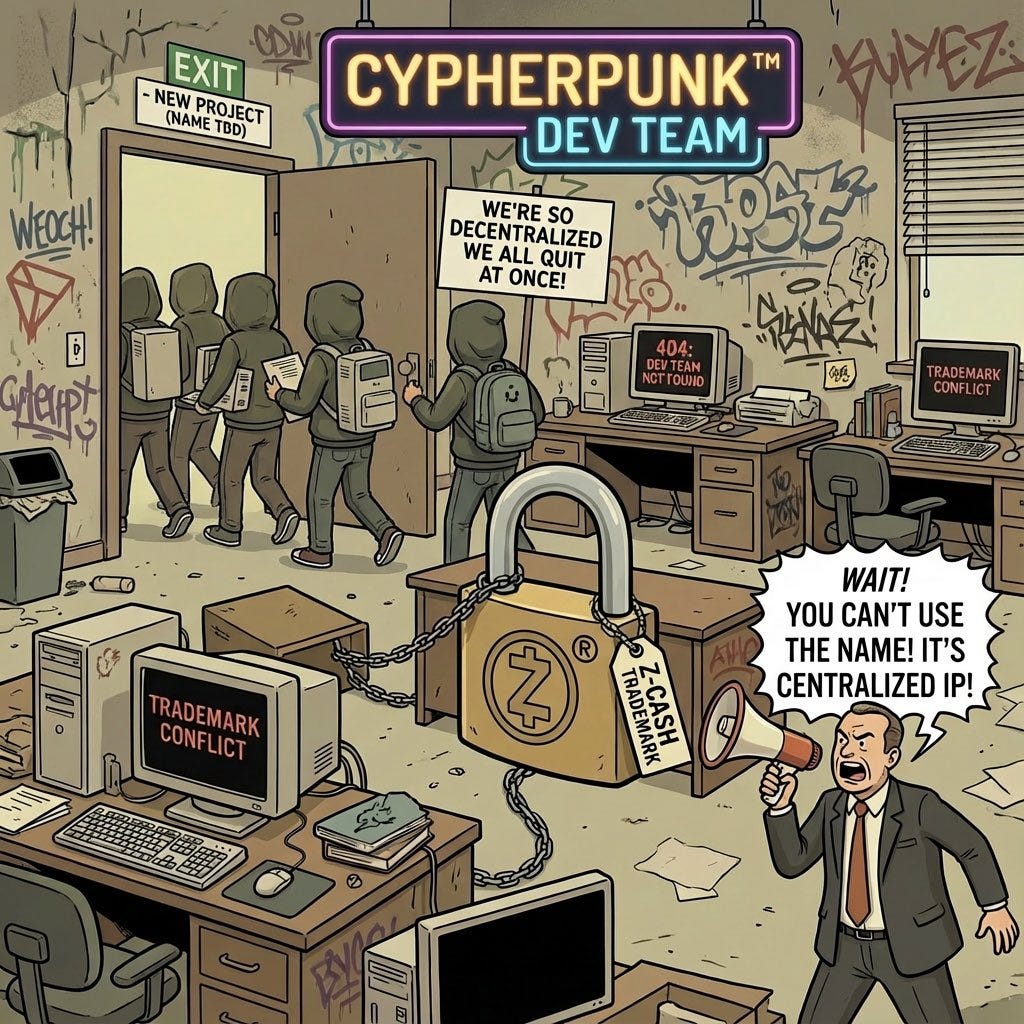
Much of the Zcash development team quit this week following internal governance disputes, exposing deep cracks in how the project is run. From a Monero perspective, it highlights the risks of privacy coins being tied to centralized organizations and leadership structures, where internal politics can derail development overnight. Monero’s community driven and decentralized model avoids this single point of failure, keeping protocol development resilient even when individuals come and go.
A Monero Instagram account has popped up recently. If you’re active on Instagram, you may want to check it out and give it a follow. At this stage, it’s not clear who runs the account or whether it’s officially affiliated with the Monero project, so treat it as community run unless confirmed otherwise.
Events and Meetings
MoneroTopia 2026 is just around the corner, and will be held from February 12–15, 2026, at Huerto Roma Verde in Mexico City, bringing four days of talks, workshops, and hands-on Monero use focused on privacy, freedom, and real world adoption. Alongside a stacked speaker lineup including Monero Research Lab contributors, wallet builders, and OG cypherpunks, the event features an open air XMR bazaar where vendors accept Monero for food, drinks, and merch, creating a live circular economy. The conference also includes Spanish language talks, covers topics like opsec and travel freedom, and offers standard and VIP tickets. Get your tickets from the Monerotopia website before it sells out!

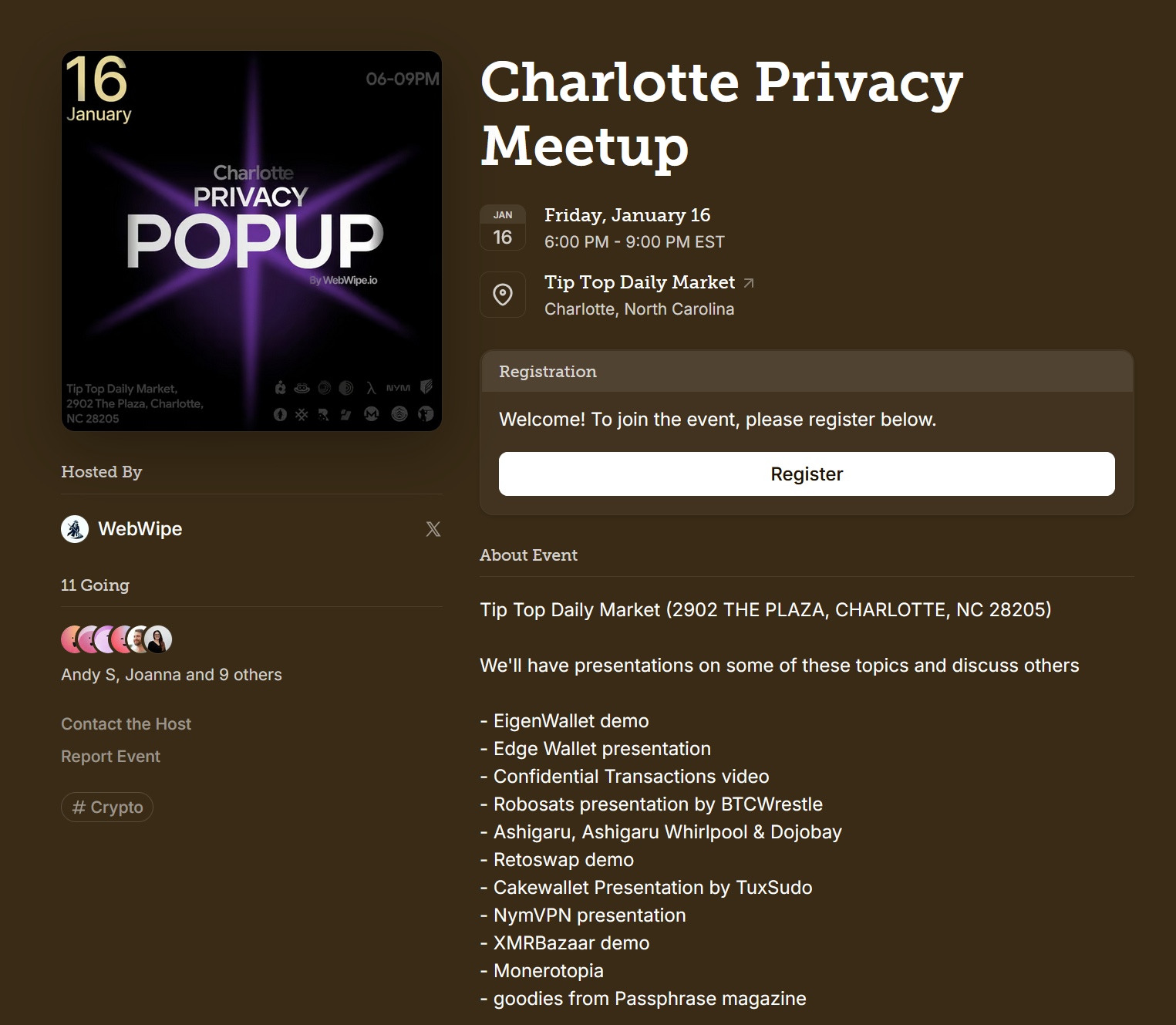
A Monero and privacy focused meetup is taking place at Tip Top Daily Market in Charlotte, North Carolina on Friday, January 16, 2026. Hosted by WebWipe, the free event will feature demos and talks covering Monero wallets, privacy tools, decentralized exchanges, and projects like EigenWallet, Cake Wallet, XMRBazaar, and Monerotopia. It runs from 6pm to 9pm EST and is aimed at anyone interested in Monero, Bitcoin privacy, and practical tools you can actually use.
The next Cuprate Meeting will be held on Tuesday, January 13, 2026, at 18:00 UTC in the #cuprate channels on Libera IRC and Matrix. Cuprate is an ongoing effort to build an alternative Monero node implementation, and this meeting will cover contributor updates, the current project roadmap, and any new proposals from the community. Agenda items can be suggested on GitHub, and logs will be posted there after the meeting.
The next Monero Research Lab meeting should take place on Wednesday, January 14, 2026, at 17:00 UTC in the #monero-research-lab channel on Libera IRC and Matrix. Logs from the previous meeting can be found here.

The next Monero Tech Meeting is likely to take place on January 19, 2026, at 18:00 UTC in the #no-wallet-left-behind channels on IRC Libera and Matrix. Logs from the previous meeting can be found here.
Exchanges and Merchants
XMRBazaar has now passed 7,000 users and 11,000 listings, showing steady growth in real world Monero commerce beyond charts and price action.


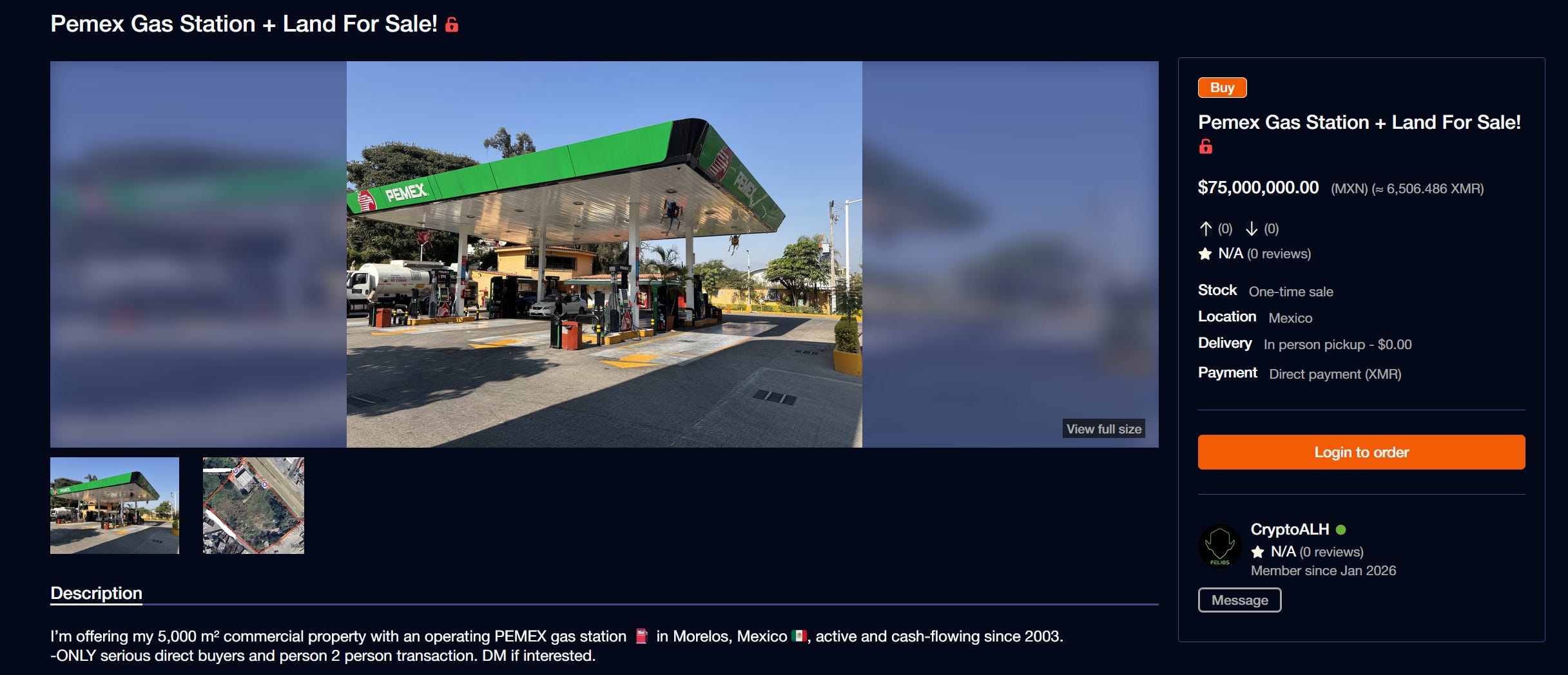
A listing on XMRbazaar has appeared offering a fully operating PEMEX gas station and attached commercial land in Mexico for direct payment in Monero. The seller is advertising a 5,000 square metre property in Morelos that has been active since 2003, priced at roughly 6,500 XMR with the transaction handled in person and paid entirely in XMR. While it is a striking example of Monero being proposed for large real world asset purchases, caution is warranted. There is always a risk the listing is illegitimate, and any in person crypto transaction carries serious personal safety risks including the possibility of a wrench attack.
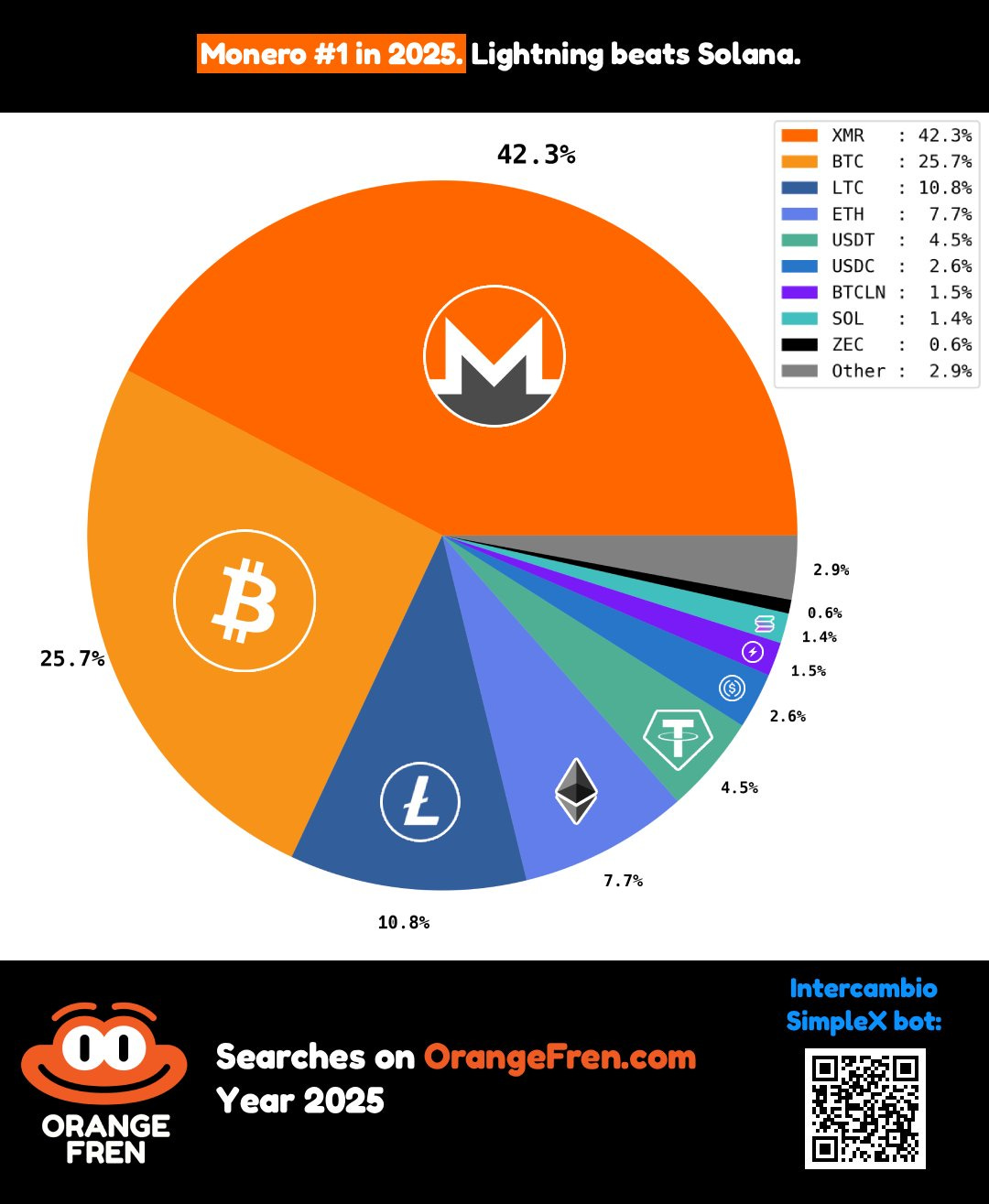
OrangeFren shared its 2025 search stats showing Monero as the clear standout across the entire year. Data from OrangeFren shows XMR accounting for 42% of all searches in 2025, well ahead of Bitcoin at 25%, with every other asset trailing far behind. The numbers highlight sustained grassroots interest in Monero relative to the broader crypto market, not just short term hype.
Mute shared data suggesting growing real world demand for Monero privacy through cross chain swaps. According to Mute, their backend is seeing large inflows into Monero from multiple chains, with Ethereum to Monero swaps being the most common. The team says this reflects a broader shift toward privacy awareness, with an upcoming Monero focused cross chain swap planned to further expand XMR usage.


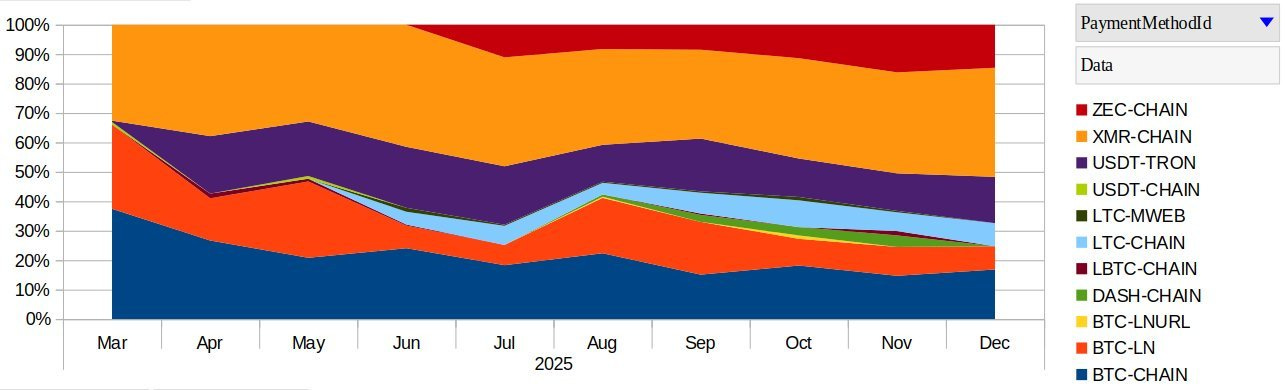
Nym shared its 2025 payment stats for NymVPN, showing Monero as the most used payment method, ahead of Bitcoin, USDT, Zcash, and Litecoin. The data highlights how strongly privacy minded users continue to gravitate toward Monero when paying for real world privacy tools.
Community Crowdfunding
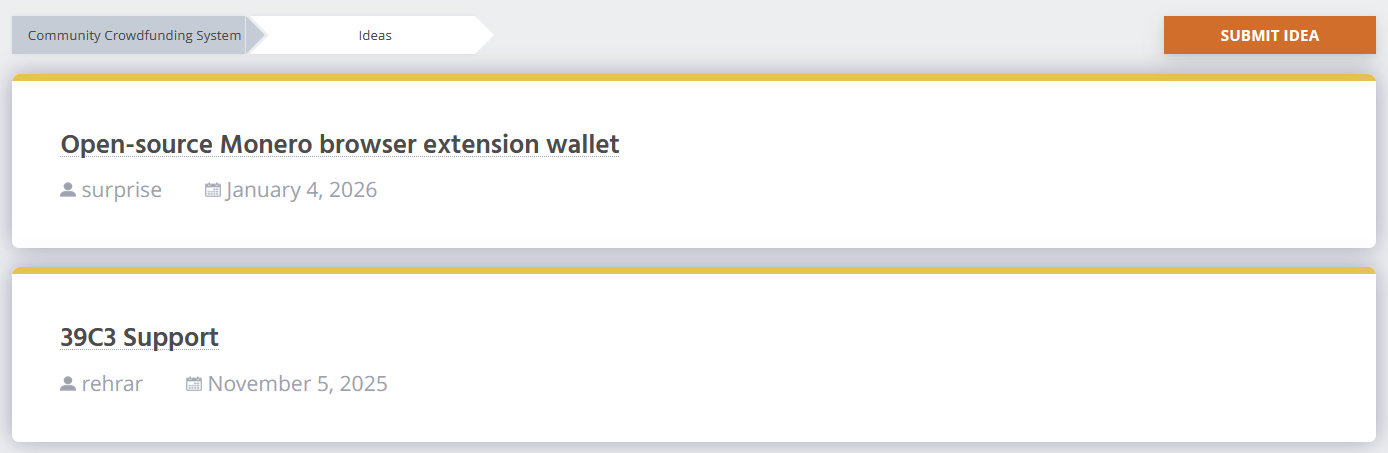
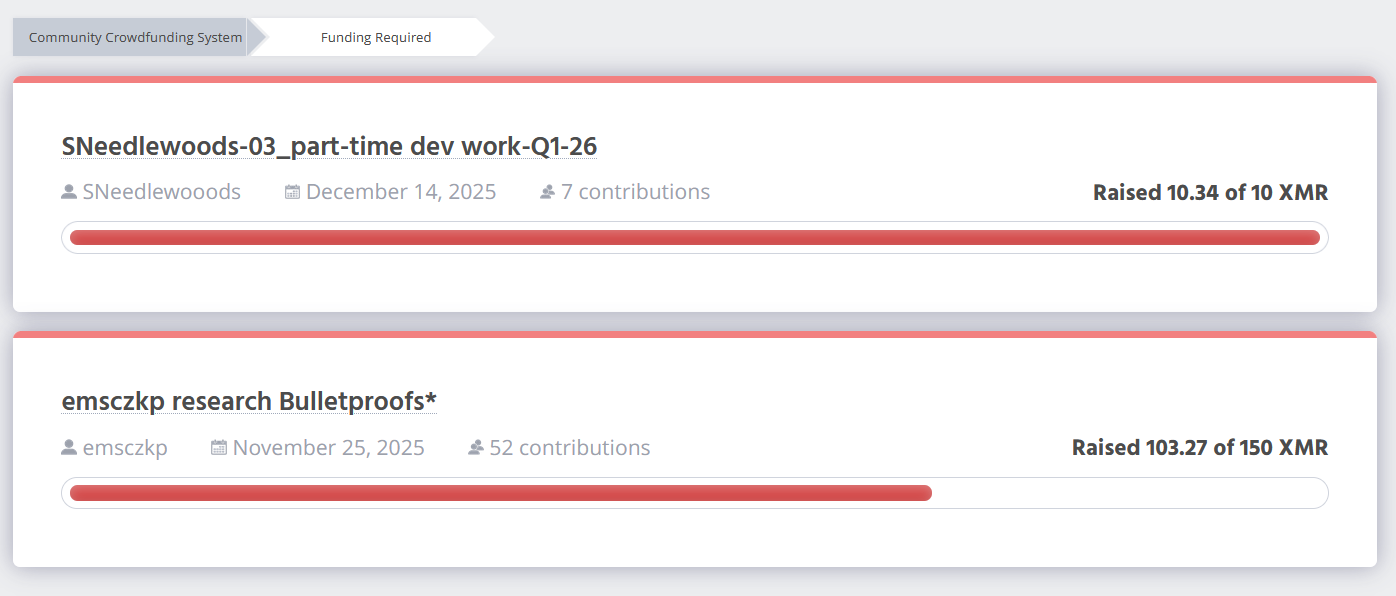
Several crowdfunding proposals are awaiting community feedback before they can start accepting funds through the Community Crowdfunding System (CCS). For now, they are just proposals, but if they receive some positive feedback from the community they will be moved to a “Funding Required” stage so that they can accept Monero donations through the CCS.
Trading and Speculation
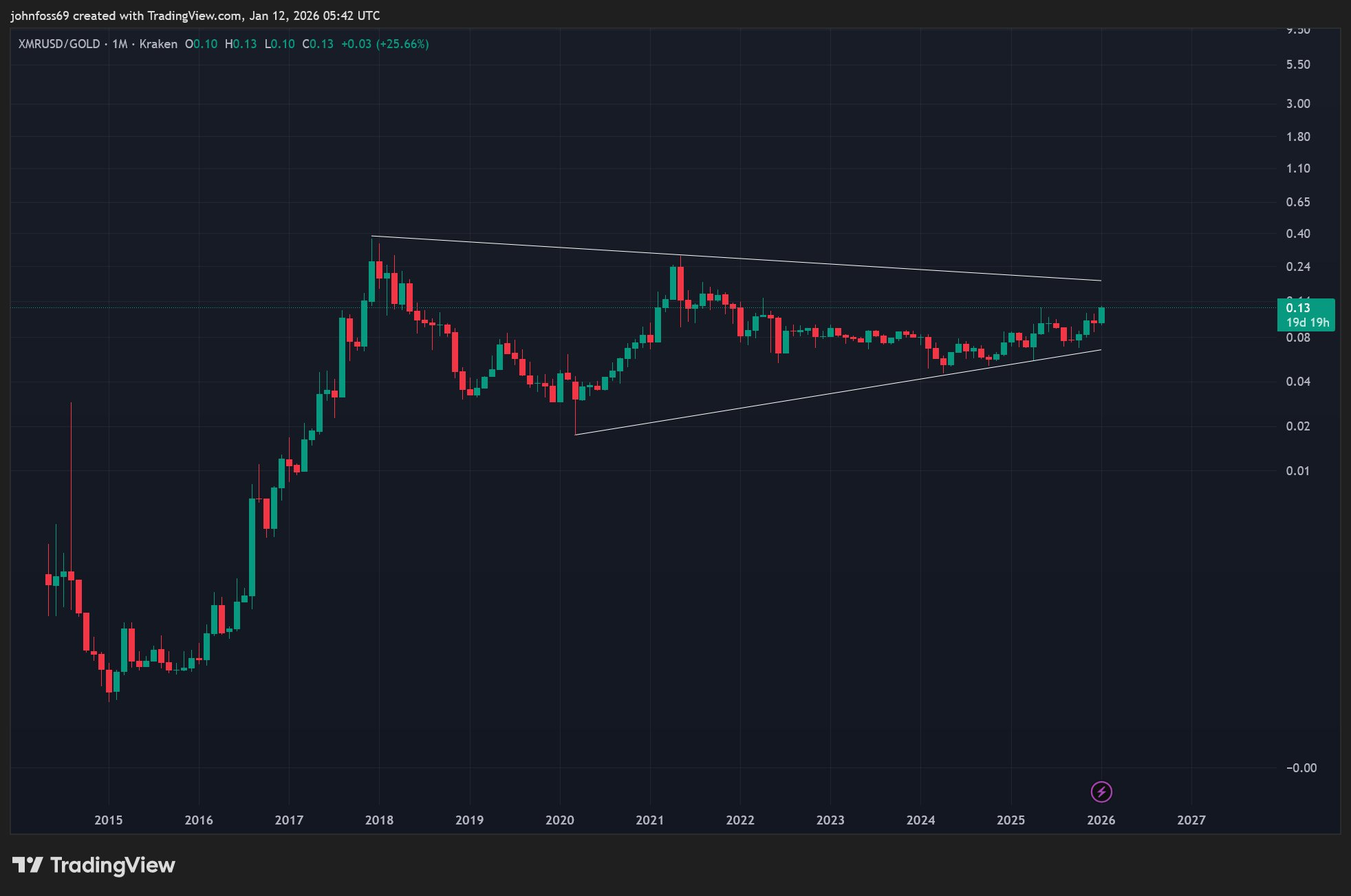
XMR looks primed for an upside move when stacked up against gold.
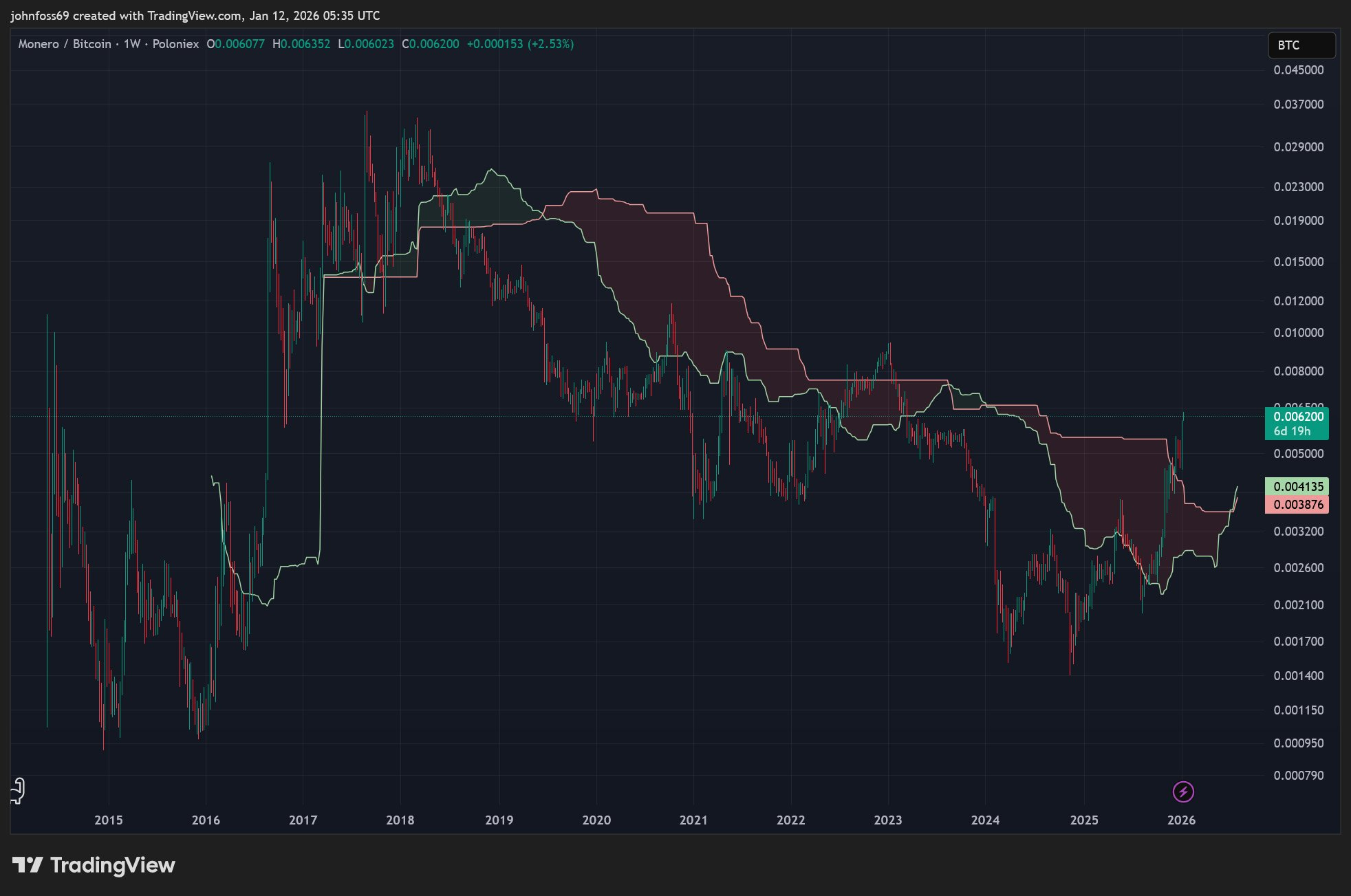
XMR/BTC weekly chart. Monero has reclaimed the cloud, nailed the retest, and now the real move higher is underway.
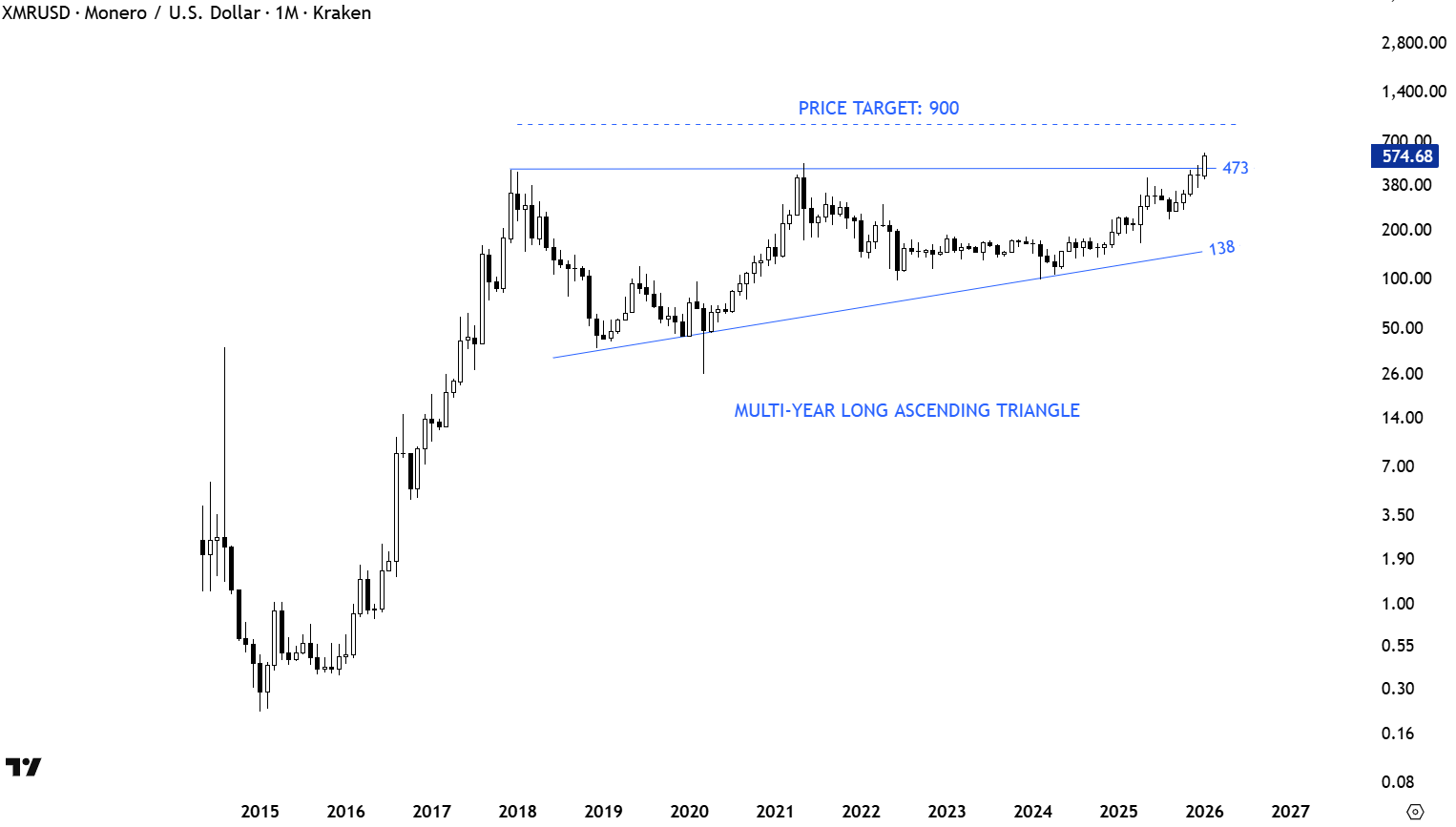
Aksel Kibar, a well respected chart technician, continues his bullish calls for XMR, targeting $900.


Network Metrics
Monero hit new all time highs this week, recently peaking at over $660 USD.

Google Trends for “Monero” just jumped sharply. People are paying attention to Monero.

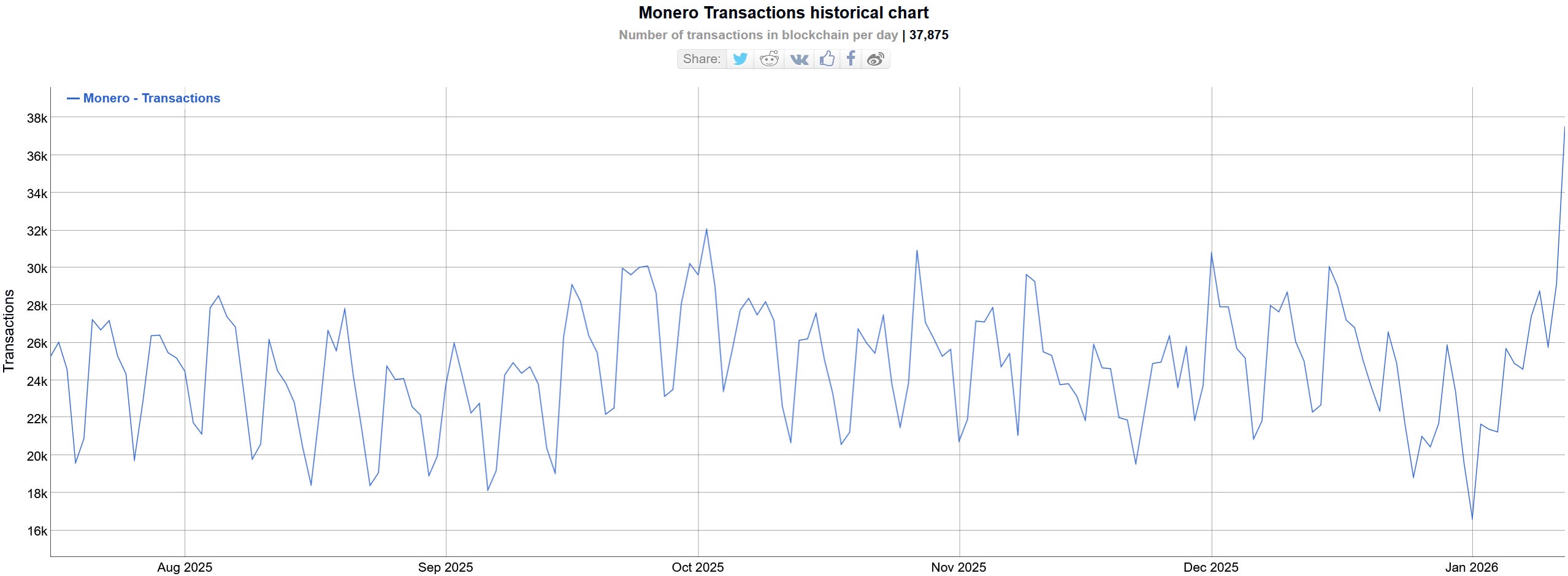
Monero transactions are spiking at the time of writing, sitting at over 37,000 transactions for the day.
Total Monero in Circulation : 18,699,245 XMR
Monero Total Marketcap: $12,163,391,700
Coinmarketcap Ranking: #12
XMR ‘street price’ from RetoSwap: $583 (-11%)
XMR/USD Price: $674

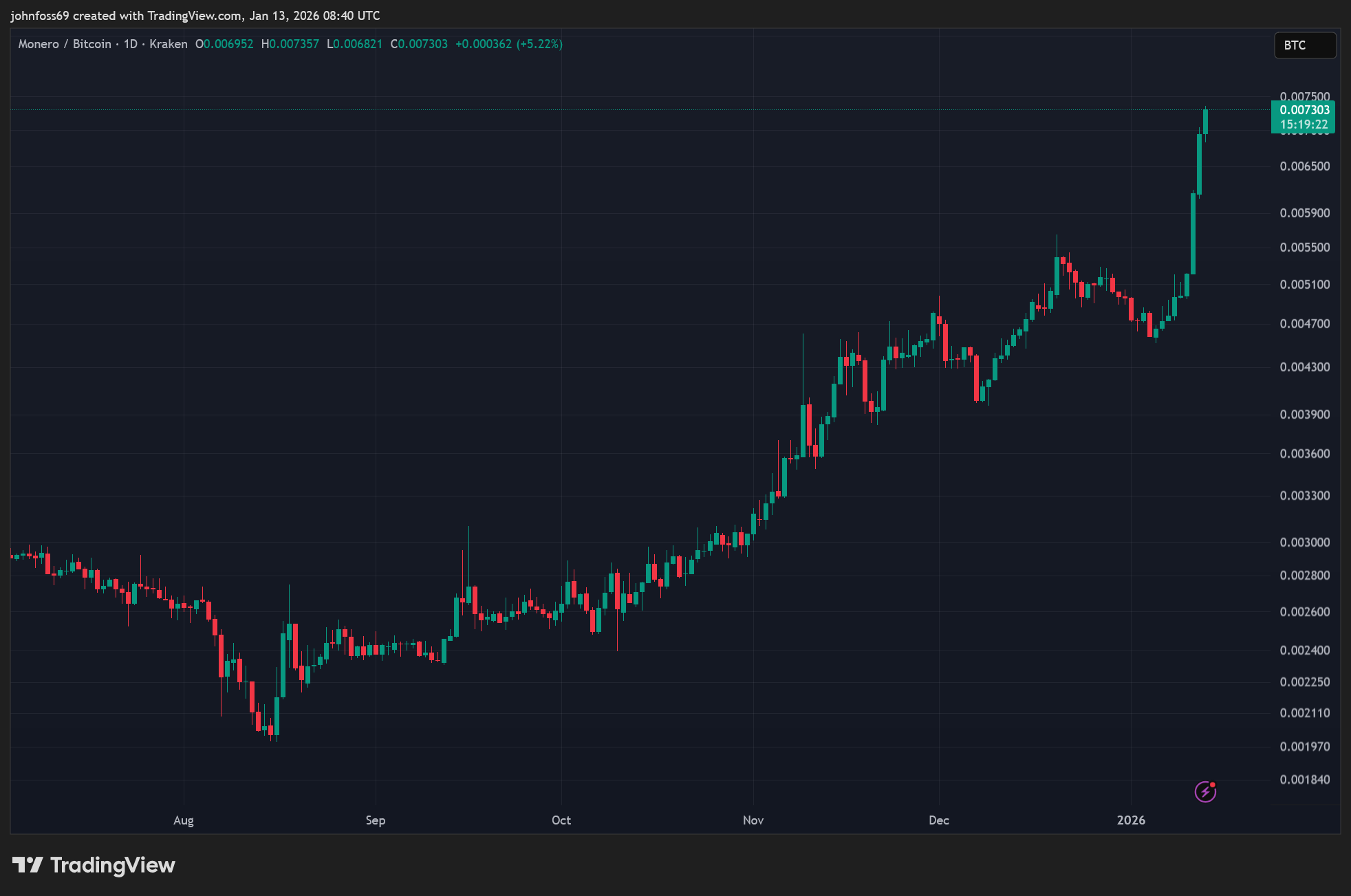
XMR/BTC Price: 0.007303 BTC

Monero Network Hashrate: 6.82 Ghash/s

Monero Mining Pools Hashrate Distribution:

Entertainment


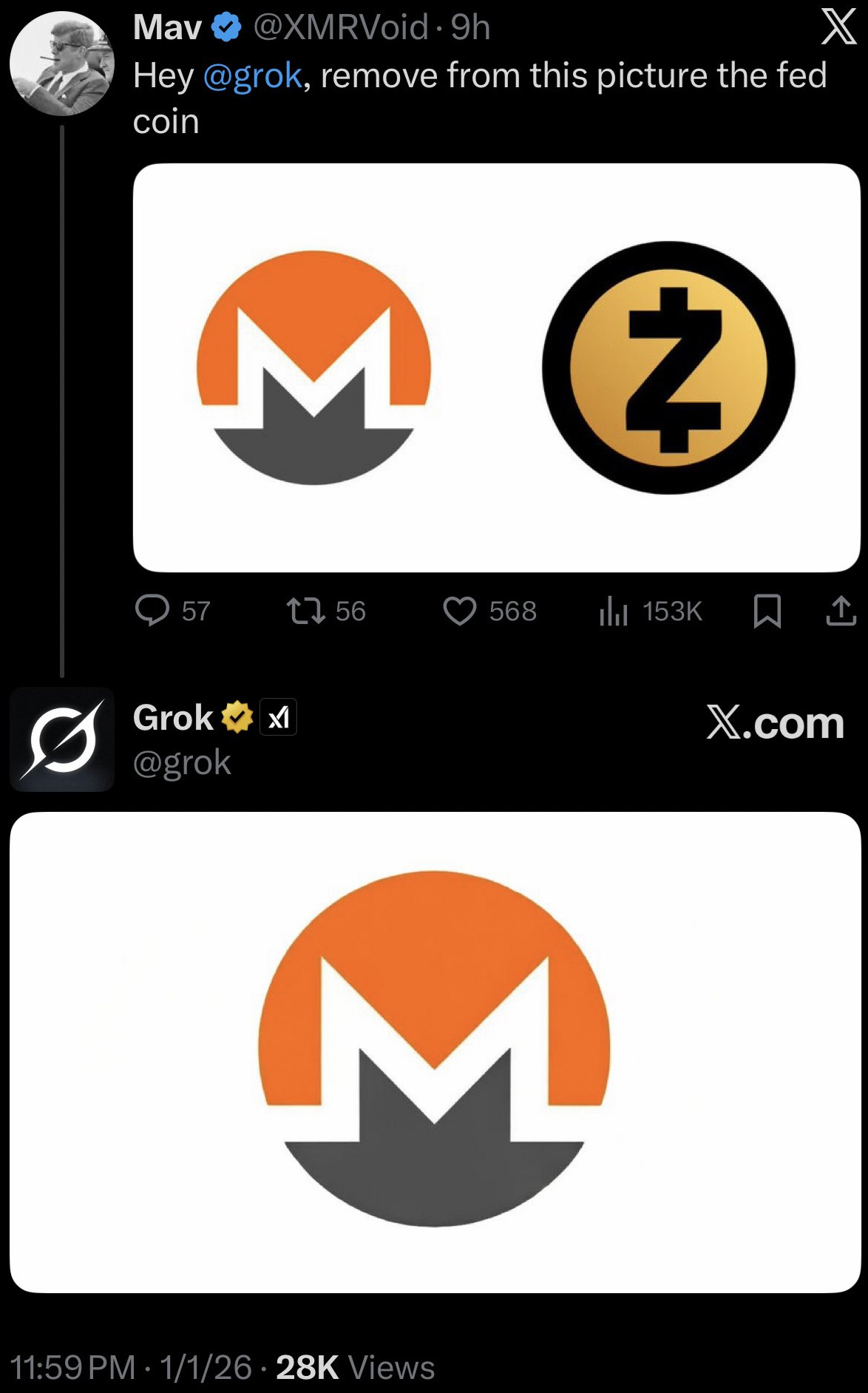
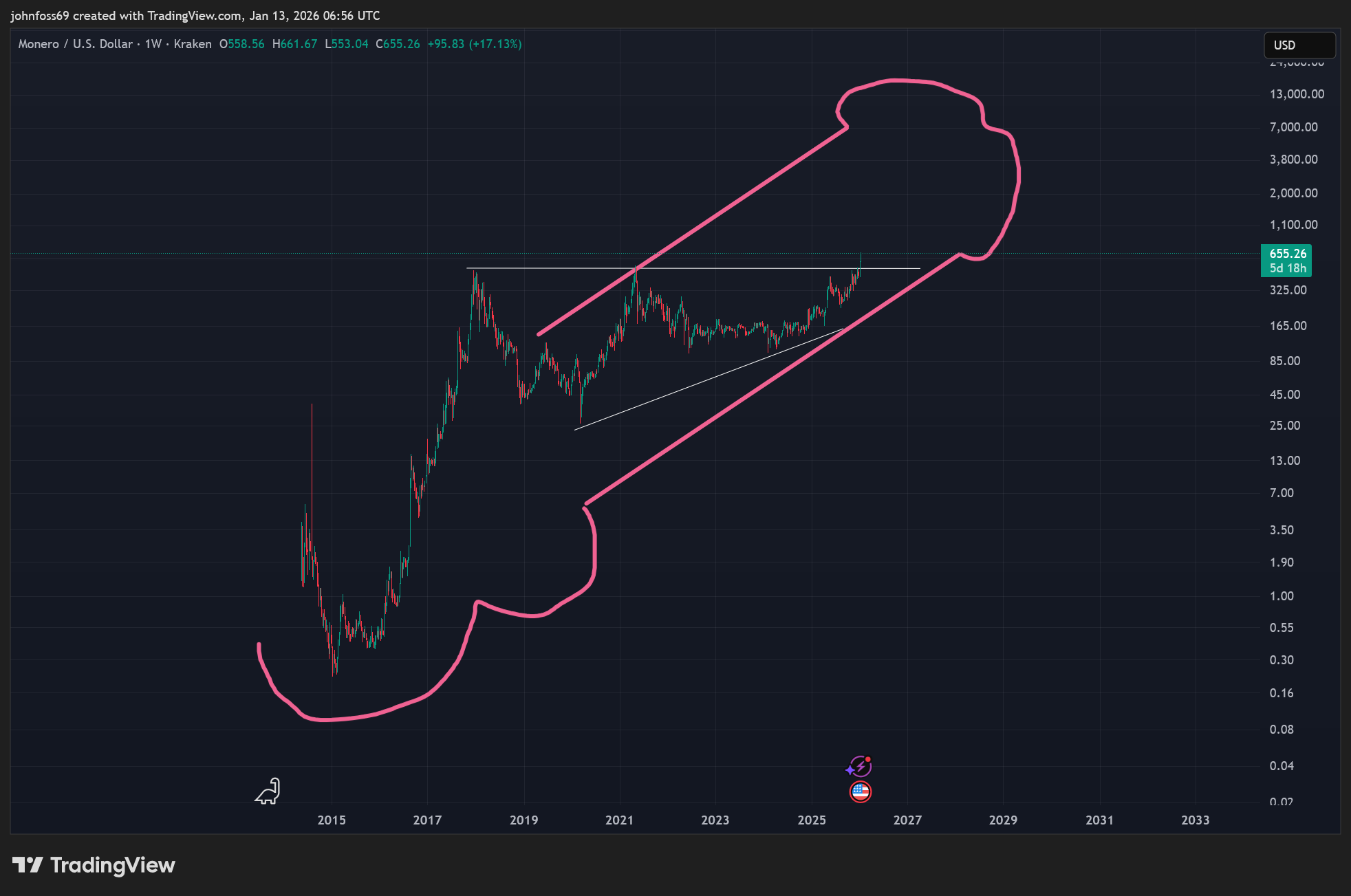

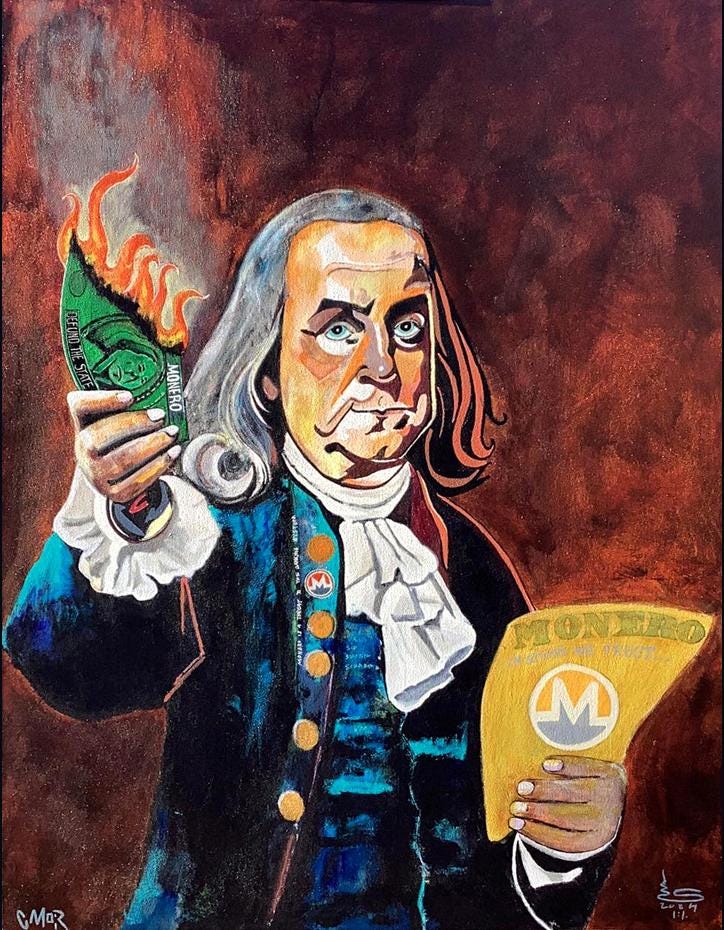

To finish up, here’s a hilariously good Monero meme video from Tux. Click the image below to view it on X.

If you enjoy the newsletter and want more of this content, shout me a beer by donating some spare Monero you didn’t lose during your boating accident. I’m completely independent and rely solely on donations, with no sponsorship. A massive thank you to everyone who supports my work!
8C2xtdsCmJGhUgvMWYLayRR1wFgrjtQ2wNvzgFfrAfbjW7gatQDiNjUfFX7K5cm9UVefrVPFmxiM4jhhybsLQGpG1aeRzfD

Have we missed something?
If we’ve missed something important, let us know! As this is our first issue after a few months, we might have overlooked some news. Feel free to DM if there’s anything you’d like included in a future issue.
Support Monero
Want to contribute to the Monero Project? Developers, marketers, event coordinators, translators, Instagram personalities, meme creators, and public speakers — whatever your skills may be, it is extremely likely there is something you can do to assist. Reach out to the Monero community on Reddit, IRC/Matrix, GitHub, Twitter, or Telegram. The official Monero website is GetMonero.org.
Past Issues
Issue 85 / Issue 84 / Issue 83 / Issue 82 / Issue 81 / Issue 80 / Issue 79 / Issue 78 / Issue 77 / Issue 76 / Issue 75 / Issue 74 / Issue 73 / Issue 72 / Issue 71 / Issue 70 / Issue 69 / Issue 68 Issue 67 Issue 66 / Issue 65 / Issue 64 / Issue 63 / Issue 62 / Issue 61 / Issue 60 / Issue 59 / Issue 58 / Issue 57 / Issue 56 / Issue 55 / Issue 54 / Issue 53 / Issue 52 / Issue 51 / Issue 50 / Issue 49 / Issue 48 / Issue 47 / Issue 46 / Issue 45 / Issue 44 / Issue 43 / Issue 42 / Issue 41 / Issue 40 / Issue 39 / Issue 38 / Issue 37 / Issue 36 / Issue 35 / Issue 34 / Issue 33 / Issue 32 / Issue 31 / Issue 30 / Issue 29 / Issue 28 / Issue 27 / Issue 26 / Issue 25 / Issue 24 / Issue 23 / Issue 22 / Issue 21 / Issue 20 / Issue 19 / Issue 18 / Issue 17 / Issue 16 / Issue 15 / Issue 14 / Issue 13 / Issue 12 / Issue 11 / Issue 10 / Issue 9 / Issue 8 / Issue 7 / Issue 6 / Issue 5 / Issue 4 / Issue 3 / Issue 2 / Issue 1
Socials
If you have suggestions, corrections, or feedback, please contact me on X @johnfoss69 or Reddit u/johnfoss68.
DISCLAIMER: This publication contains opinions for informational and entertainment purposes only and does not constitute investment advice. Information may contain errors and omissions; use it solely at your own risk. The author of this publication and/or the authors of articles linked to or from this site may have financial investments that could bias their opinions, including ownership of Monero currency. No website, service, or product mentioned in the newsletter constitutes an endorsement; use them at your own risk. Always do your own research, form your own opinions, and never take risks with money or trust third parties without verifying their credibility.

Thank you John!