Table of Contents:
Development, Releases, and Technology
General News
Events and Meetings
Exchanges and Merchants
Community Crowdfunding
Trading and Speculation
Network Metrics
Entertainment
Development, Releases, and Technology
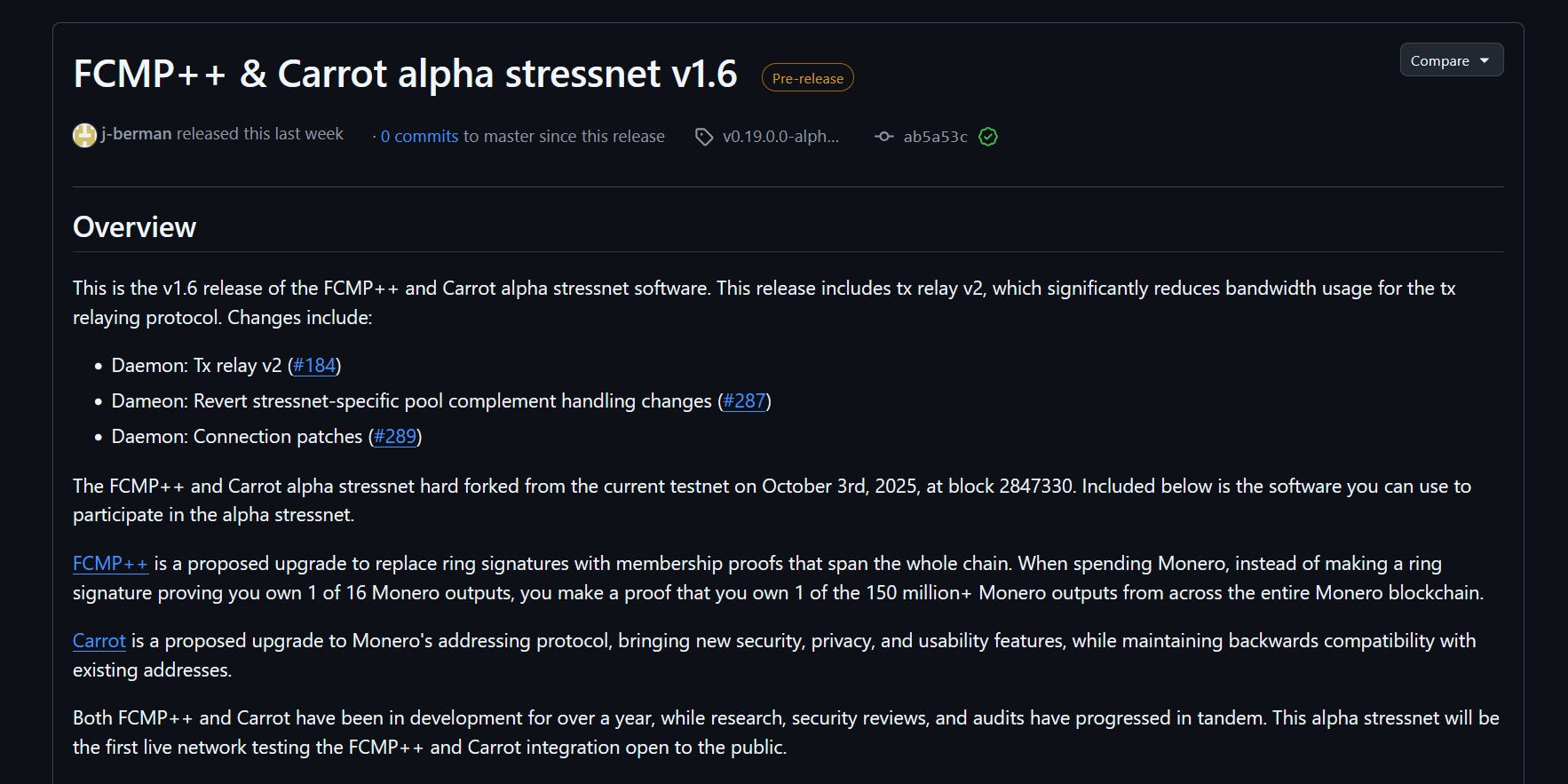
A new alpha stressnet update for Monero has been released, rolling out v1.6 of the FCMP++ and Carrot stressnet software. This lets the community try out two major proposed upgrades before they ever reach mainnet: FCMP++, which replaces ring signatures with full-chain membership proofs, and Carrot, a new address format aimed at improving privacy and usability without breaking existing addresses. The release also introduces tx relay v2, significantly reducing bandwidth usage, along with several daemon fixes. This is early, experimental software and not meant for real funds, and developers are encouraging the community to test it thoroughly and report issues to help ensure a smooth eventual upgrade. More information here.
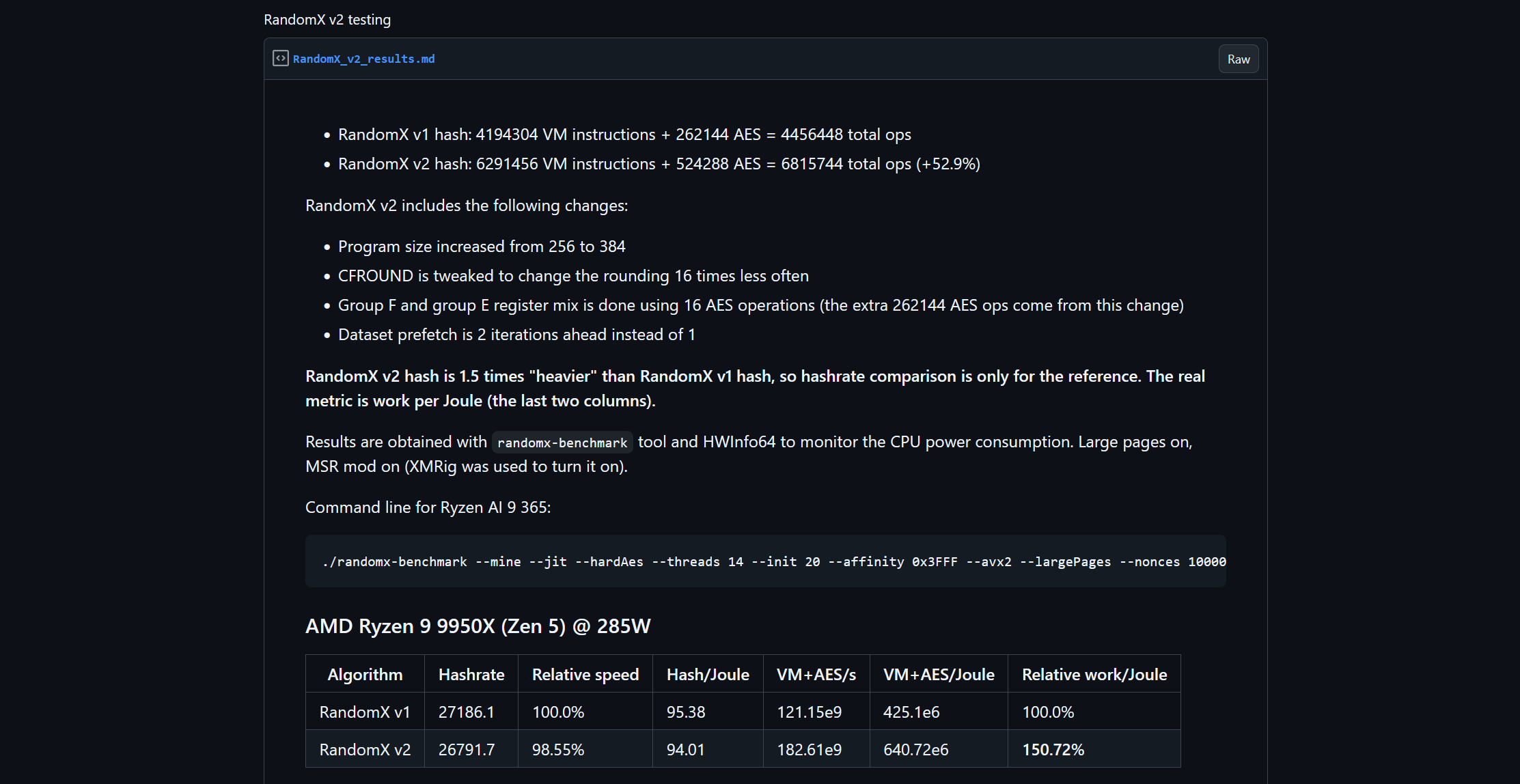
Monero developers are gathering real-world benchmarks for the upcoming RandomX v2 update, with a call for users running newer Intel CPUs to test and share results. A simple Linux script has been posted to standardize testing, with results being collected publicly to help understand performance changes and how newer and older hardware may be affected. More information and a link to the script here.
Updates from the unofficial Monero Research Lab X page have continued to provide a steady stream of Monero dev insights. The team recently agreed to fund a third independent review of a critical FCMP++ math component, bringing in zkSecurity for extra assurance after two prior audits, while Cypher Stack proposed a mitigation for a Generalized Bulletproofs issue that slightly increases proof sizes but isn’t seen as a major blocker. Discussions around CARROT’s Outgoing View Keys highlighted clear usability gains for wallets and multisig setups alongside concerns about potential exchange pressure, and a review of the BulletCT paper found no meaningful performance gains for Monero, shifting focus toward alternatives like SwiftRange or Flashproofs.
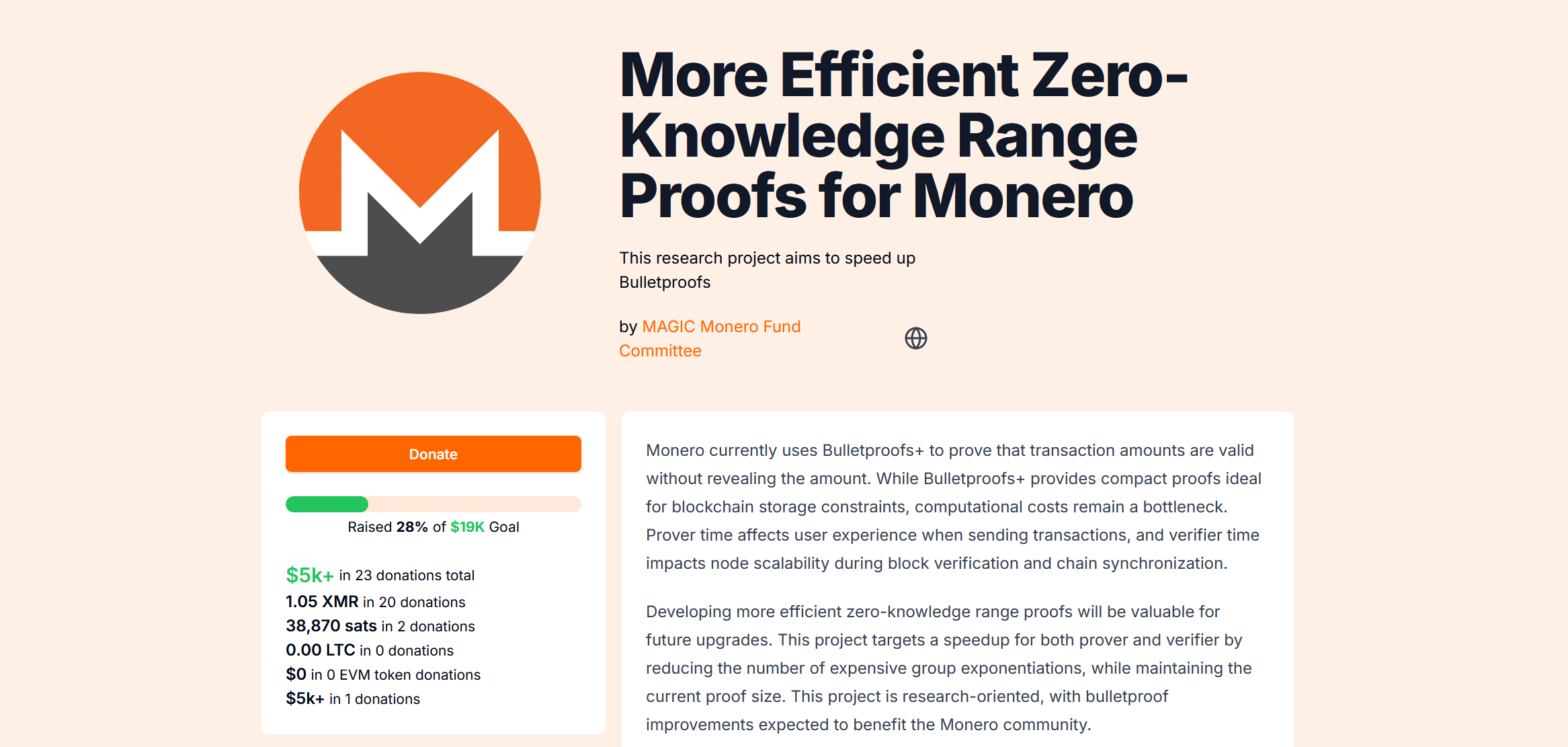
A MAGIC Monero Fund research project is raising $19,000 to speed up Bulletproofs+, the cryptography Monero uses to hide transaction amounts, making transactions faster to create and easier for the network to verify without increasing data size. The 13-week project is being led by CSIRO researchers Dr Nan Wang and Dr Dongxi Liu and is designed to support future upgrades such as FCMP++, with all code released open-source. The fundraiser is currently 28% funded after a $5,000 seed donation, with full details and donations available here, and the technical proposal here.
Grease is an early proof-of-concept that’s trying to bring payment channels to Monero, so you could make instant, private payments off-chain and only settle back to the Monero base layer when you’re done. The idea is to improve everyday UX for things like point-of-sale payments and micro-transactions, without turning Monero into a smart contract chain or leaking channel metadata on a public ledger. The project uses a ZK rollup style chain for off-chain state management, and the repo has been getting active updates recently. Check it out here.

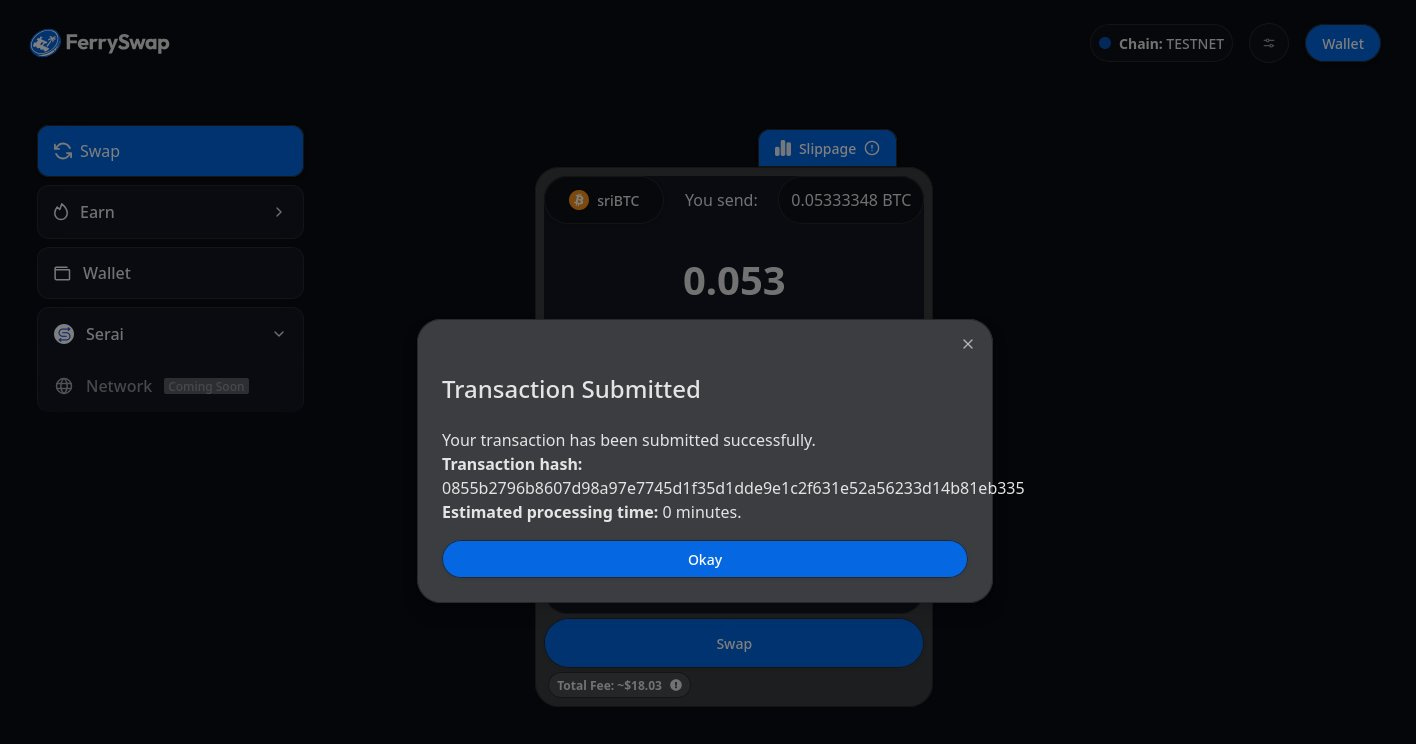
FerrySwap is coming soon. It’s being built as a Monero-first swap interface on top of Serai DEX, designed to enable direct cross-chain swaps without centralized bridges or custody. More information here and here.
Haveno has released v1.0.2 of its Android app. Haveno is a peer-to-peer trading app that lets people buy and sell Monero without accounts, custody, or centralized exchanges. This update adds more flexible trading fees, clearer explanations when a trade isn’t available, and some general bug fixes to make the app more reliable overall. More information here.
Stack Wallet has released v2.4.3, with a mix of new features, fixes, and performance improvements across mobile and desktop. Stack Wallet is an open-source, self-custody wallet that supports Monero and many other cryptocurrencies, letting users hold and swap coins without giving up control of their keys. Check it out here.
A new Monerujo release is landing in under two days, just in time for the Monerotopia conference. Monerujo, the first ever mobile wallet for Monero, should be available via their website or the Google Play Store once the update drops.
MAGIC Grants has released Skylight Wallet v1.0.7 with a bunch of small fixes and improvements. Skylight is a modern, open-source Monero wallet that lets you hold and use XMR yourself without running a full Monero node or trusting a third party with your keys. This update improves stability on Windows and Linux, makes sending XMR smoother, and adds better QR code scanning for connecting to light wallet servers. More information and downloads here.
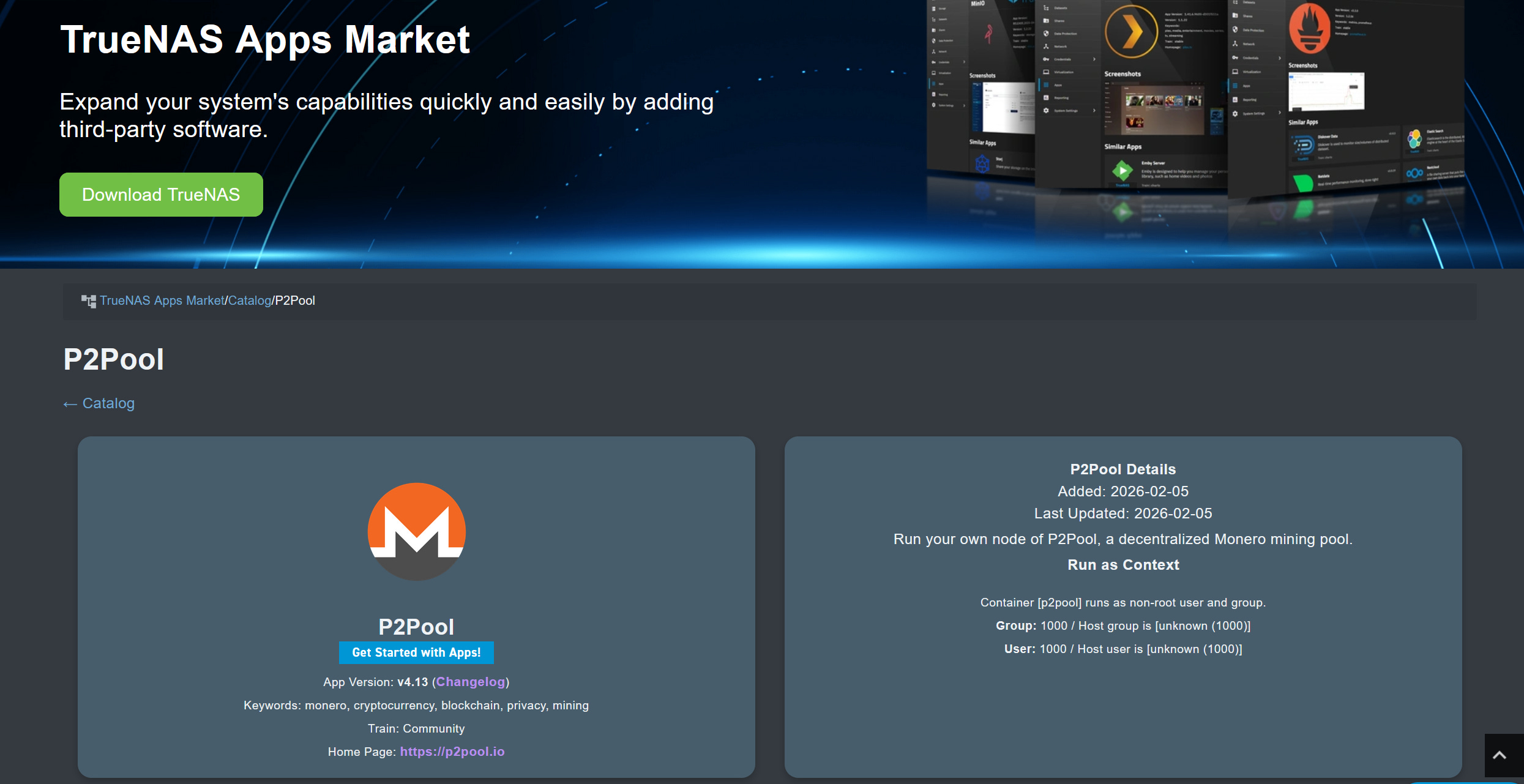
P2Pool is now available in the TrueNAS app store, making it easier to run a Monero mining node on TrueNAS. XMRig support is expected to follow, which would round out a simple self-hosted mining setup.
Monero Superbrain is now live on Umbrel, making it dead simple to mine Monero with a single click. Built by SirJamzAlot, the app bundles P2Pool, XMRig, and a clean dashboard into one plug-and-play setup that turns your Umbrel into a decentralized mining hub. It supports both P2Pool Mini and Main, tracks earnings in real-time, and even lets you connect extra machines on your network to boost hashpower. It’s still in beta, but if you want to help nourish P2Pool and mine without touching the command line, this is worth checking out.

It is highly recommended you run a node to help secure the Monero network. You can also solo mine via the official Monero GUI wallet which can be found here or partake in the decentralized and permissionless P2Pool. The official Monero website GetMonero.org or SethForPrivacy.com are fantastic places to find help to get started running a node or mining.
CypherSage posted a step-by-step guide on DeusOp showing how to run your own Monero node, mine on P2Pool, and use XMRig on a headless Linux setup. It walks through everything from installing Monero and enabling Huge Pages to running P2Pool Mini on low-power hardware.

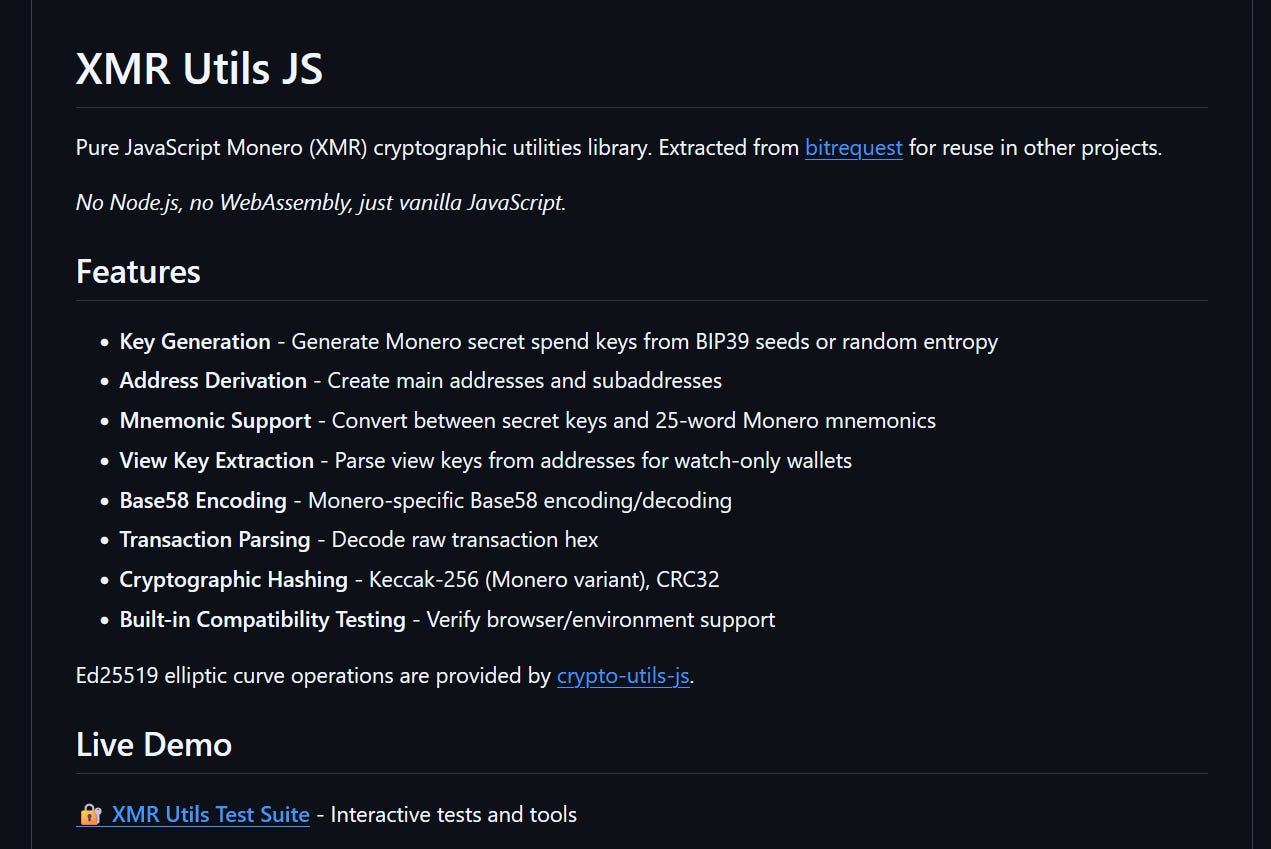
Bitrequest released a small JavaScript library that makes it easier for apps and websites to work with Monero. It handles things like generating Monero addresses, creating subaddresses, reading mnemonics, and checking transactions, all directly in the browser without extra software. It’s open-source and already used in Bitrequest’s point-of-sale app for accepting Monero payments, but since it’s new, it’s something users should review carefully before using with real funds.
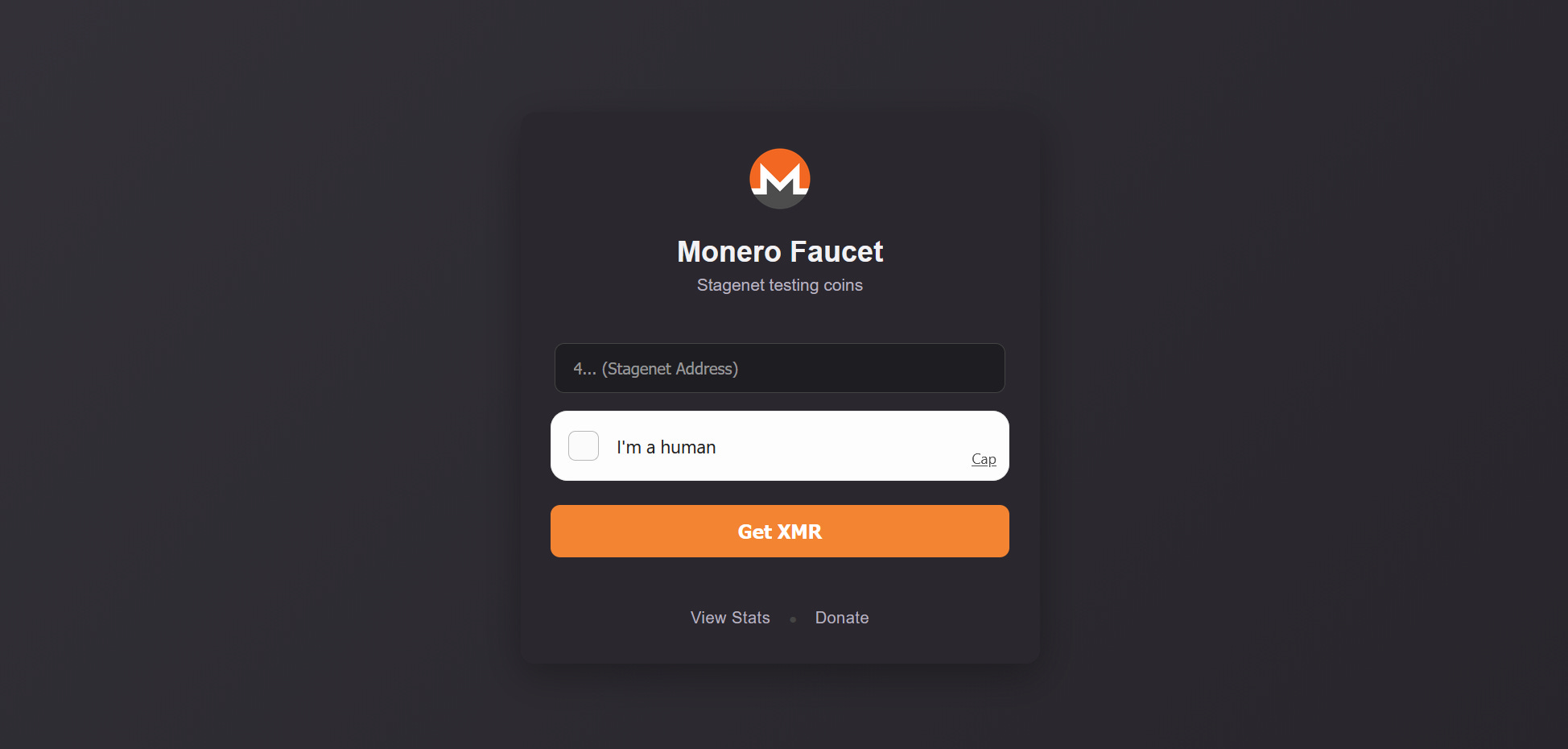
xNOTHINGx built a new Monero Stagenet faucet to help people test wallets and transactions without using real XMR. The privacy-focused faucet that lets users grab stagenet coins for testing, with both a regular site and a Tor onion version available. It’s early and pretty bare bones, but it fills a real gap for developers and newcomers experimenting on Monero’s stagenet. Check it out here.
A new tool called openresolve was shared by lunar-sh, a simple OpenAlias CLI resolver written in C that turns a website name into a Monero address without needing scripts or extra setup. You just enter the domain and it gives you the XMR address, which can be handy for quick checks. Since it’s new, it’s advised to use it with caution.
Excellent-Ostrich107 posted a browser-based Monero escrow prototype called Onyx Escrow that runs fully in your browser, using a non custodial 2 of 3 setup where buyer and seller can release funds, or an arbiter can step in for disputes. It claims FROST threshold signatures in WASM, with a server that coordinates the flow but can’t spend the funds. It’s live and mainnet tested at onyx-escrow.com, but it’s very new so treat it with caution, especially until source code is shared. More information here.
A project to turn a Nintendo 64 into an offline wallet address generator has made progress over the past month. Developer Bowler Bear now has the app running on real N64 hardware, with recent updates fixing memory issues, improving text readability, and adding smoother controller controls. More information here.
General News
Monero Talk went live from the Monerotopia 2026 venue in Mexico City for episode 251 of the Monero Talk, joined by Monerotopia speaker Ray Youssef, CEO of Noones. The episode covers on-the-ground vibes, a Monero price check, weekly news, and a long-form discussion with Youssef ahead of his upcoming conference talk. It’s a good listen if you want a feel for the event before doors open and some context on where Monero conversations are heading this week.
Anti Moonboy News episode 60 is out, with a wide-ranging episode that digs into the latest Epstein-related headlines touching parts of the crypto industry, looks at Monero’s continued dominance on darknet markets, breaks down recent XMR drama, and shares updates on Monerotopia 2026. Check it out here.
CypherGoat published a new issue of This Week in Monero, covering the latest news across the Monero ecosystem. You can check out the latest issue here.
An article from the Mises Institute breaks down why transparent digital currencies come with real risks for freedom, safety, and everyday commerce. It explains how fully visible blockchains enable surveillance, price discrimination, and even physical targeting of holders, while arguing that privacy-by-default money like Monero preserves fungibility and personal autonomy. The piece makes the case that financial privacy isn’t about hiding wrongdoing, but about protecting people, markets, and voluntary exchange in an increasingly cashless world.

Events and Meetings
Monerotopia 2026 is this week and will be held from February 12–15, 2026, at Huerto Roma Verde in Mexico City, bringing four days of talks, workshops, and hands-on Monero use focused on privacy, freedom, and real-world adoption. Alongside a stacked speaker lineup including Monero Research Lab contributors, wallet builders, and OG cypherpunks, the event features an open air XMR bazaar where vendors accept Monero for food, drinks, and merch, creating a live circular economy. The conference also includes Spanish language talks, workshops, live music, and heavily discounted or free access options for local attendees. Tickets and details are available at the Monerotopia website. Additional information here.
In case you can’t make it to the event, the Monerotopia conference will be live streamed on the Monerotopia X account!

A Monero focused meetup is being held in London on February 20, featuring a practical talk on using Monero to protect transaction privacy amid tightening crypto regulations. The event covers real-world methods for chain hopping, obfuscating funds, and integrating Monero into broader crypto and business structures, followed by networking with others. Full details and tickets are available here.

A Tampa Privacy Pop up is happening on February 20 at the Tampa Innovation Center, bringing together privacy and Monero focused projects for an evening of talks, demos, and casual discussion. The free event will feature live demos and presentations from tools like EigenWallet, Cake Wallet, Edge Wallet, RoninDojo, NymVPN, XMRBazaar, and more, with a focus on real world privacy tech people can actually use. You can register and find more information here.

MoneroKon 2026 is officially on, with OrangeFren stepping in to organize this year’s event after earlier plans fell through. MoneroKon is the annual meeting of privacy advocates, cypherpunks, researchers, and developers focused on sharing scientific and technical work on Monero, privacy enhancing technologies, and distributed systems. MoneroKon will run June 5 to 7 in Warsaw, alongside the Bitcoin Film Fest next door. The call for presentations, panels, workshops, and artworks is now open, with submissions due by April 24, 2026. Tickets and more information can be found on the MoneroKon website.

The next Monero Research Lab meeting should take place on Wednesday, February 11, 2026, at 17:00 UTC in the #monero-research-lab channel on Libera IRC and Matrix. Logs from the previous meeting should be found here soon.

The next Cuprate Meeting will be held on Tuesday, February 10, 2026, at 18:00 UTC in the #cuprate channels on Libera IRC and Matrix. Agenda items can be suggested on GitHub, and logs will be posted there after the meeting.
Exchanges and Merchants
FerrySwap is coming soon. It’s being built as a Monero-first swap interface on top of Serai DEX, designed to enable direct cross-chain swaps without centralized bridges or custody. More information here and here.
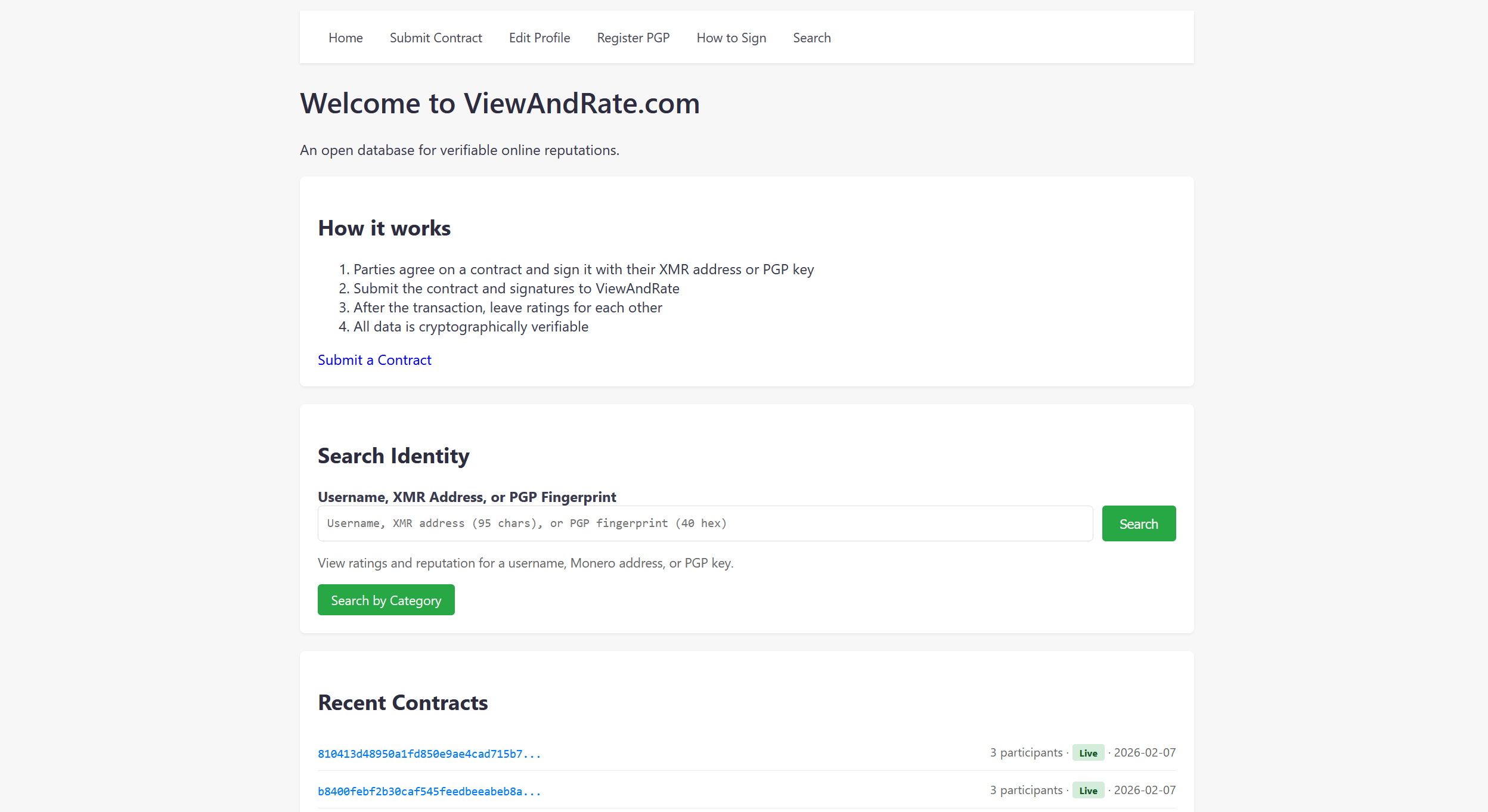
A new site called ViewAndRate.com is being tested as a way to build portable, verifiable reputations for Monero users by signing contracts and reviews with XMR addresses or PGP keys. The idea is that even if marketplaces go offline, reputations can be verified and reused elsewhere. More information here.
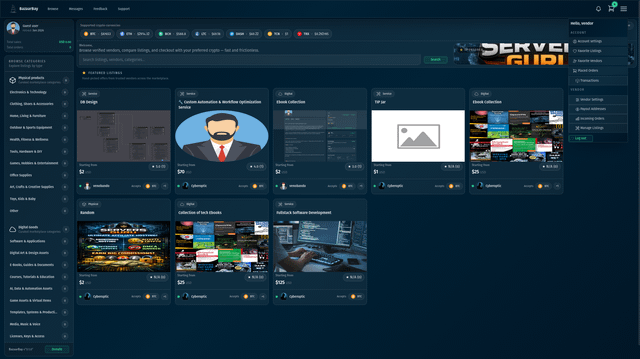
A developer has shared early details of BazaarBay, a proposed non custodial P2P marketplace where vendors control their own funds and buyers can choose between direct payment or escrow, and is asking the Monero community for feedback ahead of a planned v0.1 launch. The proposal sparked debate around what counts as truly decentralized, with commenters questioning the use of a centralized server, admin based dispute resolution, and how the project differs from existing platforms like XMRBazaar. The full discussion and concept overview are here.
QuantumProxies has added Monero as a payment option. QuantumProxies sells residential and datacenter proxy services used for things like web access, automation, and location based browsing, and now accepts XMR payments via NOWPayments. More information here.
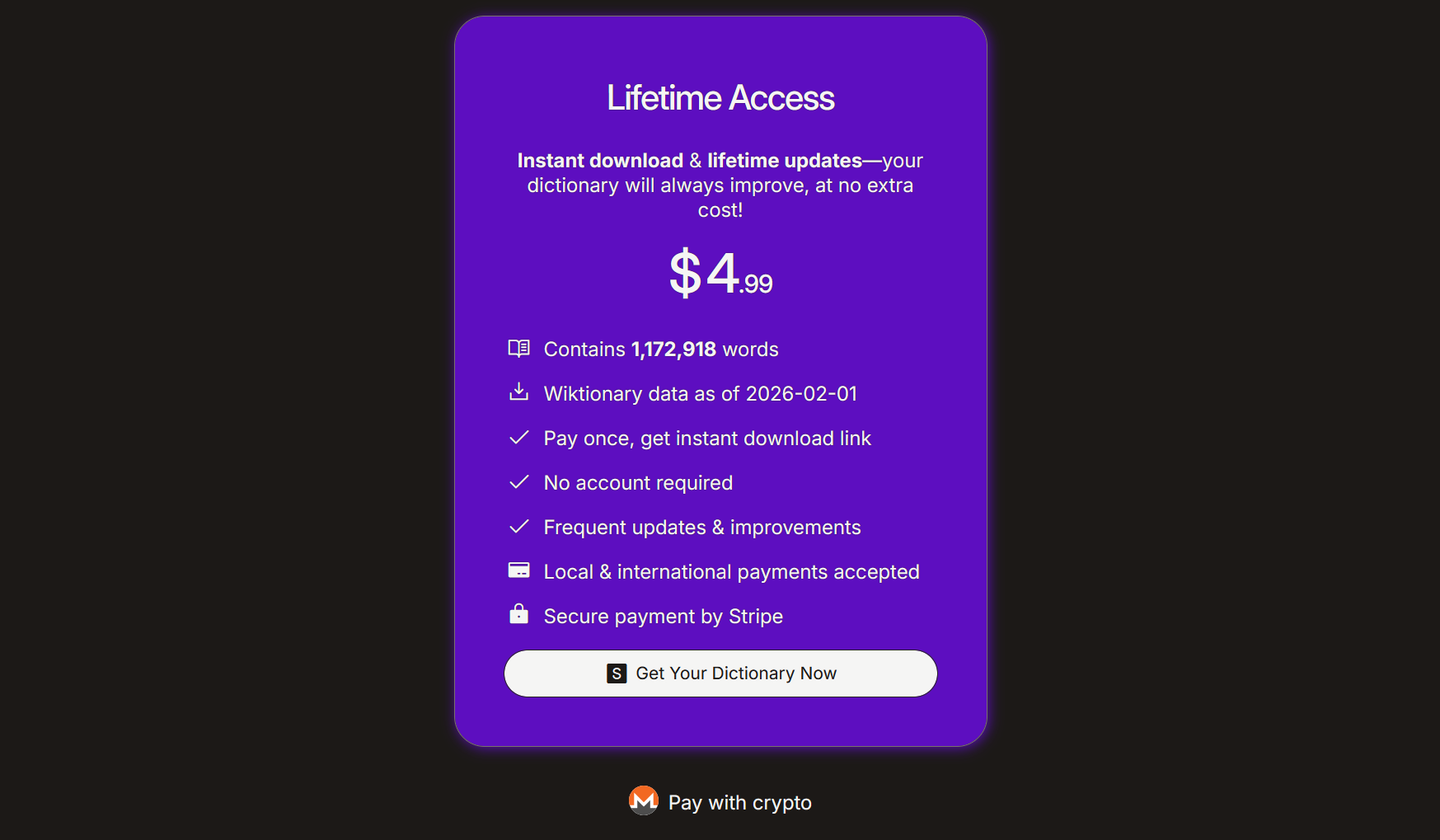
A merchant called reader-dict.com now accepts Monero after TheFuzzStone directly contacted the creator and asked for XMR support. The site sells offline dictionaries and language tools for e-ink readers and other devices. More information here.
A privacy focused service called SilentAPI now lets users access major AI models like GPT-5.2, Gemini 3.0, Kimi K2.5, and DeepSeek R1 using Monero, with no KYC, no accounts, and no prompt logging. The platform acts as an API proxy and private chat interface, supports Tor via a new hidden service endpoint, and charges pay-per-use rather than subscriptions or credit cards. More information here and here.
Search stats from OrangeFren.com for January show Monero firmly in the lead, taking 42.31% of all searches. Bitcoin follows at 25.71%.


Community Crowdfunding
Several crowdfunding proposals are awaiting community feedback before they can start accepting funds through the Community Crowdfunding System (CCS). For now, they are just proposals, but if they receive some positive feedback from the community they will be moved to a “Funding Required” stage so that they can accept Monero donations through the CCS.
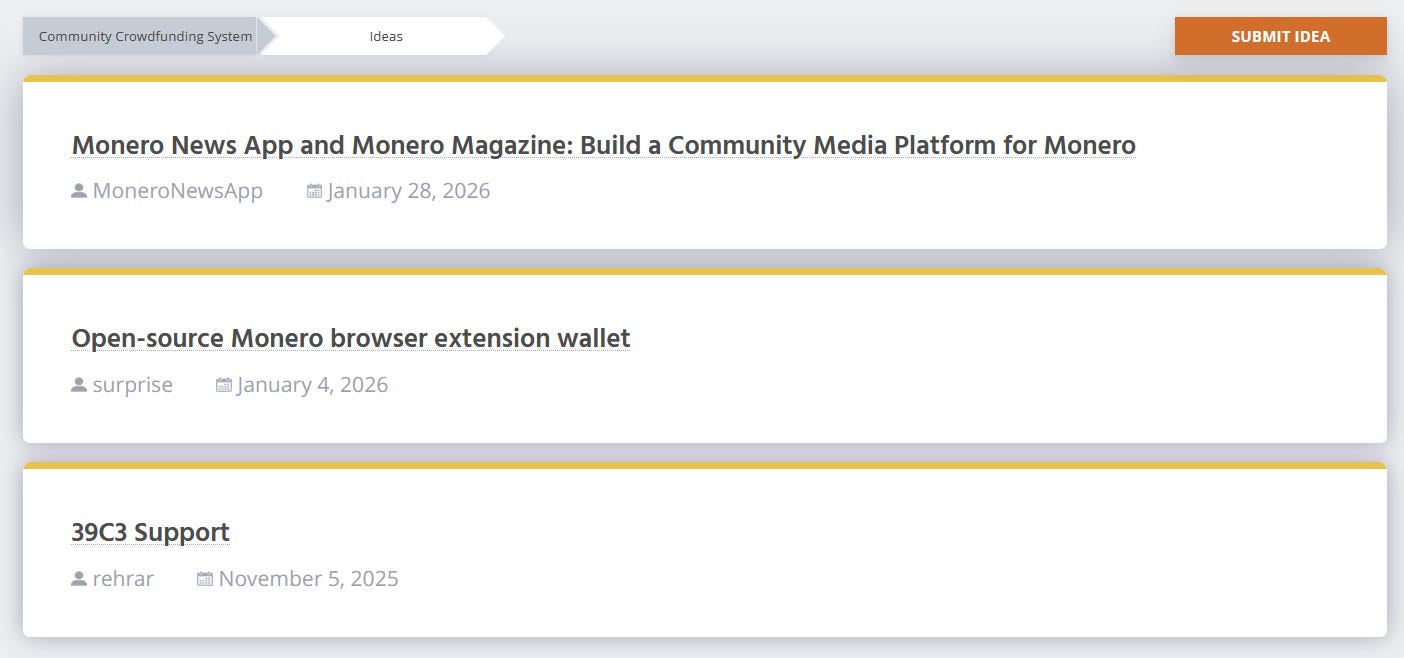
All approved proposals have been fully funded.
Trading and Speculation
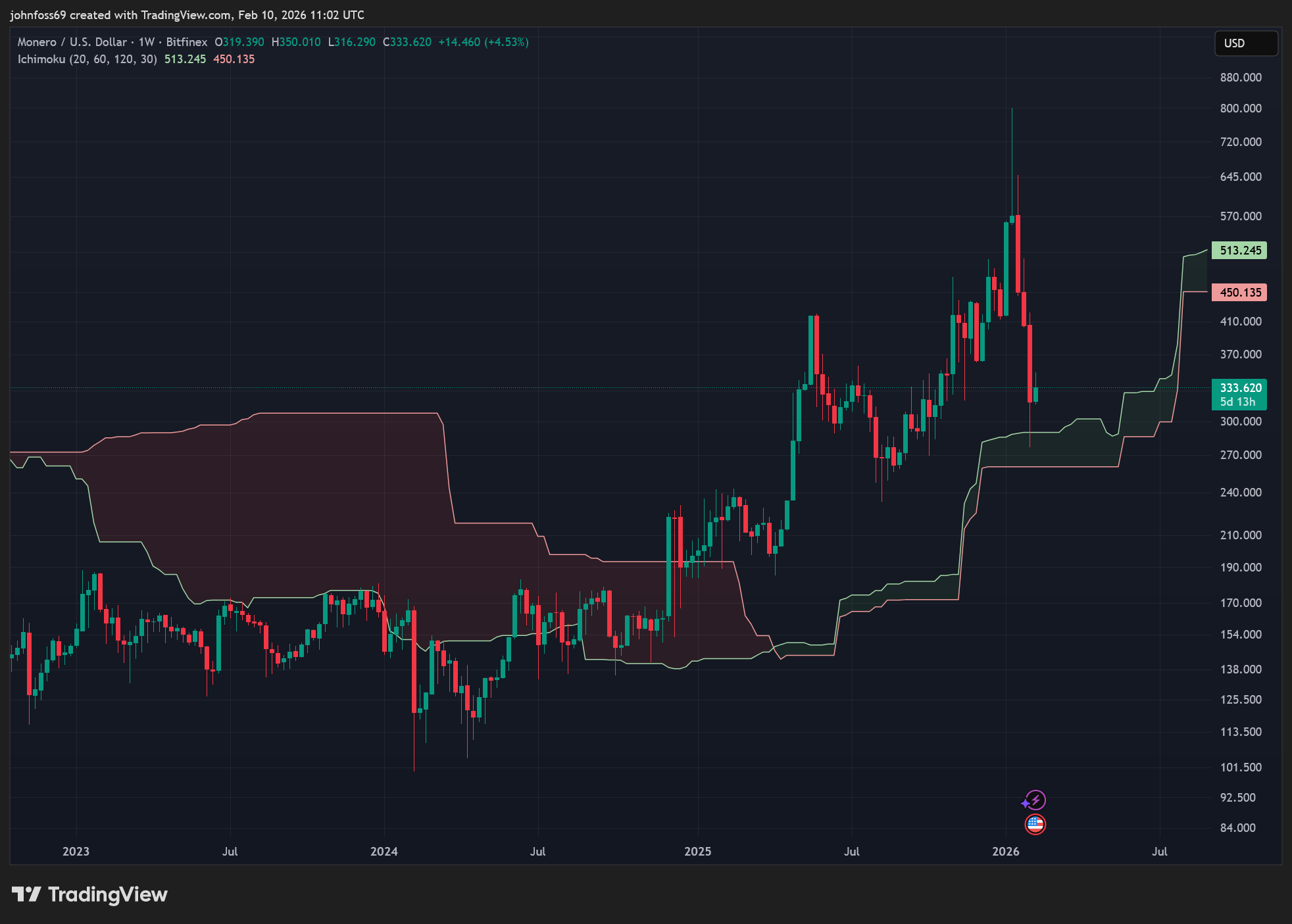
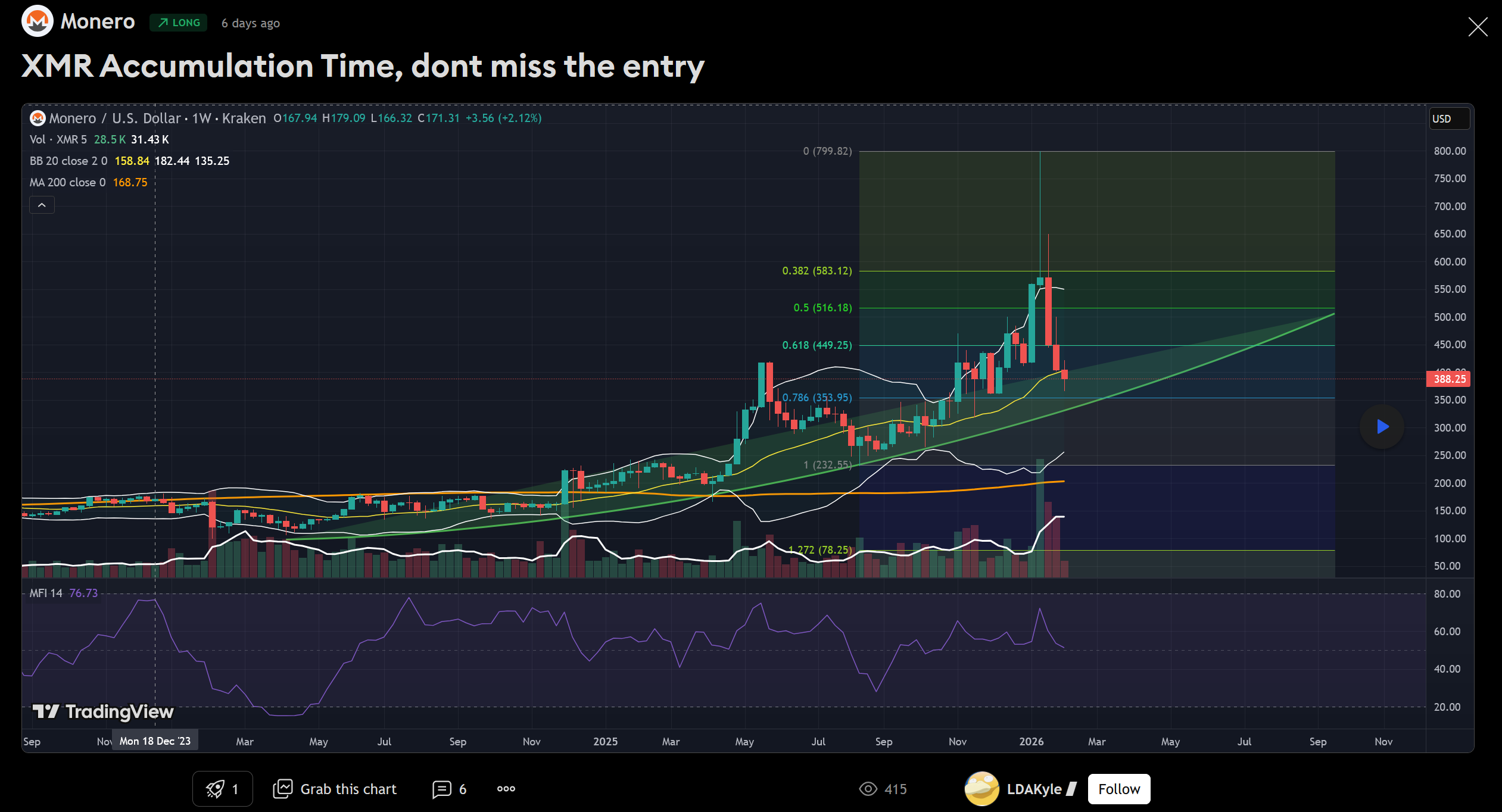
After Monero’s strong run last month, price has pulled back to retest the top of the weekly cloud. Ideally this turns into a period of sideways consolidation, setting the base for the next move higher.
Network Metrics
Total Monero in Circulation : 18,711,339 XMR
Monero Total Marketcap: $6,268,241,591
Coinmarketcap Ranking: #16
XMR ‘street price’ from RetoSwap: $371 (+10%)
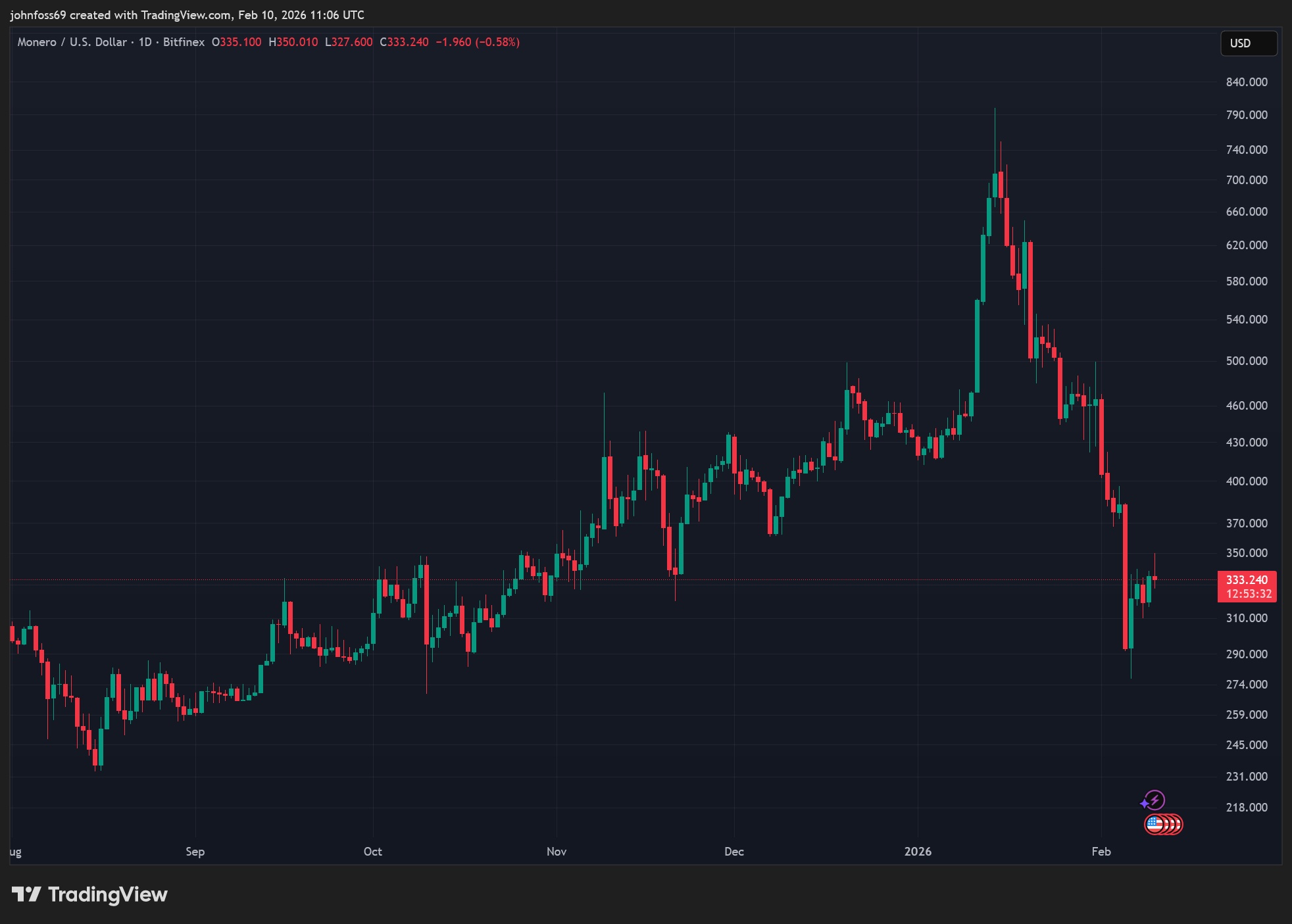
XMR/USD Price: $333
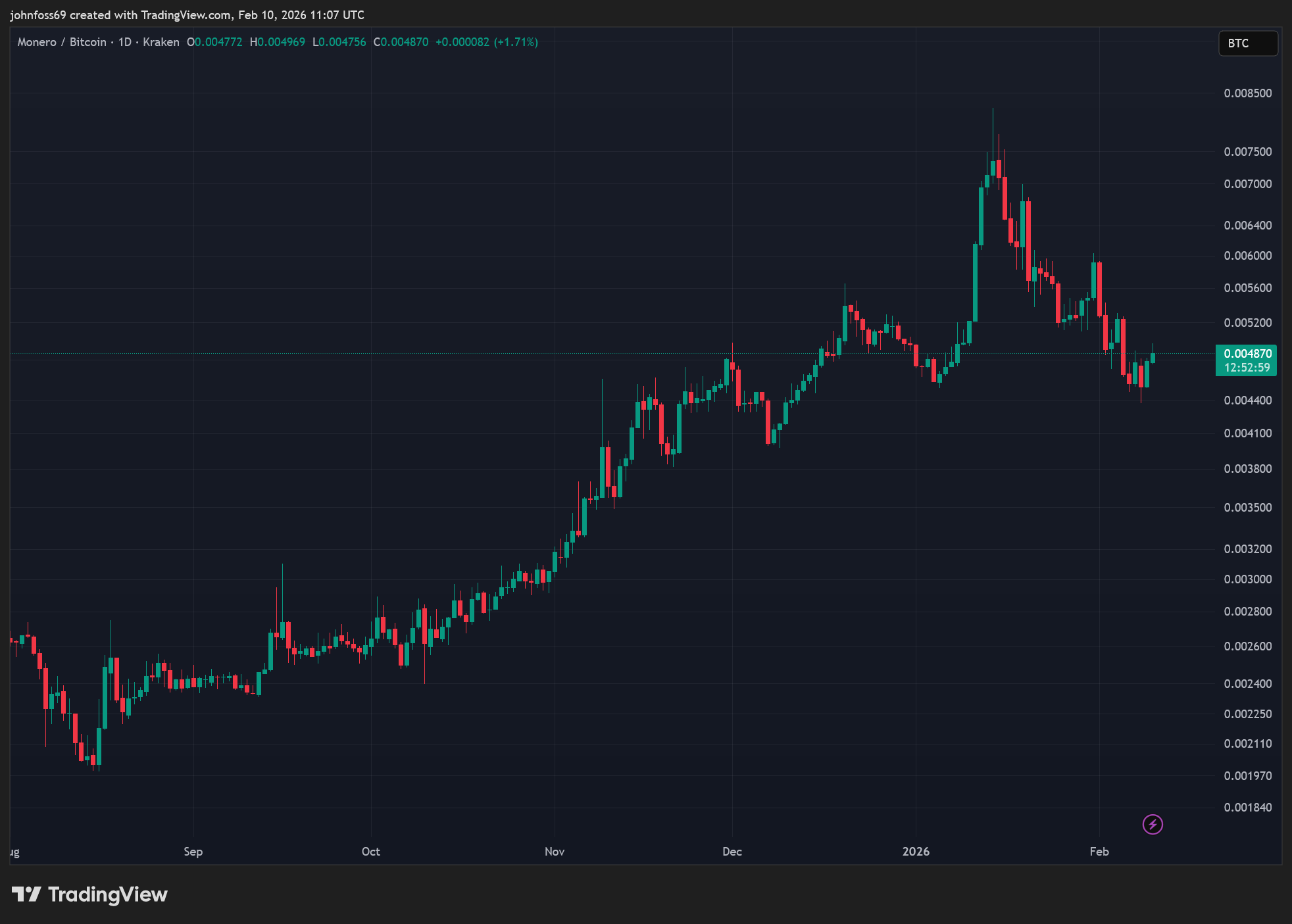
XMR/BTC Price: 0.004870 BTC
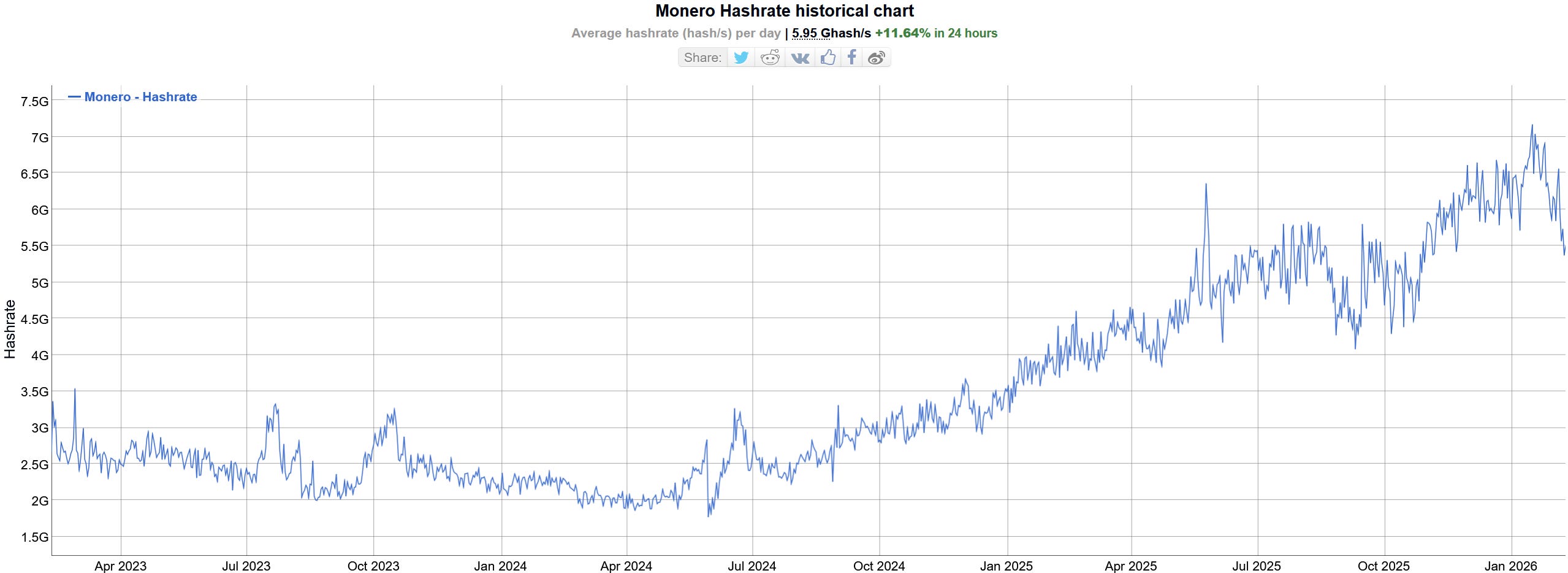
Monero Network Hashrate: 5.95 Ghash/s
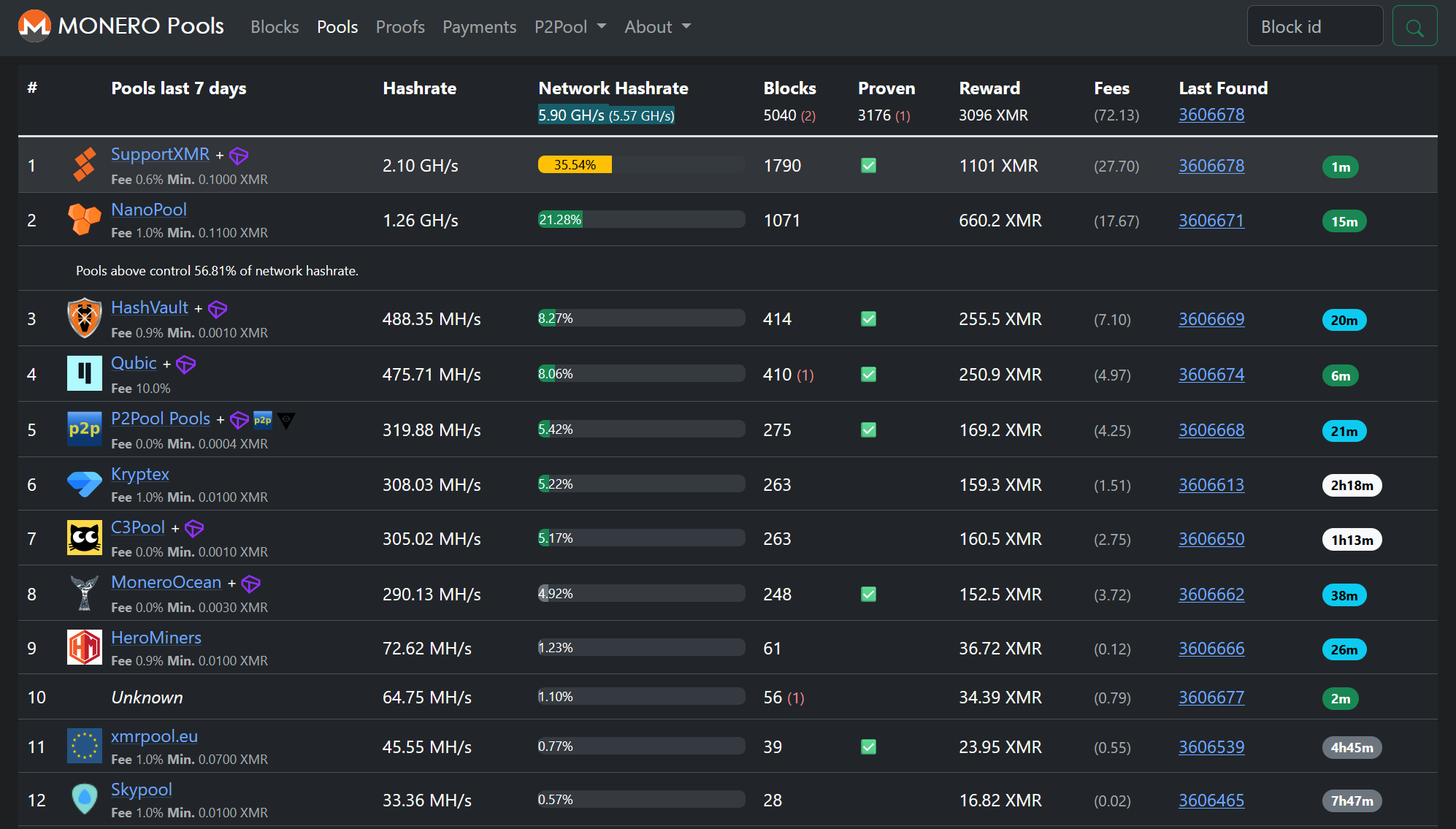
Monero Mining Pools Hashrate Distribution:
Entertainment




If you enjoy the newsletter and want more of this content, shout me a beer by donating some spare Monero you didn’t lose during your boating accident. I’m completely independent and rely solely on donations, with no sponsorship. A massive thank you to everyone who supports my work!
8C2xtdsCmJGhUgvMWYLayRR1wFgrjtQ2wNvzgFfrAfbjW7gatQDiNjUfFX7K5cm9UVefrVPFmxiM4jhhybsLQGpG1aeRzfD

Have we missed something?
If we’ve missed something important, let us know! As this is our first issue after a few months, we might have overlooked some news. Feel free to DM if there’s anything you’d like included in a future issue.
Support Monero
Want to contribute to the Monero Project? Developers, marketers, event coordinators, translators, Instagram personalities, meme creators, and public speakers — whatever your skills may be, it is extremely likely there is something you can do to assist. Reach out to the Monero community on Reddit, IRC/Matrix, GitHub, Twitter, or Telegram. The official Monero website is GetMonero.org.
Past Issues
Issue 87 / Issue 86 / Issue 85 / Issue 84 / Issue 83 / Issue 82 / Issue 81 / Issue 80 / Issue 79 / Issue 78 / Issue 77 / Issue 76 / Issue 75 / Issue 74 / Issue 73 / Issue 72 / Issue 71 / Issue 70 / Issue 69 / Issue 68 Issue 67 Issue 66 / Issue 65 / Issue 64 / Issue 63 / Issue 62 / Issue 61 / Issue 60 / Issue 59 / Issue 58 / Issue 57 / Issue 56 / Issue 55 / Issue 54 / Issue 53 / Issue 52 / Issue 51 / Issue 50 / Issue 49 / Issue 48 / Issue 47 / Issue 46 / Issue 45 / Issue 44 / Issue 43 / Issue 42 / Issue 41 / Issue 40 / Issue 39 / Issue 38 / Issue 37 / Issue 36 / Issue 35 / Issue 34 / Issue 33 / Issue 32 / Issue 31 / Issue 30 / Issue 29 / Issue 28 / Issue 27 / Issue 26 / Issue 25 / Issue 24 / Issue 23 / Issue 22 / Issue 21 / Issue 20 / Issue 19 / Issue 18 / Issue 17 / Issue 16 / Issue 15 / Issue 14 / Issue 13 / Issue 12 / Issue 11 / Issue 10 / Issue 9 / Issue 8 / Issue 7 / Issue 6 / Issue 5 / Issue 4 / Issue 3 / Issue 2 / Issue 1
Socials
If you have suggestions, corrections, or feedback, please contact me on X @johnfoss69 or Reddit u/johnfoss68.
DISCLAIMER: This publication contains opinions for informational and entertainment purposes only and does not constitute investment advice. Information may contain errors and omissions; use it solely at your own risk. The author of this publication and/or the authors of articles linked to or from this site may have financial investments that could bias their opinions, including ownership of Monero currency. No website, service, or product mentioned in the newsletter constitutes an endorsement; use them at your own risk. Always do your own research, form your own opinions, and never take risks with money or trust third parties without verifying their credibility.