

Table of Contents:
Development, Releases, and Technology
General News
Events and Meetings
Exchanges and Merchants
Community Crowdfunding
Trading and Speculation
Network Metrics
Entertainment
Development, Releases, and Technology
Monero v0.18.5.0 and Monero GUI v0.18.5.0 “Fluorine Fermi” were recently released, bringing SOCKS5 support, reliability improvements, bug fixes, and a range of security enhancements to Monero's core software and desktop wallet. More information here.
The Monero Research Lab has spent the past month focused primarily on preparing the upcoming FCMP++ upgrade for deployment, with ongoing stressnet testing, audit reviews, and integration work continuing to progress. Researchers have also been advancing post quantum initiatives such as Jamtis-PQ, reviewing future privacy and view key proposals, discussing improvements to Monero’s peer to peer network through the ProbeLab research effort, and moving forward with external review of Helios/Selene cryptographic work. More information regarding Monero’s development can be found here.

The Monero Research Lab recently highlighted AI assisted audits of Monero related code, with several reviews already completed. Recent audits have focused on Monero's RingCT and Bulletproofs+ implementation, with results published by developer SChernykh. While AI generated audits are not a replacement for expert human review, they may provide an additional tool for identifying bugs, edge cases, and areas worthy of deeper investigation.


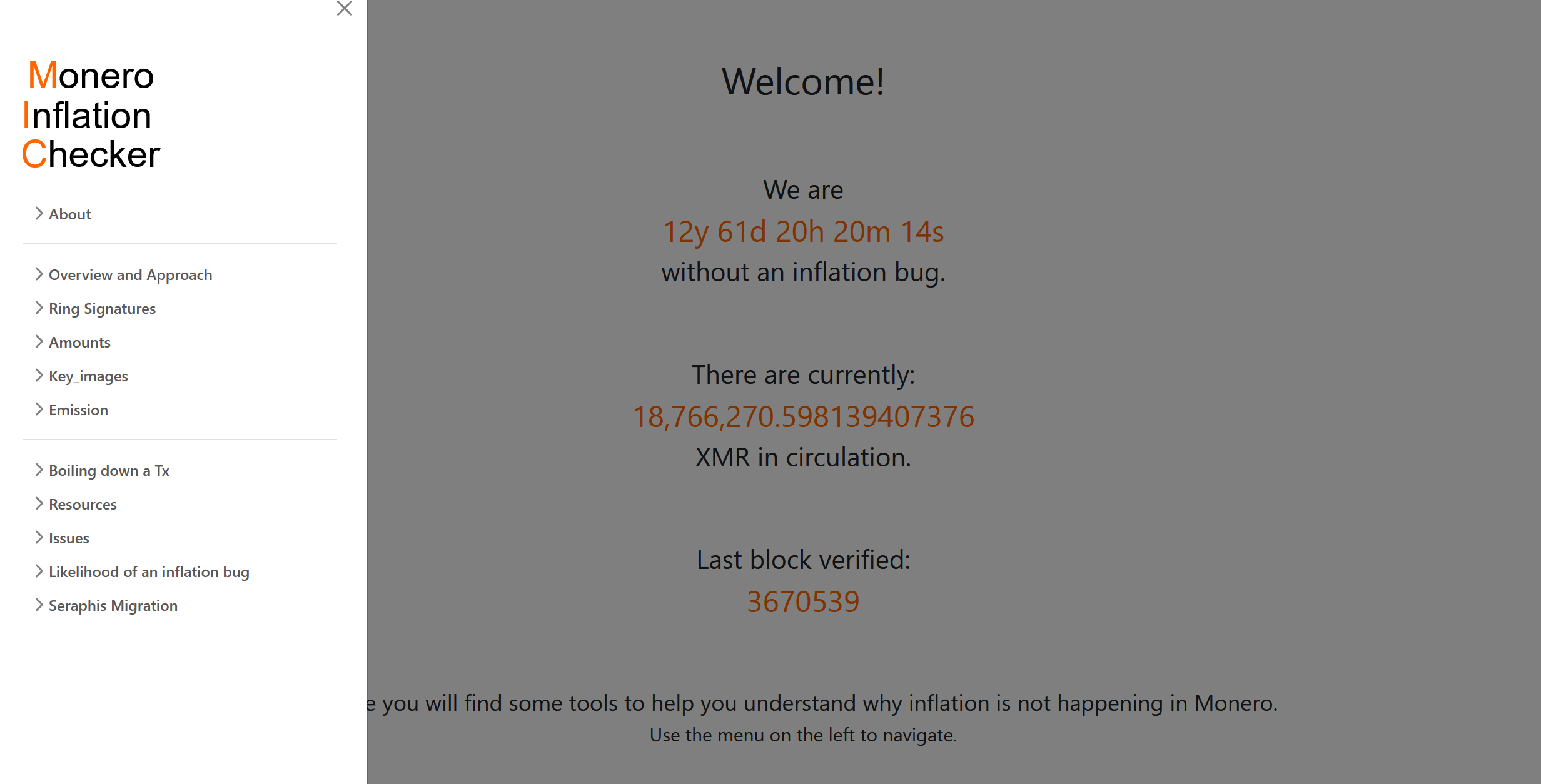
Following the recent inflation bug discovered in Zcash, some users have revisited concerns about whether a similar issue could exist in Monero. One resource often cited in these discussions is the Monero Inflation Checker, an interactive educational tool that explores the cryptographic mechanisms Monero uses to prevent hidden inflation while independently verifying the network's circulating supply. The site walks users through concepts such as ring signatures, key images, confidential amounts, and emission rules, helping explain why Monero has operated for more than 12 years without a known inflation bug. Check it out here.
Monero Talk host Douglas Tuman recently sat down with Monero developer Justin Berman for a wide ranging discussion covering Monero development, the upcoming FCMP++ upgrade, view keys, hardware wallet support, exchange delistings, and the future of decentralized exchange infrastructure. A major focus of the conversation was the newly launched FCMP++ stress test, with Berman explaining what users can expect from the upgrade and why it represents one of the most significant improvements to Monero’s privacy and scalability in years. Check it out here.
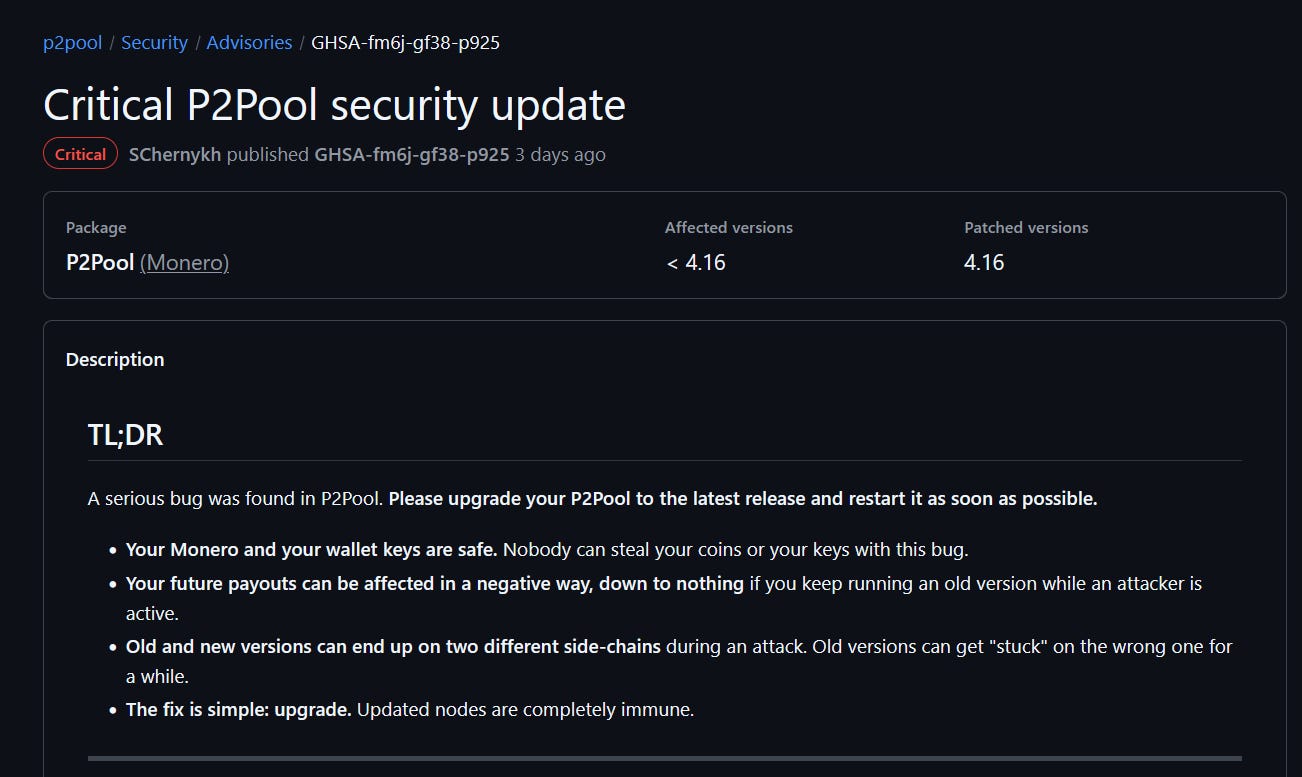
P2Pool developers are urging all miners to upgrade to v4.16 after a critical vulnerability affecting older versions began seeing active exploitation in the wild. The bug does not put Monero wallets or private keys at risk, but it can allow attackers to manipulate P2Pool’s reward distribution and capture a significant share of mining payouts from unpatched nodes. According to developer SChernykh, older P2Pool Mini and Nano chains have already been targeted, with many miners reportedly losing rewards as a result. Anyone running a version older than v4.16 should update immediately.
A Monero community developer claims to have achieved wallet sync speeds up to 6.8x faster by modifying the original Monero wallet and a custom Cuprate fork. The improvements are planned for a new open source React Native wallet for iOS and Android, with a strong focus on privacy, usability, and optional community features aimed at boosting Monero adoption.
Cake Wallet has released v6.2.1, introducing Trezor support for Monero wallets alongside improvements to WalletConnect, Pay Anything, and the node management interface. The update also includes Bitcoin and Litecoin sync enhancements, plus a range of bug fixes.


Cake Wallet has announced a partnership with Foundation Devices to bring Monero support to the upcoming Passport Prime hardware wallet. A preview of the integration has already been shared, with more details expected as development continues.


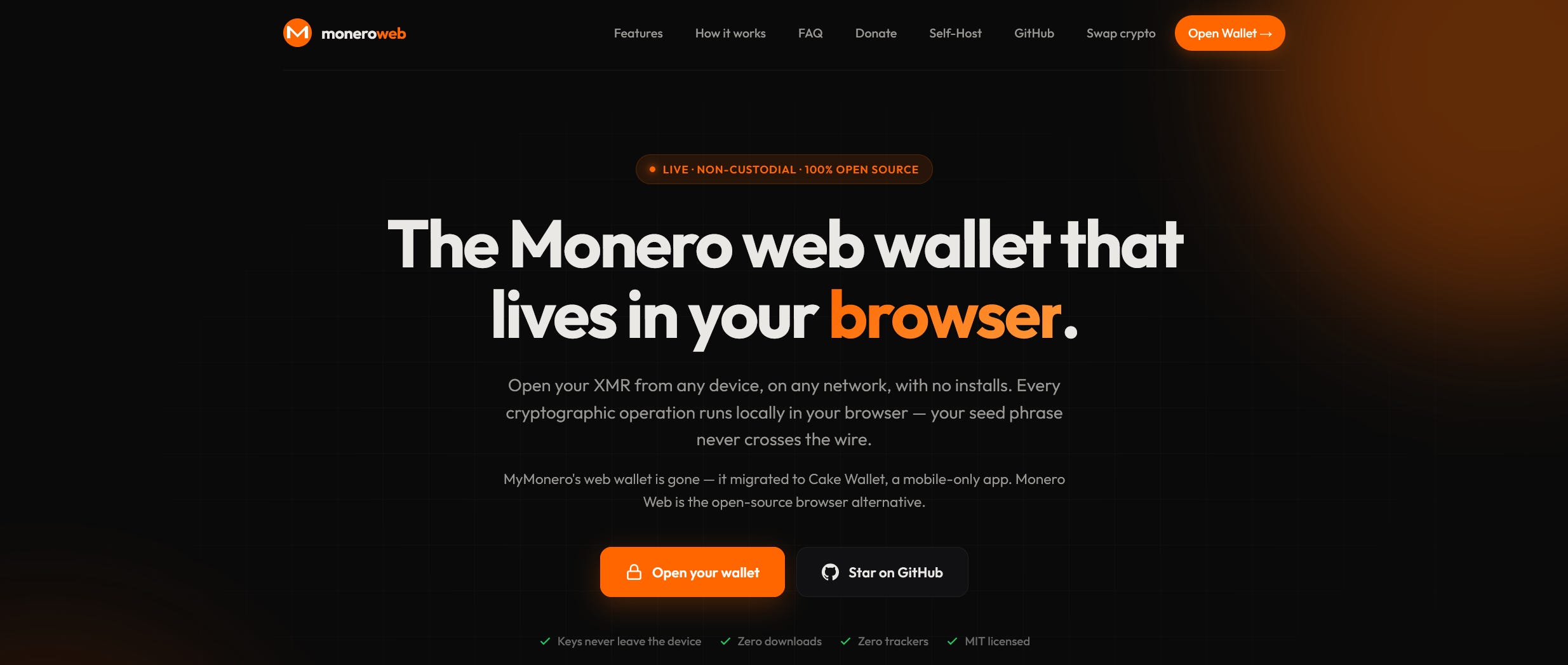
Medtabka, the developer behind monero-web.com, an open source web based Monero wallet that runs entirely in the browser, has announced that a browser extension is currently in development for the project. Alongside the update, community testing helped identify and quickly resolve several Polyseed related issues, highlighting the benefits of open source development and peer review. The project remains under active development, with the developer also reminding users to stay vigilant against phishing websites impersonating legitimate Monero services. More information here and here.
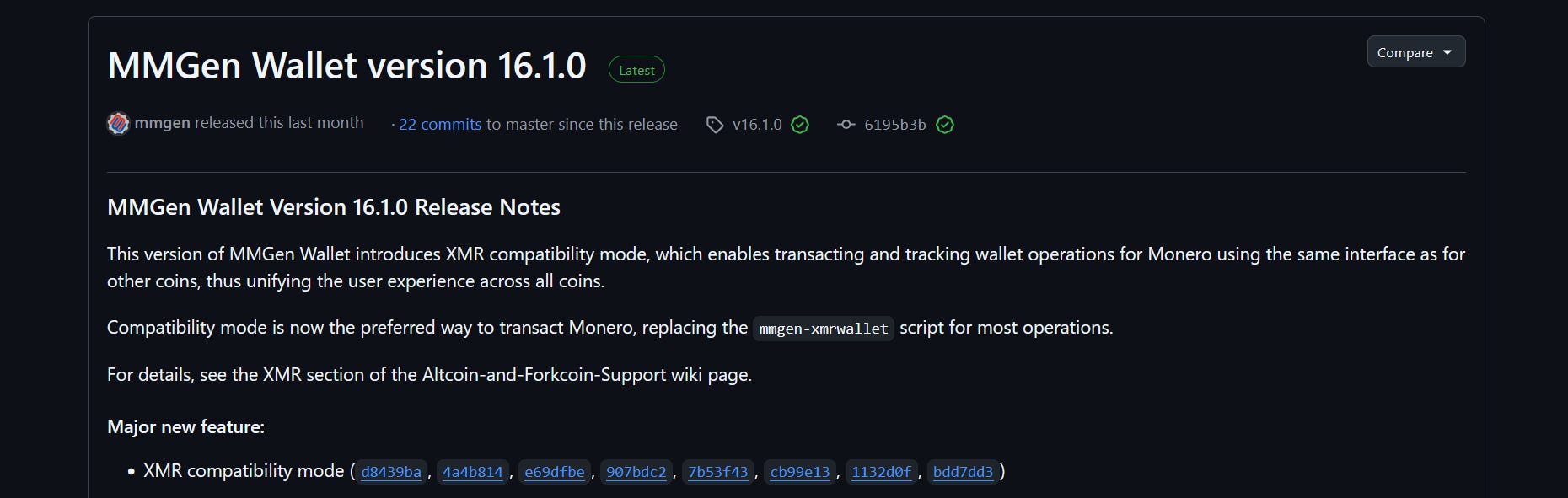
MMGen Wallet v16.1.0 has been released, introducing a new Monero compatibility mode to the terminal based wallet and cold storage solution. MMGen is an open source command line wallet designed for both online and offline storage. The latest release continues to expand its Monero support, with full details available in the project's release notes.
Recent community discussion around Monero’s upcoming FCMP++ and Carrot upgrades has resurfaced on Reddit, with some users claiming outgoing view keys (OVKs) could eventually split Monero into “clean” and “dirty” coins or weaken fungibility. The concerns were quickly challenged by developers and longtime contributors, who pointed out that current Monero view keys already reveal much of the same information today, while Carrot primarily improves hardware wallet usability, wallet security, future scalability, and quantum resistance. Many in the community argued the fears are based on misunderstandings of how OVKs actually work, with FCMP++ and Carrot still widely viewed as major long term upgrades for Monero’s privacy and resilience. Dive into the drama here and here, or watch a recent Monerotopia presentation on Carrot from jeffro256.
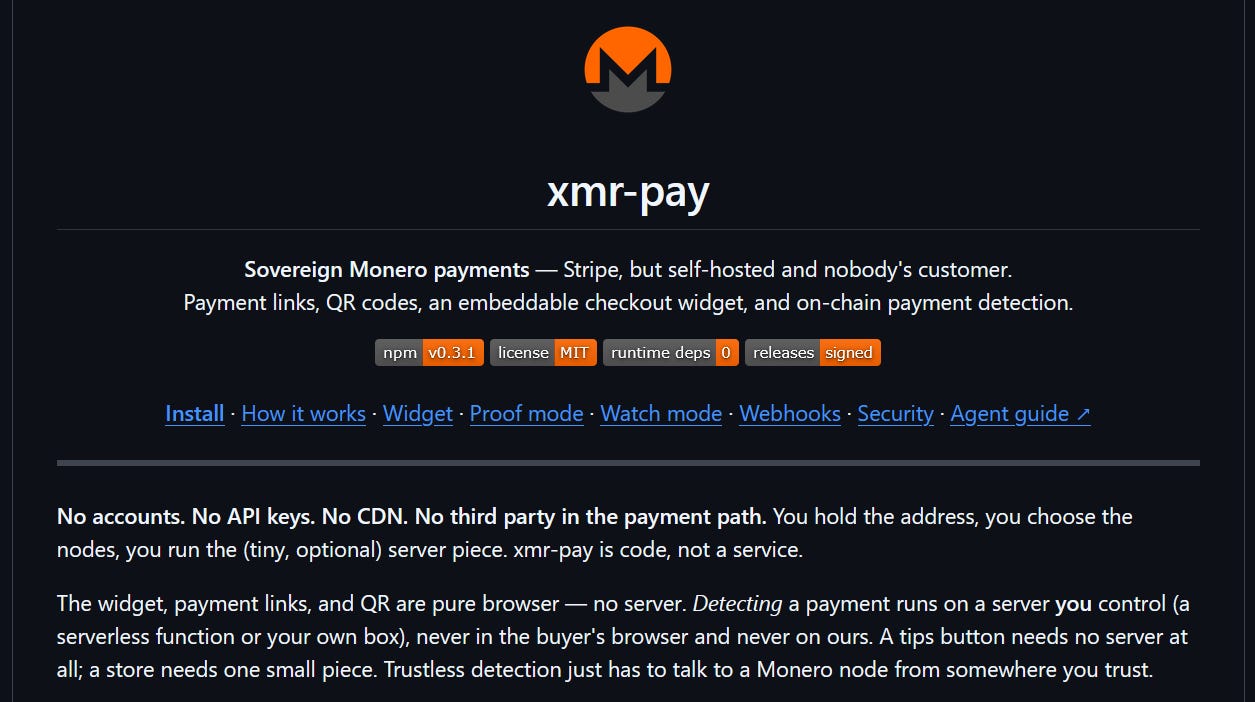
SlowBearDigger has released xmr-pay, a free and open source payment gateway designed to help merchants accept Monero without relying on custodians or third party payment processors. The project supports both transaction proof verification and optional wallet RPC monitoring, allowing businesses to verify payments while retaining full control of their funds. The developer is actively seeking feedback and security testing from the community, with an early WooCommerce plugin already in development. More information here.
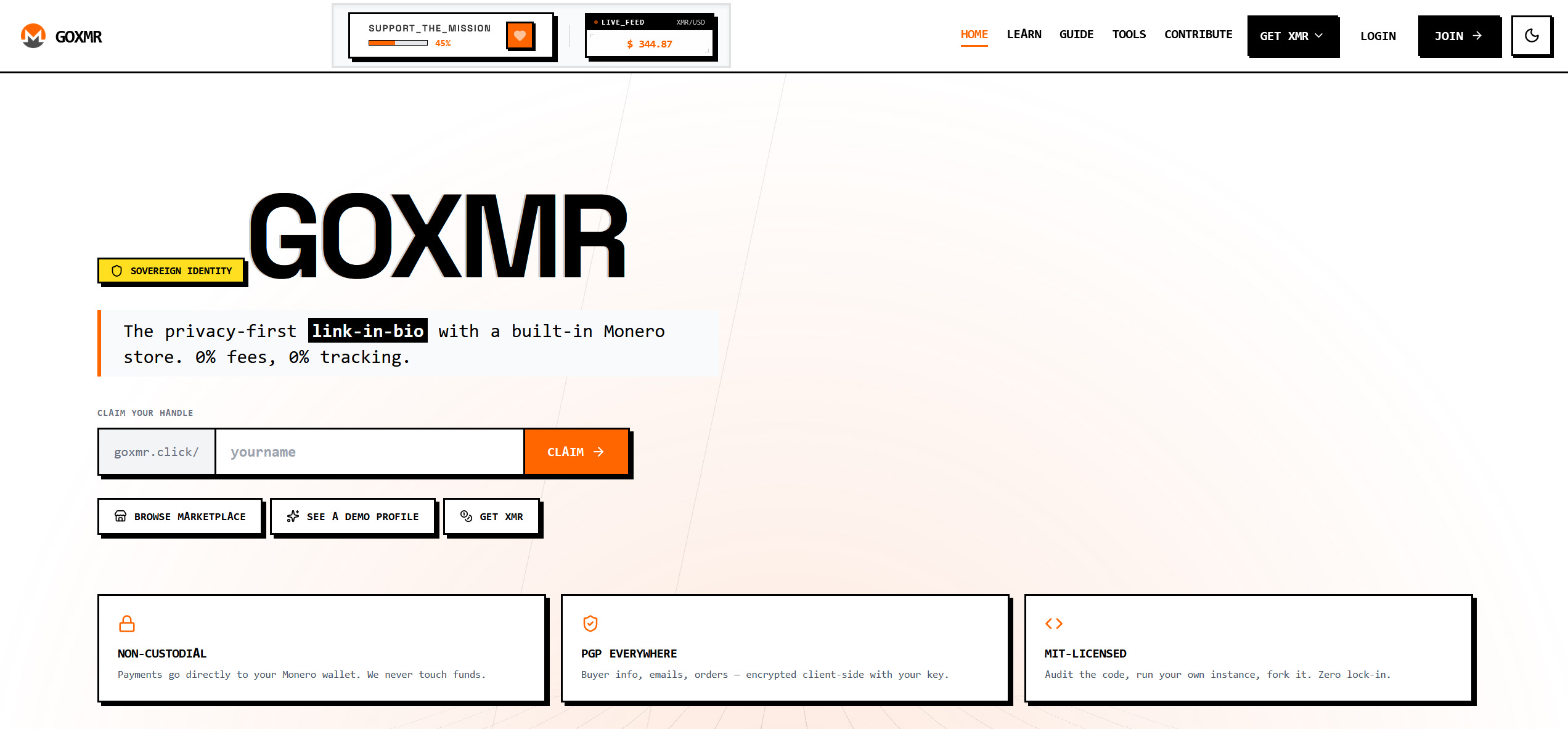
Also from SlowBearDigger comes GOXMR, an open source privacy first platform that combines a link in bio service, Monero marketplace, OpenAlias identities, and Nostr integration under a single profile. Users can create a custom GOXMR handle, publish wallet addresses, receive Monero payments directly to their own wallet, and access a growing collection of privacy focused tools including encrypted message drops, QR code generation, blockchain exploration, dead man's switch functionality, and Monero educational resources. While still in active development, GOXMR represents an ambitious attempt to build Monero native identity, commerce, and utility tools for the wider privacy ecosystem.
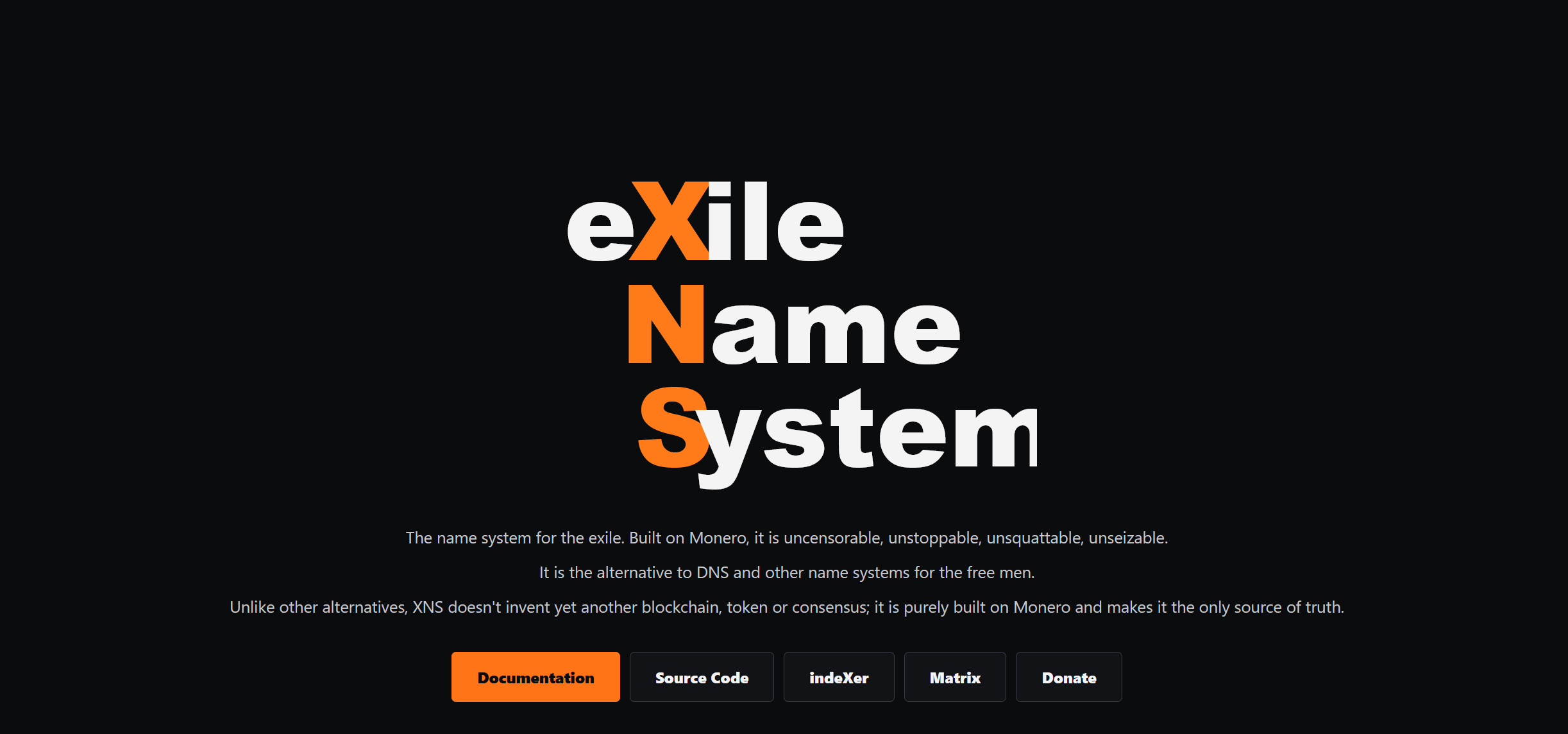
A new project called XNS (eXile Name System) has launched on Monero, aiming to provide a decentralized alternative to traditional DNS and internet naming systems. Rather than relying on a separate blockchain, token, validators, or governance structure, XNS uses Monero as its sole source of truth, allowing users to register cryptographic identities directly through Monero transactions. The project's long term vision is to create censorship resistant, seizure resistant names that can be used for websites, messaging services, onion addresses, and other digital identities without dependence on centralized registrars. More information here and here.
The Armadillo Node Project is an upcoming Raspberry Pi based Monero node focused on security hardening and privacy. Planned features include intrusion detection, firewall automation, delayed software updates, and additional operating system hardening aimed at users seeking a more security focused setup. The project remains under development with a release targeted for mid July, and the developer is actively seeking community feedback on security and transparency.
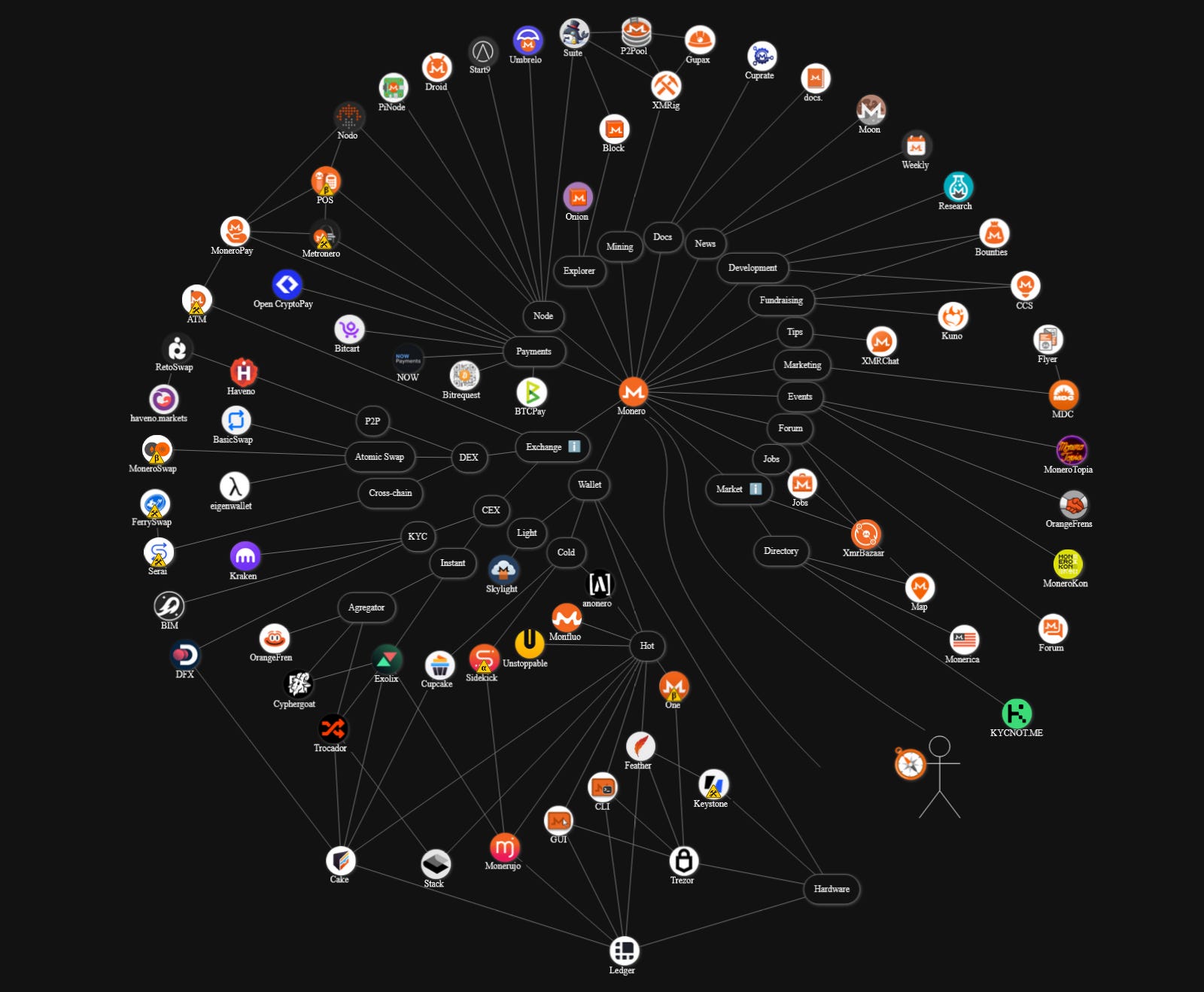
The Monero Ecosystem directory has received a fresh update. The site serves as a curated hub for Monero related projects, services, resources, and infrastructure, making it easier for users to discover and navigate the broader Monero ecosystem. Check it out here.
General News
Monero Talk host Douglas Tuman recently sat down with longtime Monero community member Cryptocomicon to discuss Monero's long term outlook in an increasingly regulated and surveilled financial world. The conversation explored topics including stablecoin adoption, financial privacy, transparent blockchains, exchange delistings, and why Monero's privacy focused design may become increasingly relevant as governments and institutions expand oversight of digital payments. The full interview is available on Monero Talk's YouTube channel here.
Anti Moonboy News #74, hosted by Monero community member Xenu, looks at recent developments across the Monero and privacy ecosystem, including the Zcash inflation bug, the P2Pool security vulnerability, MoneroKon 2026, and updates from the Monero Research Lab, alongside broader commentary and discussion. Check it out here.
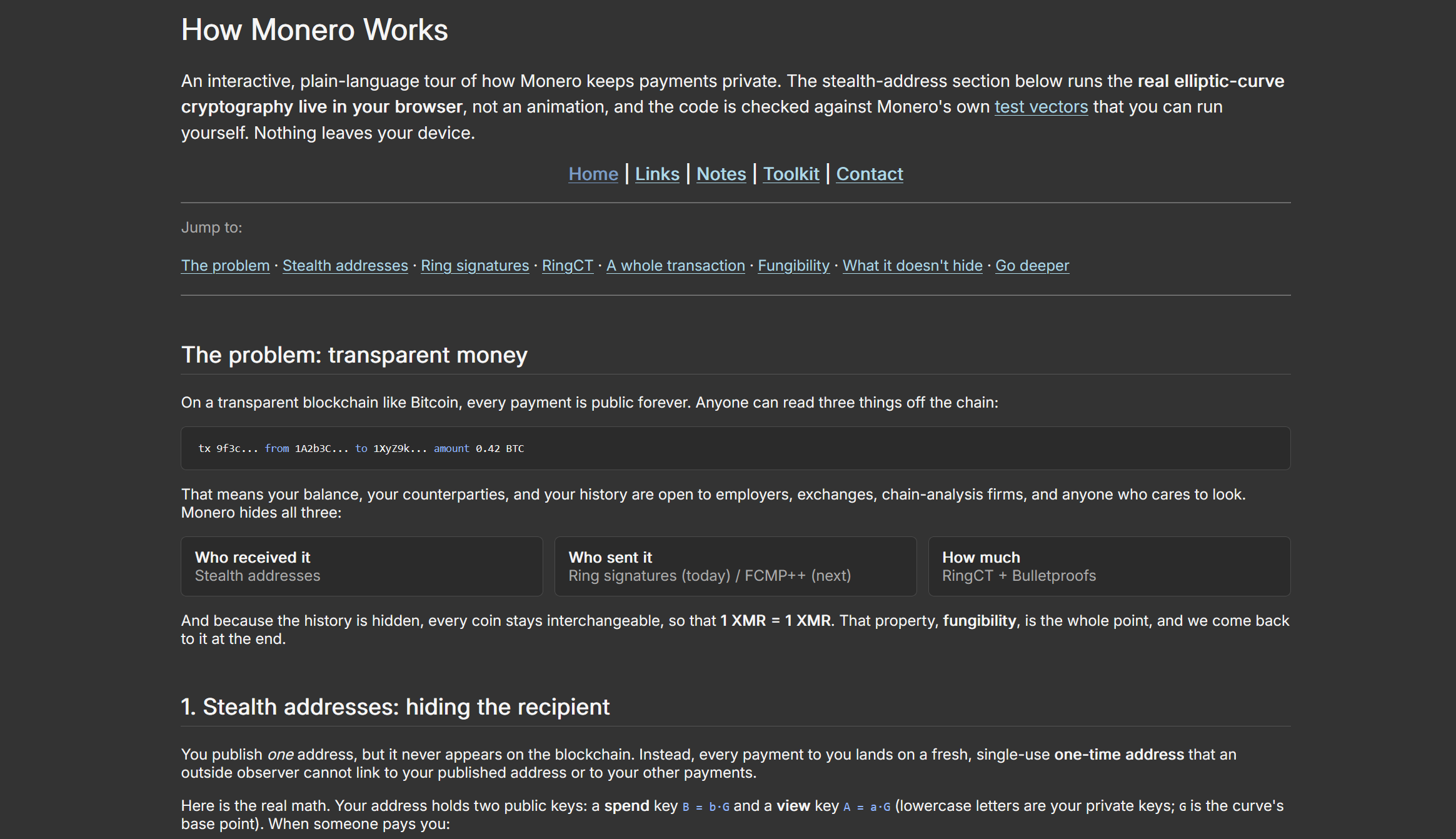
CypherToshi has launched an interactive How Monero Works guide that demonstrates Monero's core privacy technologies using real cryptographic operations running locally in the user's browser. The educational tool allows users to explore concepts such as stealth addresses, key images, ring signatures, and Pedersen commitments through hands on examples, with all code open source and available on GitHub. The site also offers a collection of Monero focused tools and resources. There’s also a Tor version of the site.
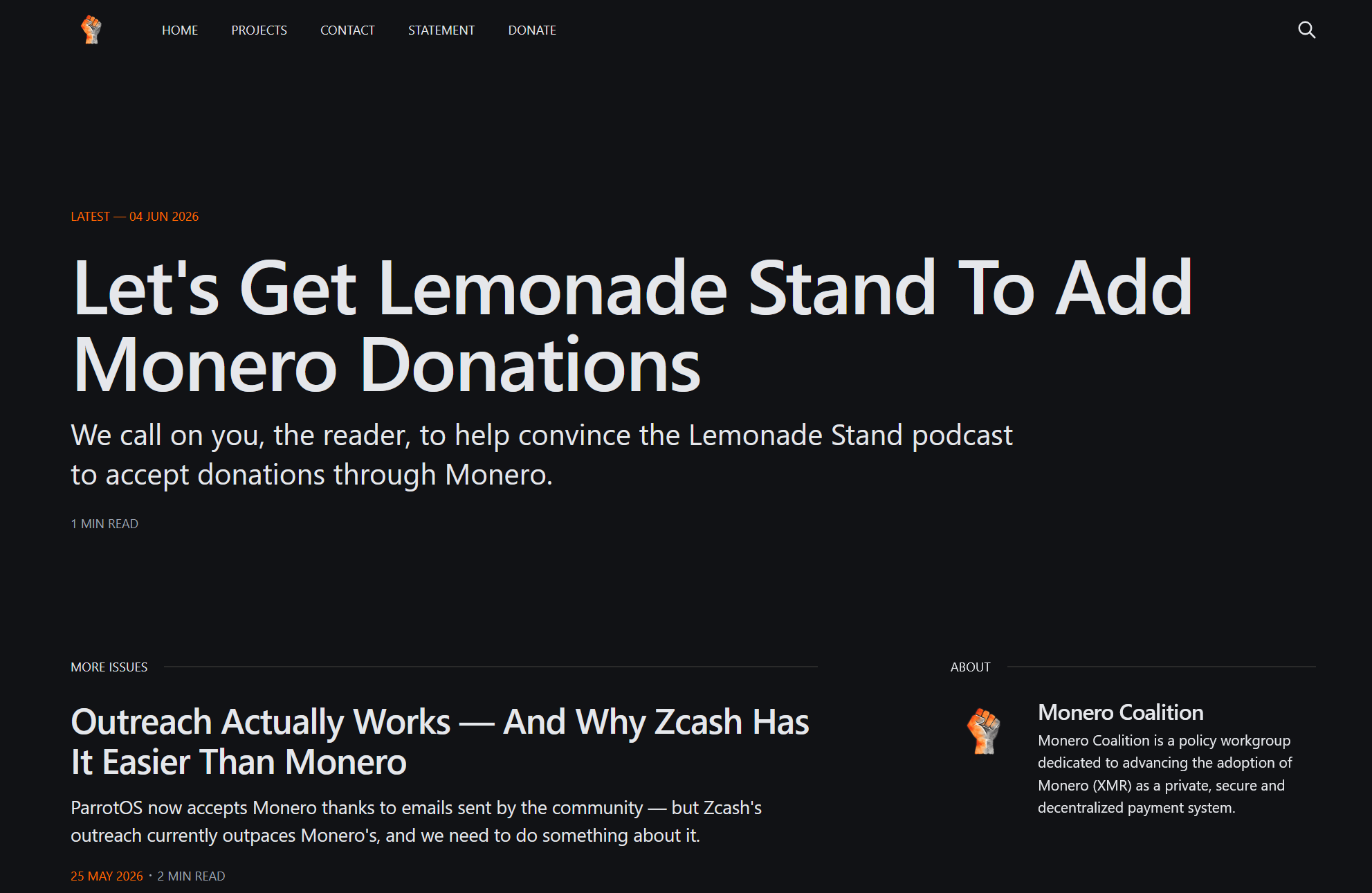
A new grassroots Monero initiative recently appeared on the scene with the launch of the Monero Coalition. Focused squarely on driving real world adoption, the project aims to encourage businesses and organizations to accept Monero through community outreach, education, and economic support. The website features merchant campaigns, advocacy tools, educational resources, and a directory of Monero accepting businesses, all centered around a simple goal of expanding Monero's use as digital cash.
The second episode of Plain Text, a podcast from Magic Grants hosted by Justin Ehrenhofer and Monero researcher Luke Parker, explores some of the cryptography behind Monero's upcoming FCMP++ upgrade. The discussion looks at the years of research and independent review that helped validate the technology, which is expected to improve Monero's privacy while remaining efficient enough for real world use. Check it out here.
CypherGoat published a new issue of This Week in Monero, covering the latest news across the Monero ecosystem. You can check out the latest issue here.
Events and Meetings
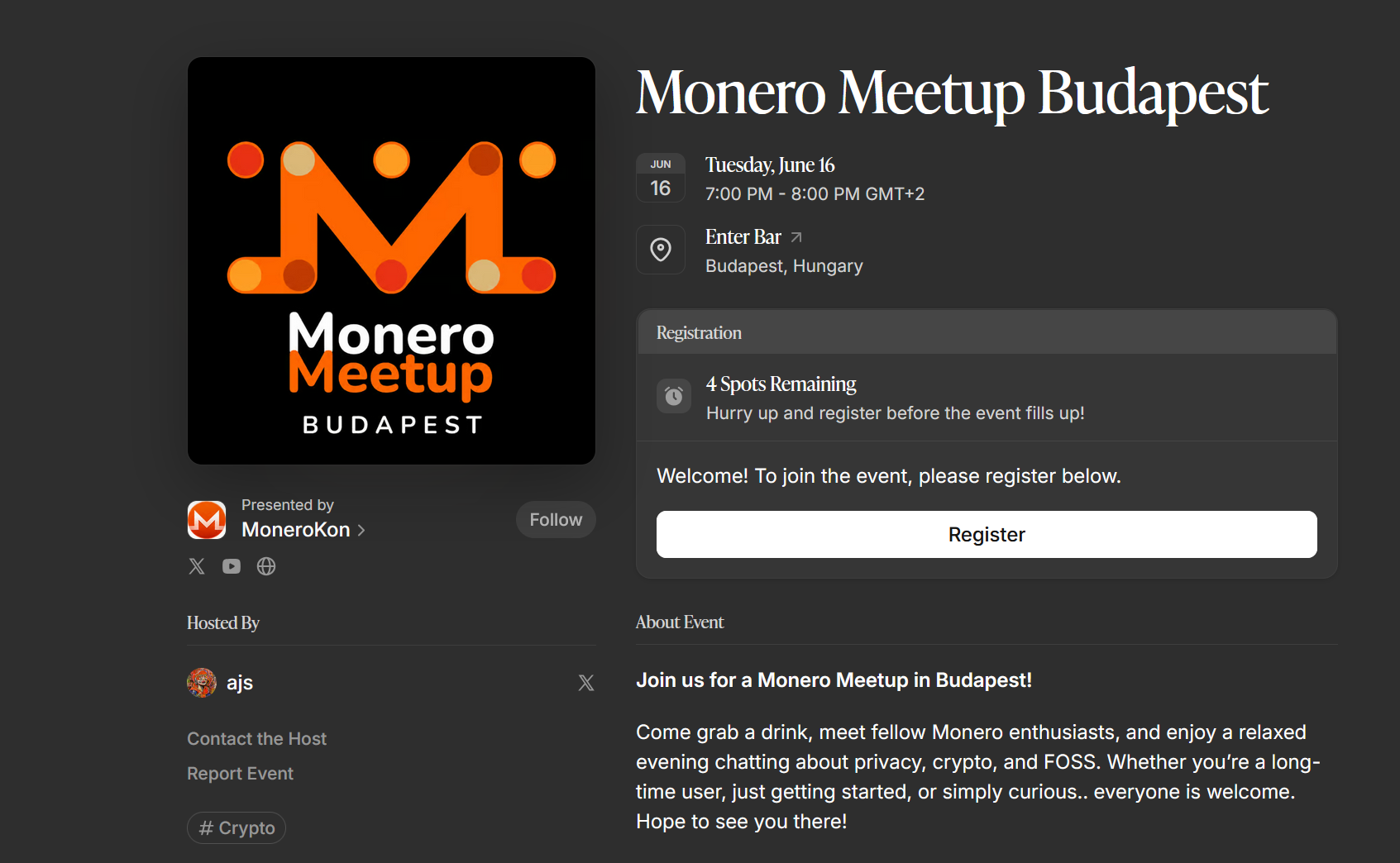
On June 16 (tonight, at the time fo writing), the MoneroKon team will host a Monero meetup in Budapest, bringing together Monero enthusiasts, privacy advocates, and open source supporters for an informal evening of discussion and networking. More information can be found here.
MoneroKon 2026 recently wrapped up, bringing together Monero developers, researchers, entrepreneurs, and community members for several days of presentations, discussion, and networking. The event featured talks on topics ranging from protocol development and privacy research to adoption, education, and the future of decentralized digital cash. While the conference was live streamed, recordings of the presentations have not yet been released publicly, but are expected to become available in the coming weeks on the Monero Community Workgroup YouTube channel.


Exchanges and Merchants
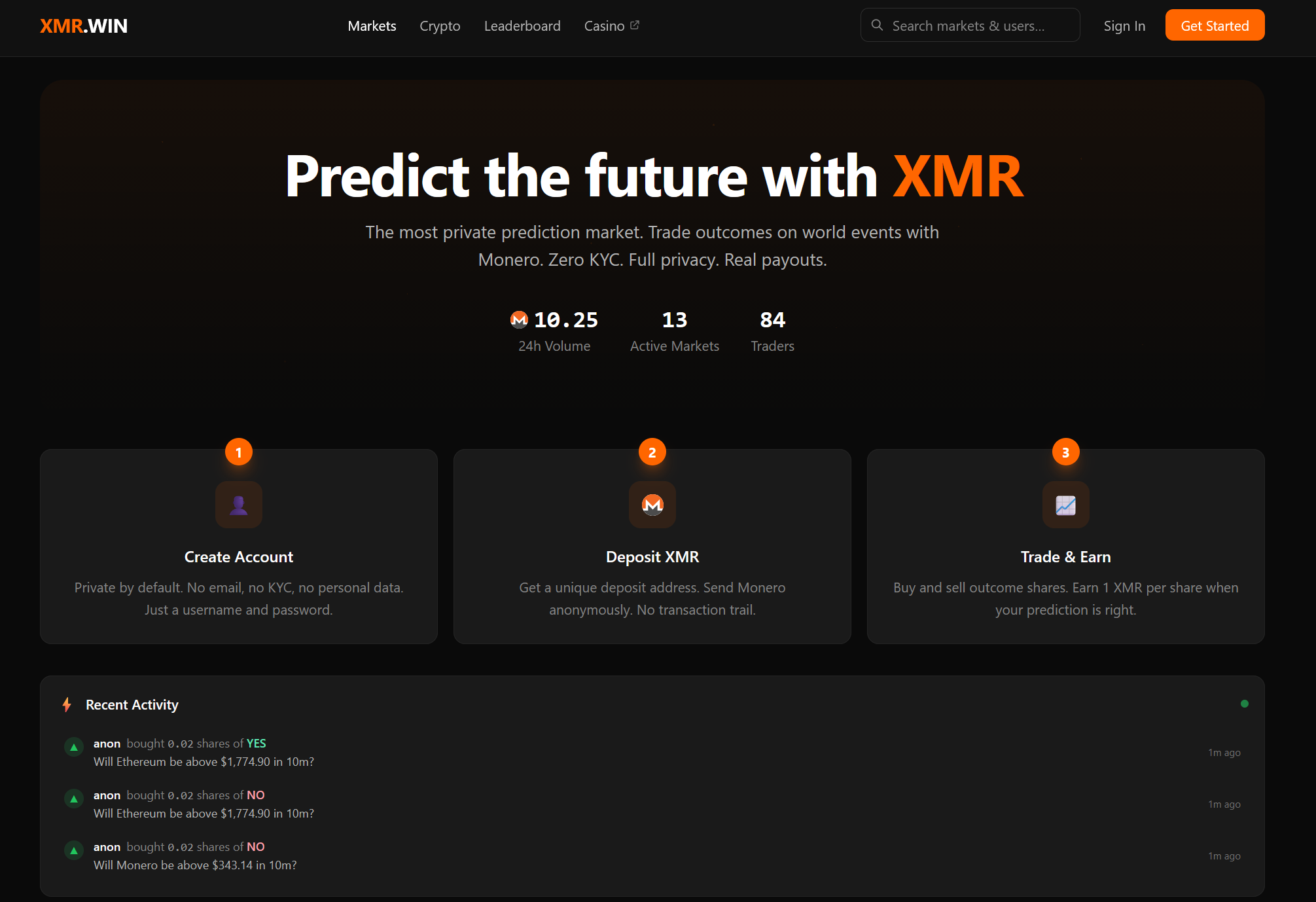
XMR.WIN is a newly launched Monero based prediction market, similar to platforms such as Polymarket or Kalshi, that allows users to trade on the outcome of real world events using XMR. Markets range from cryptocurrency price movements to politics, economics, and other yes or no style predictions, with users trading directly against one another rather than a traditional bookmaker. The platform requires no email, phone number, or KYC, supports Monero only deposits and withdrawals, and includes API support for automated trading agents. While still in its early stages and actively adding new markets and features, XMR.WIN aims to bring private, Monero powered prediction markets to the wider ecosystem.
Discussion continues around Wagyu’s XMR1, a synthetic Monero asset trading on Hyperliquid. Supporters argue that products like XMR1 help bring Monero liquidity and price exposure to new markets, potentially expanding adoption beyond the traditional XMR ecosystem. Critics, however, point to the trust assumptions involved with synthetic assets, including reserve transparency and concerns over concentrated trading activity. While claims of deliberate market manipulation remain unproven, the debate highlights the tradeoff between broader market access and the self sovereign principles that many Monero users value.
RetoSwap v1.6.0-reto has been released. RetoSwap is reported to have resumed operations following last month's exploit of the underlying Haveno trade protocol, which resulted in the theft of approximately 7,000 XMR from a small number of large trades. According to the RetoSwap team, the attack targeted a flaw in Haveno's multisig trade process rather than RetoSwap's own infrastructure. Trading was temporarily halted while developers patched the vulnerability and released updated software, with efforts to reimburse affected users continuing.
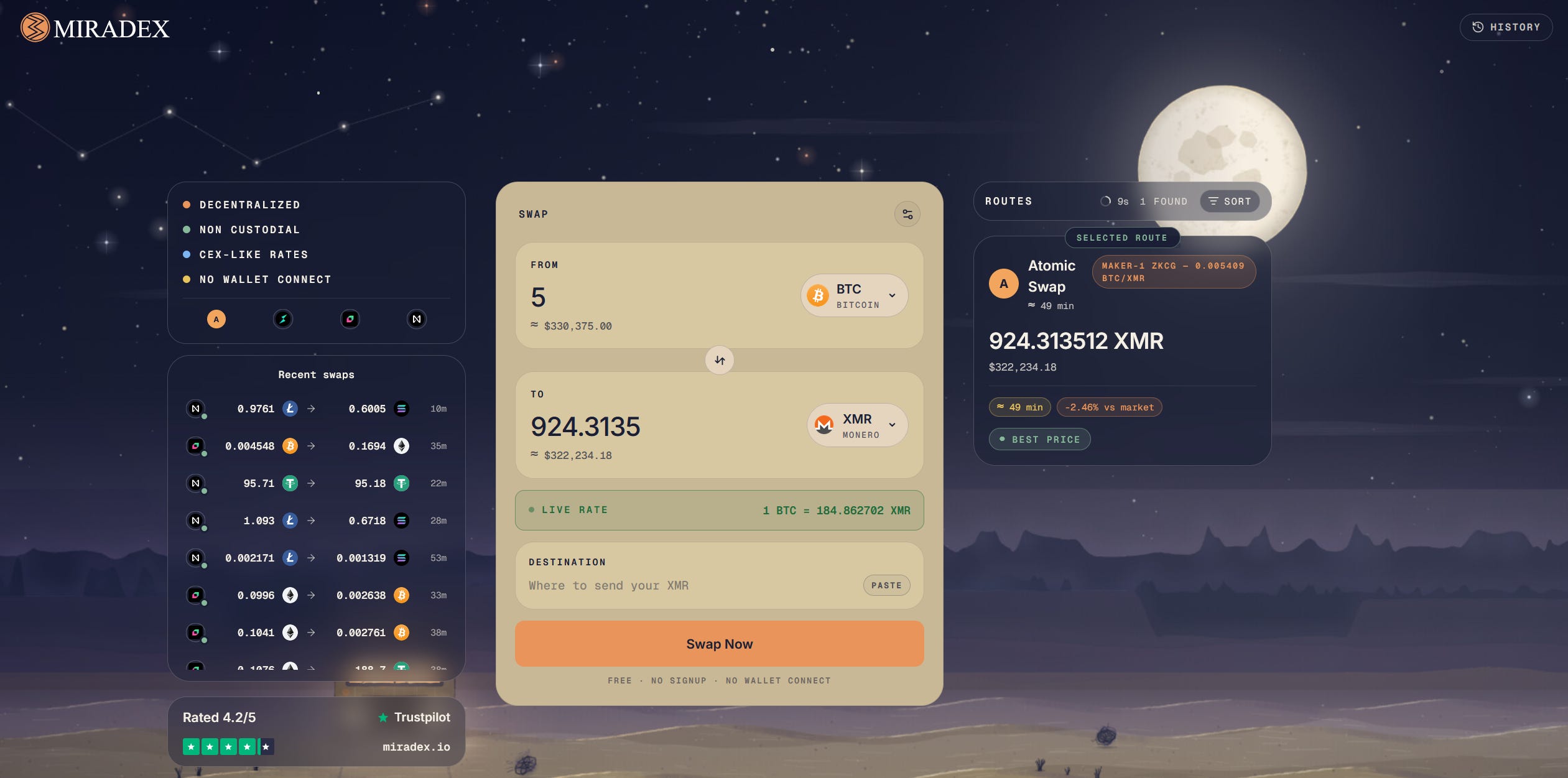
MiraDEX announced the addition of a new liquidity provider to their BTC-XMR atomic swap ecosystem earlier this month, claiming more than 20,000 XMR in available liquidity. At the time of writing, however, the maximum BTC to XMR swap size currently available through the platform appears significantly lower than the figure originally advertised. As always, users should understand the trust assumptions of any service they choose to use and select the option that best fits their needs.
Cypher eSIM, a no-KYC eSIM provider, announced support for Monero payments following repeated requests from privacy focused users. The service now accepts XMR through both its website and Telegram bot. According to the team, the integration uses a self hosted Monero daemon and was designed to avoid leaking user metadata to third parties, aligning with the service’s no account, no email and no KYC approach.
Privacy focused AI platform NanoGPT has reported that Monero was its most used payment method for the twelfth consecutive month, accounting for 33.81% of payment volume in May 2026. The milestone highlights Monero's continued popularity among users seeking privacy preserving online services, with NanoGPT allowing customers to access a wide range of AI tools without requiring an account or personal information. According to the company, Monero has consistently outperformed every other supported cryptocurrency since mid 2025.


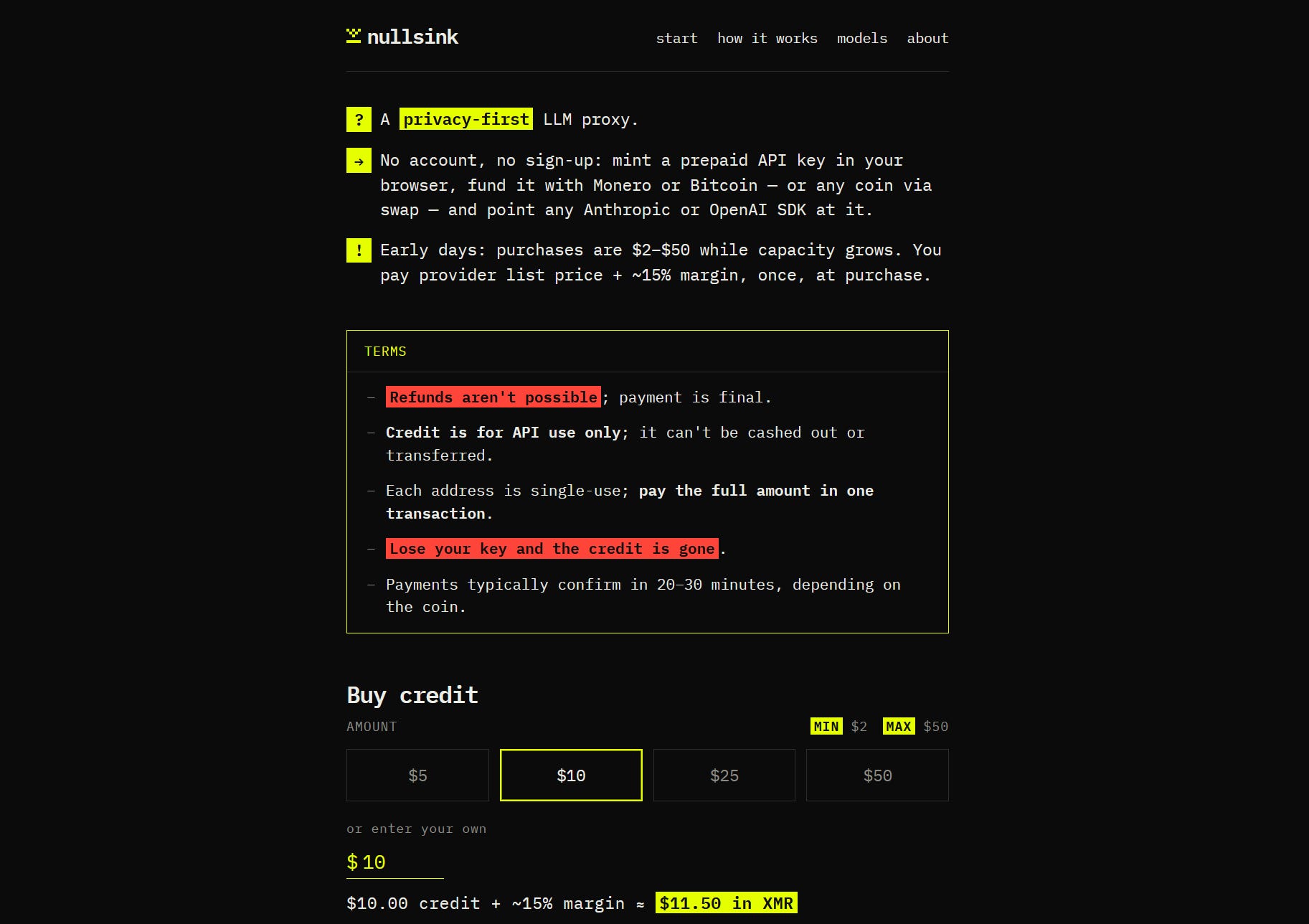
Monero community members have launched nullsink, a privacy first LLM gateway that allows users to access OpenAI and Anthropic models without creating an account or linking a payment card. Funded directly with XMR, the service issues prepaid API keys that can be used with existing AI applications, SDKs, and developer tools, helping separate a user's identity from their AI usage. More information here.
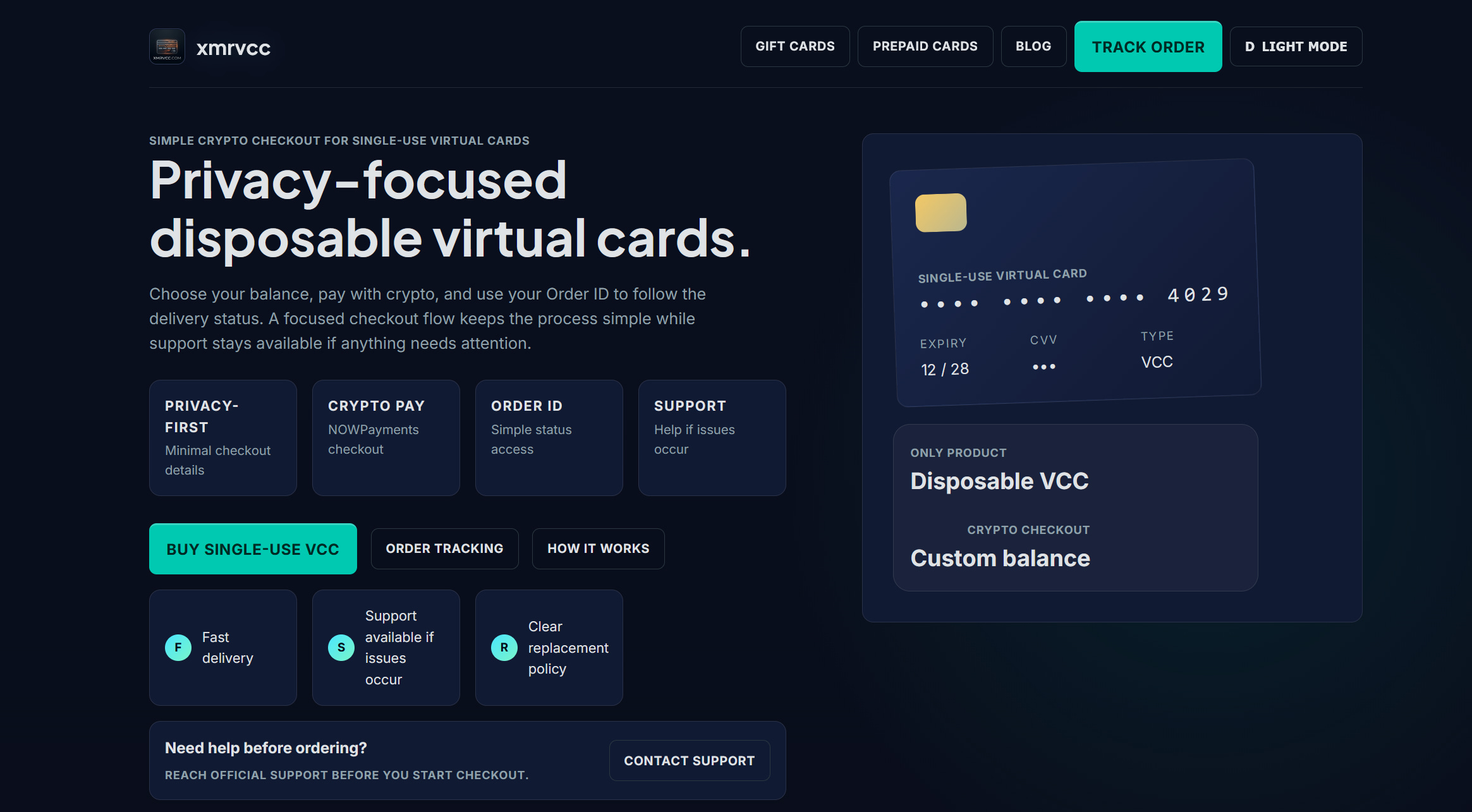
A new service called XMRVCC has launched, offering virtual payment cards, prepaid cards, and gift cards that can be purchased using Monero and other cryptocurrencies without requiring an account. The project aims to provide a simple way for users to spend cryptocurrency online through single use virtual cards, though prospective users should exercise caution given the service's recent launch and limited track record. The team says improvements to the platform are already underway following early community feedback. More information here and here.
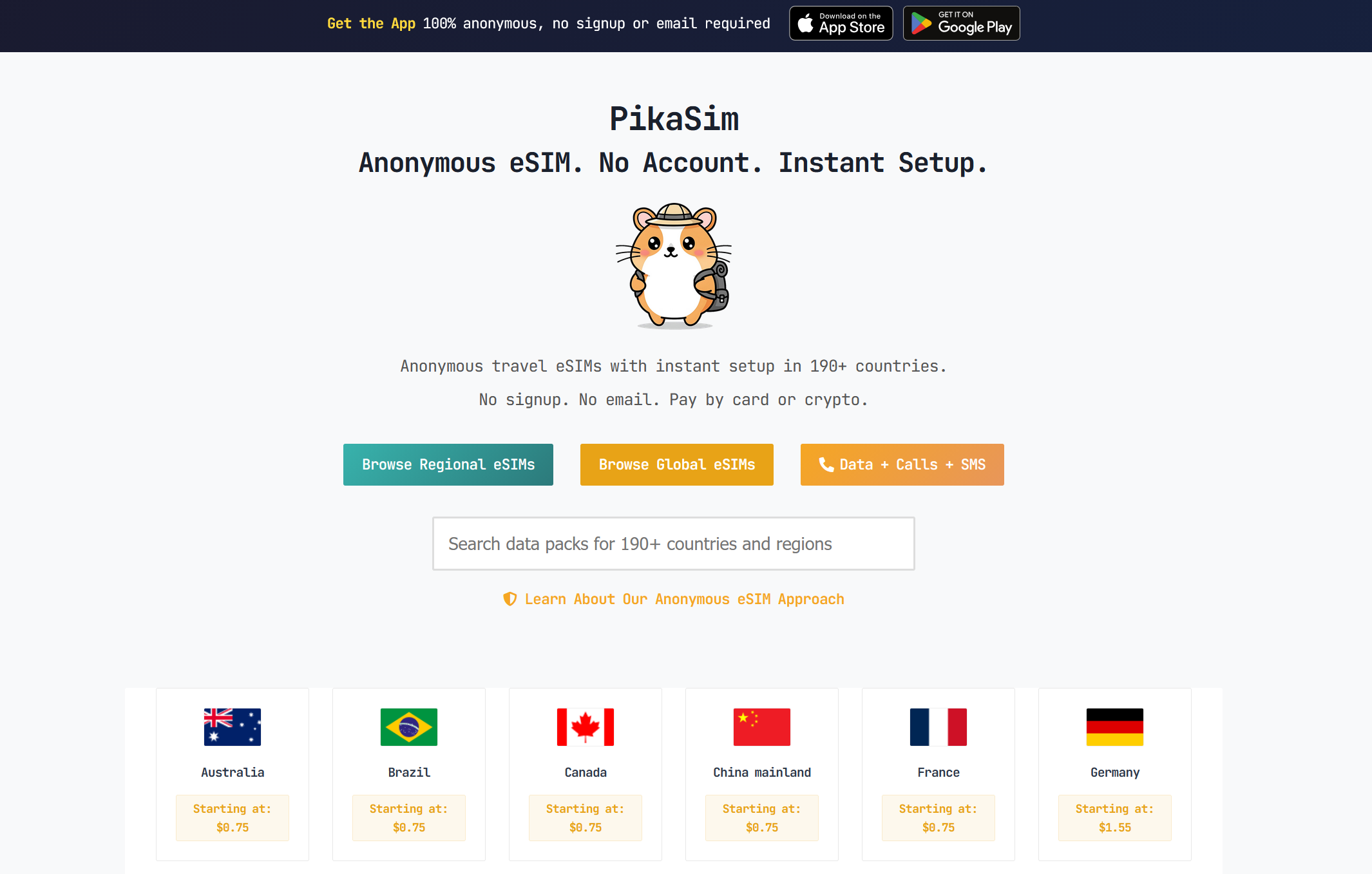
A new anonymous eSIM service called PikaSIM has launched with native Monero support, allowing users to buy mobile data plans without KYC, email signups, or account creation. The service says it avoids third party crypto swaps that can leak metadata, supports anonymous top ups via ICCID, and even displays the exit IP location before purchase so users know where their traffic will appear to originate from. The project was recently shared on Reddit, where the developer asked the Monero community for feedback.
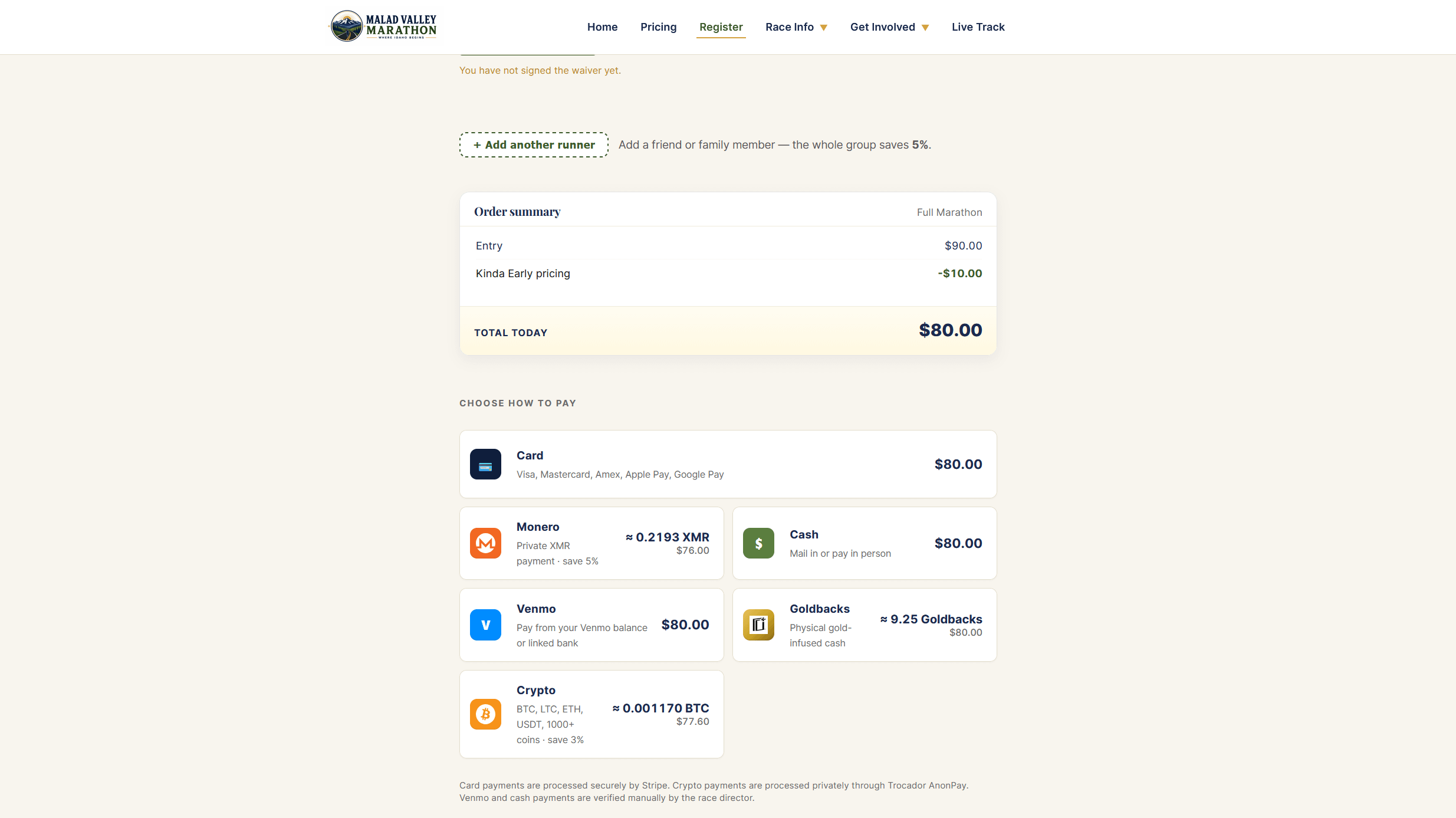
Monero users looking to put their coins to use can now register for the Malad Valley Marathon using XMR. Taking place this September in Malad City, Idaho, the event offers a full marathon, half marathon, 10K, 5K, and fun run, with Monero accepted for registration fees. It's another small but practical example of real world Monero adoption, allowing participants to sign up for a sporting event and pay directly with digital cash.
Community Crowdfunding
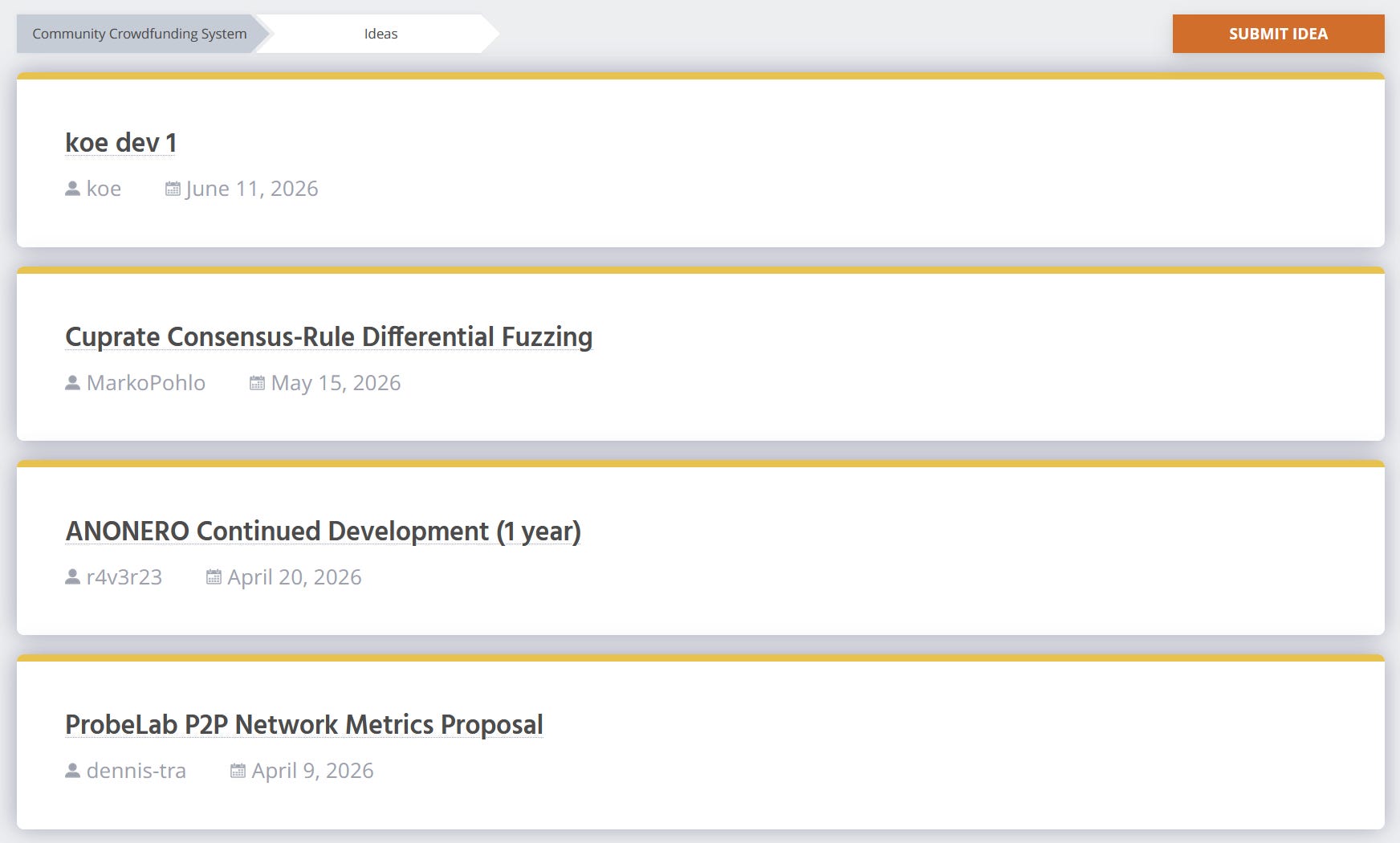
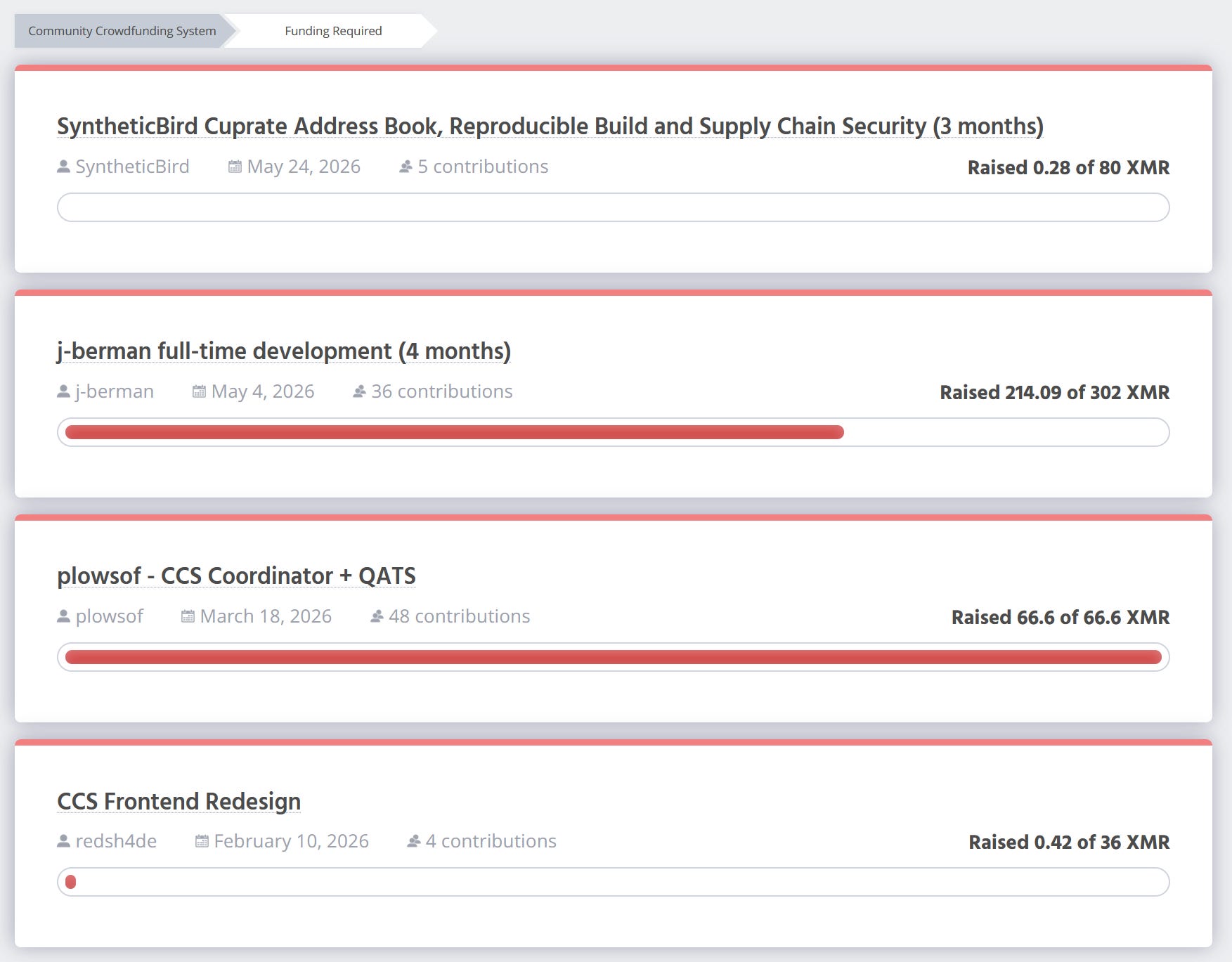
Several crowdfunding proposals are awaiting community feedback before they can start accepting funds through the Community Crowdfunding System (CCS). For now, they are just proposals, but if they receive some positive feedback from the community they will be moved to a “Funding Required” stage so that they can accept Monero donations through the CCS.
Trading and Speculation
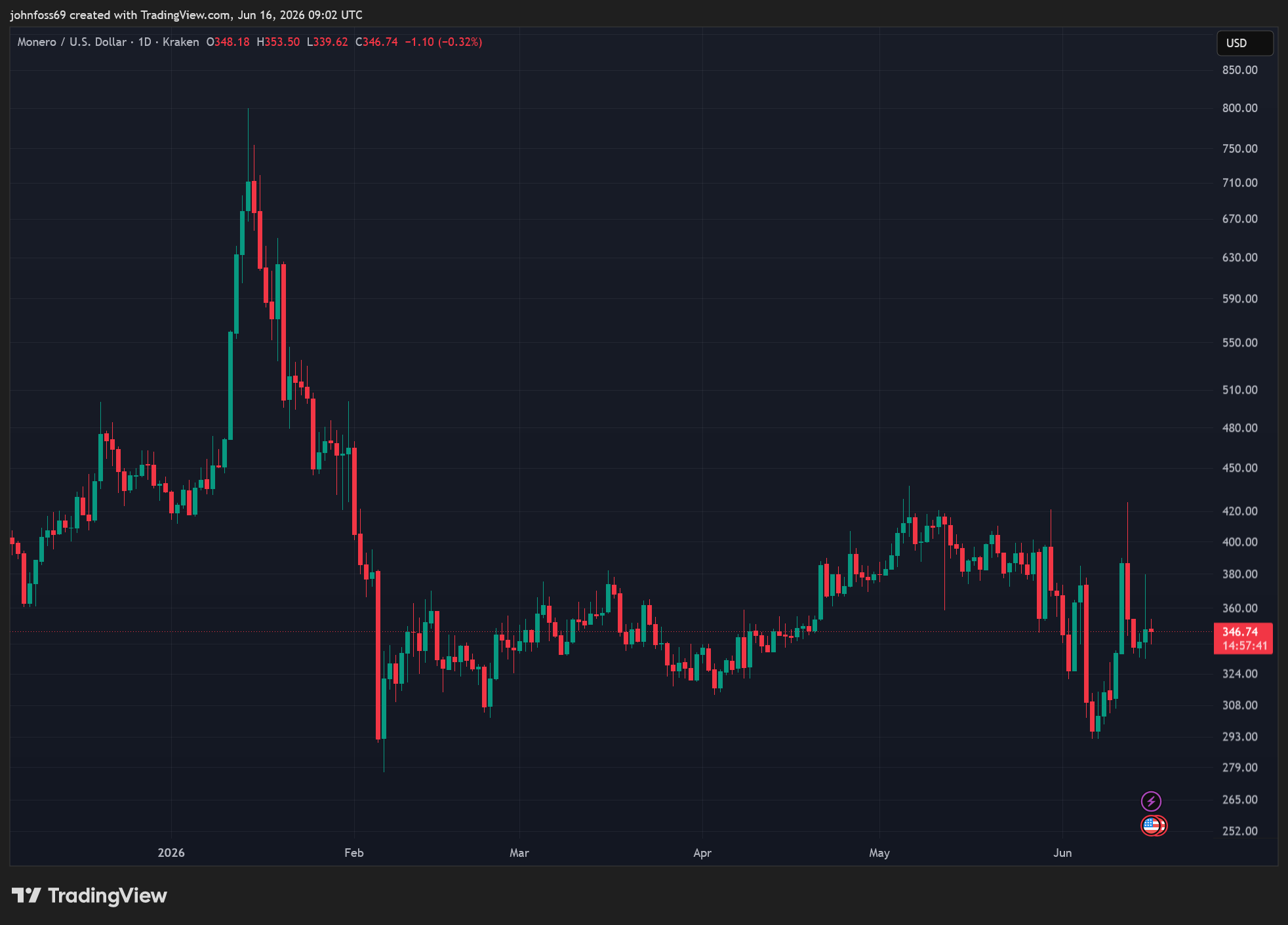
Monero briefly surged to nearly $438 this week after large buy orders reportedly linked to the movement of more than $120 million in USDT hit the market. According to blockchain investigator ZachXBT, a portion of the USDT was converted into XMR, triggering a rapid price increase. While the origin and purpose of the transactions remain unclear, the move demonstrated Monero's ability to attract significant capital flows and generated renewed interest in the privacy focused cryptocurrency.


Network Metrics
Total Monero in Circulation : 18,765,629 XMR
Monero Total Marketcap: $6,498,200,650
Coinmarketcap Ranking: #15
XMR ‘street price’ from RetoSwap: $367 (+5%)
XMR/USD Price: $346
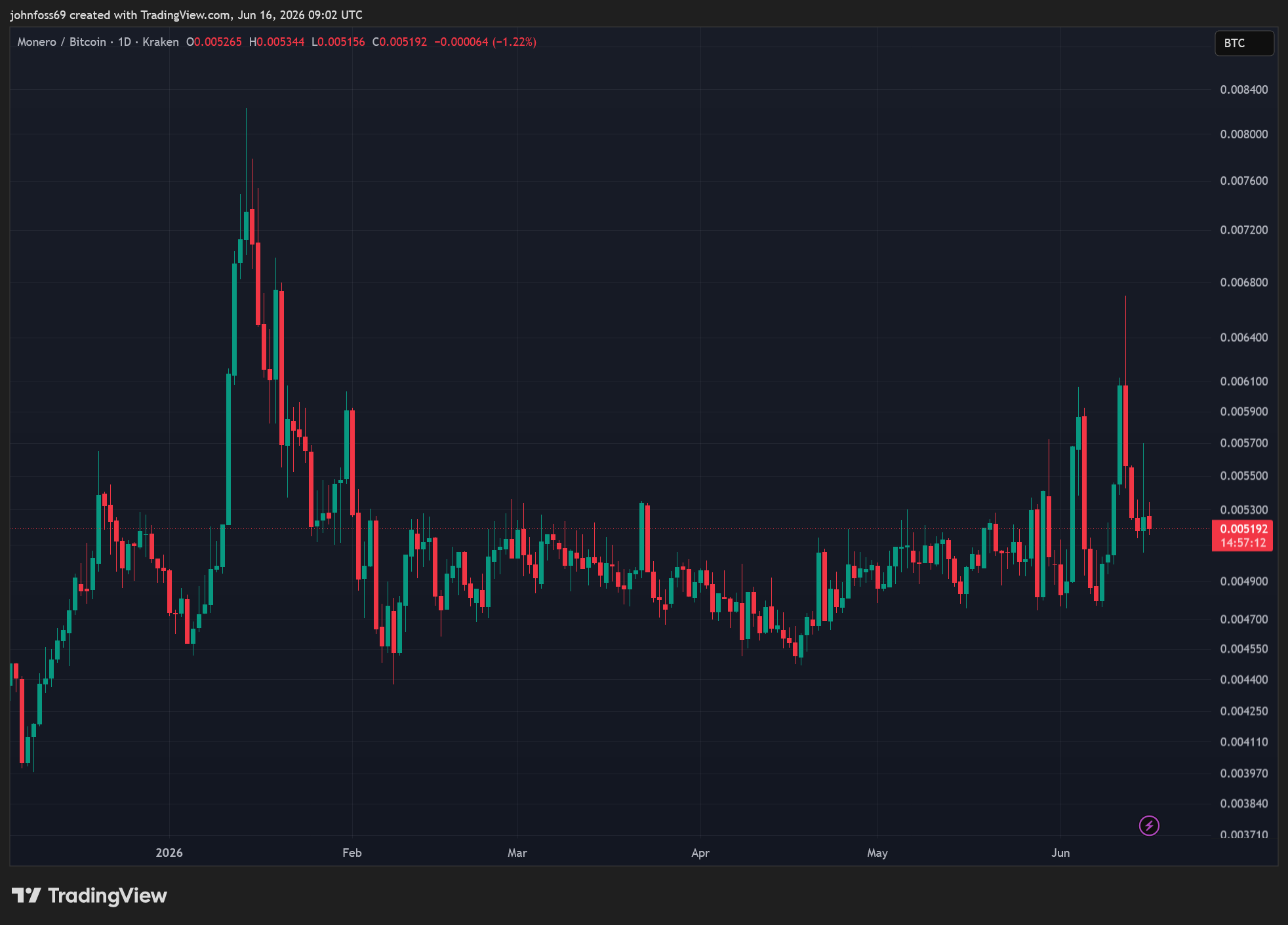
XMR/BTC Price: 0.005192 BTC
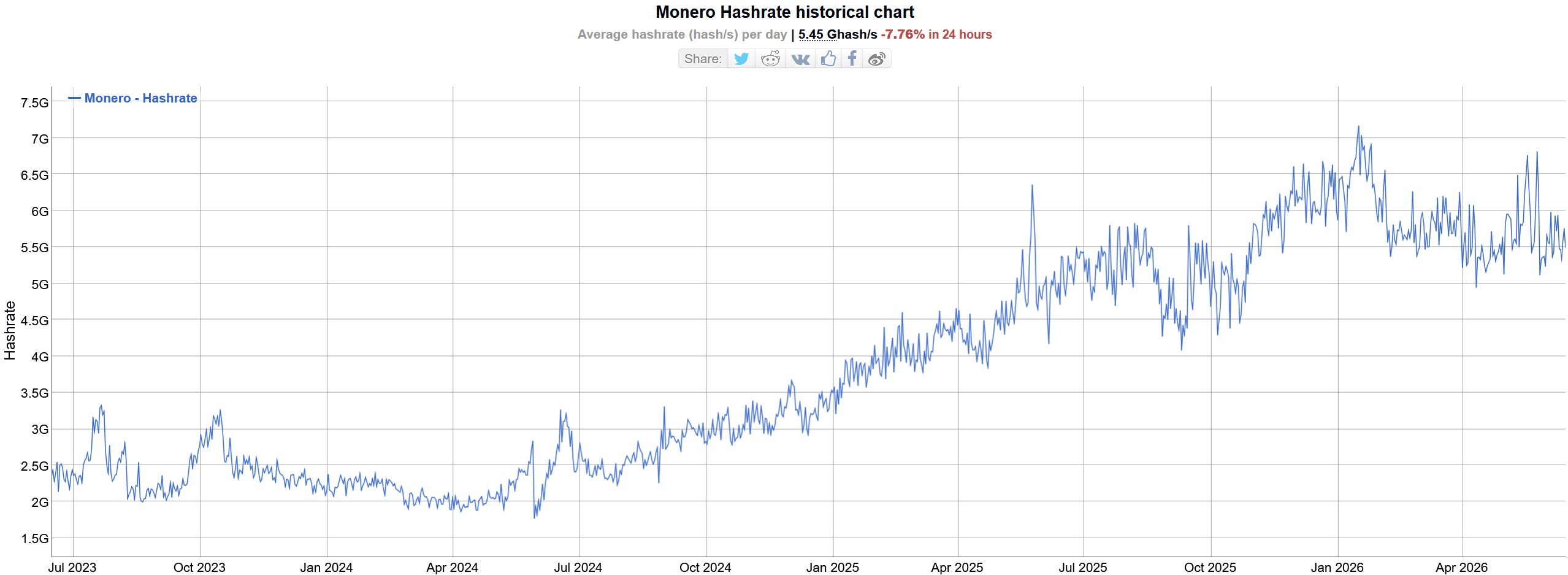
Monero Network Hashrate: 5.45 Ghash/s
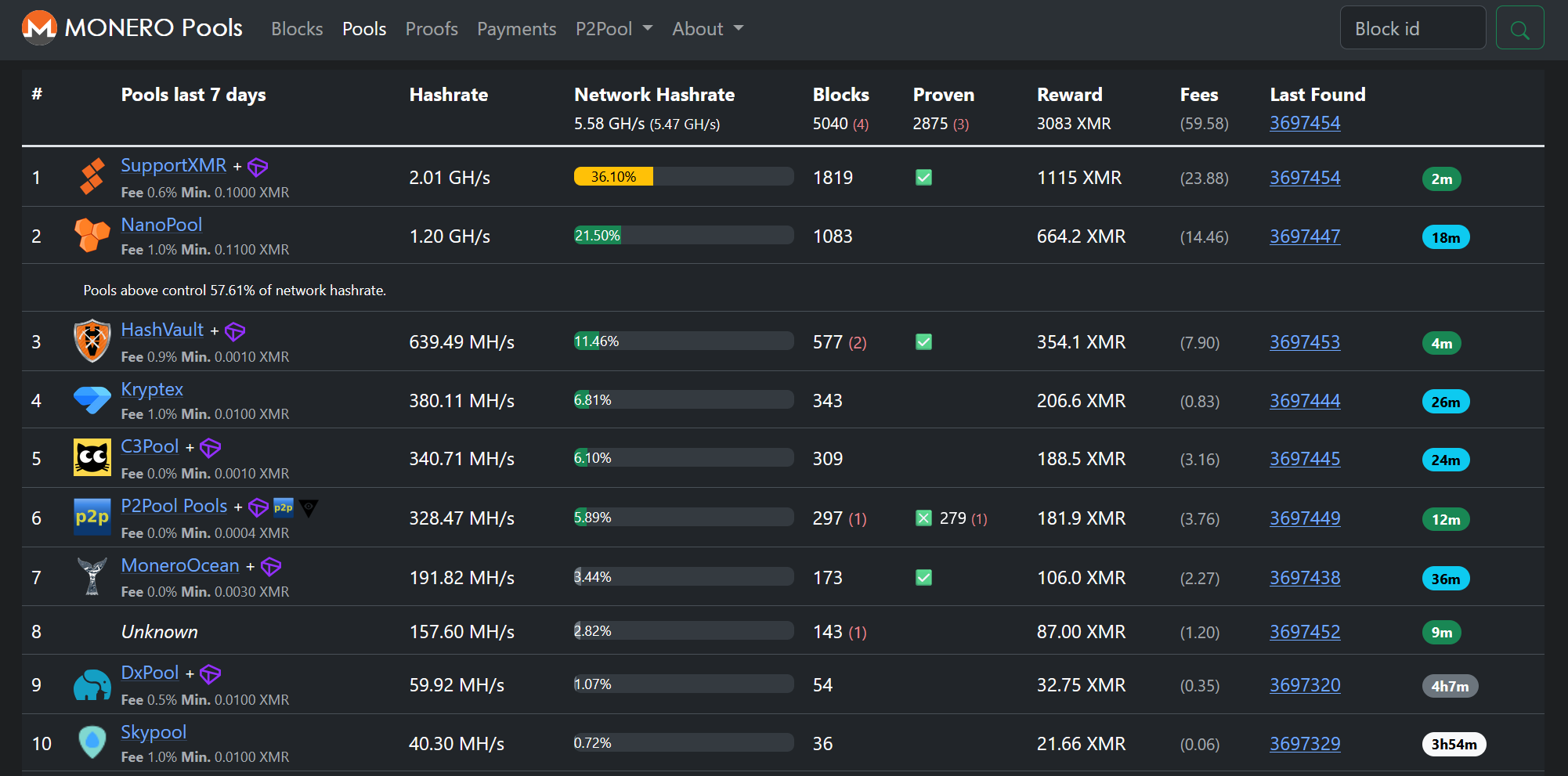
Monero Mining Pools Hashrate Distribution:
Entertainment




If you enjoy the newsletter and want more of this content, shout me a beer by donating some spare Monero you didn’t lose during your boating accident. I’m completely independent and rely solely on donations, with no sponsorship. A massive thank you to everyone who supports my work!
8C2xtdsCmJGhUgvMWYLayRR1wFgrjtQ2wNvzgFfrAfbjW7gatQDiNjUfFX7K5cm9UVefrVPFmxiM4jhhybsLQGpG1aeRzfD

Have we missed something?
If we’ve missed something important, let us know! As this is our first issue after a few months, we might have overlooked some news. Feel free to DM if there’s anything you’d like included in a future issue.
Support Monero
Want to contribute to the Monero Project? Developers, marketers, event coordinators, translators, Instagram personalities, meme creators, and public speakers — whatever your skills may be, it is extremely likely there is something you can do to assist. Reach out to the Monero community on Reddit, IRC/Matrix, GitHub, or X. The official Monero website is GetMonero.org.
Past Issues
Issue 89 / Issue 88 / Issue 87 / Issue 86 / Issue 85 / Issue 84 / Issue 83 / Issue 82 / Issue 81 / Issue 80 / Issue 79 / Issue 78 / Issue 77 / Issue 76 / Issue 75 / Issue 74 / Issue 73 / Issue 72 / Issue 71 / Issue 70 / Issue 69 / Issue 68 Issue 67 Issue 66 / Issue 65 / Issue 64 / Issue 63 / Issue 62 / Issue 61 / Issue 60 / Issue 59 / Issue 58 / Issue 57 / Issue 56 / Issue 55 / Issue 54 / Issue 53 / Issue 52 / Issue 51 / Issue 50 / Issue 49 / Issue 48 / Issue 47 / Issue 46 / Issue 45 / Issue 44 / Issue 43 / Issue 42 / Issue 41 / Issue 40 / Issue 39 / Issue 38 / Issue 37 / Issue 36 / Issue 35 / Issue 34 / Issue 33 / Issue 32 / Issue 31 / Issue 30 / Issue 29 / Issue 28 / Issue 27 / Issue 26 / Issue 25 / Issue 24 / Issue 23 / Issue 22 / Issue 21 / Issue 20 / Issue 19 / Issue 18 / Issue 17 / Issue 16 / Issue 15 / Issue 14 / Issue 13 / Issue 12 / Issue 11 / Issue 10 / Issue 9 / Issue 8 / Issue 7 / Issue 6 / Issue 5 / Issue 4 / Issue 3 / Issue 2 / Issue 1
Socials
If you have suggestions, corrections, or feedback, please contact me on X @johnfoss69 or Reddit u/johnfoss68.
DISCLAIMER: This publication contains opinions for informational and entertainment purposes only and does not constitute investment advice. Information may contain errors and omissions; use it solely at your own risk. The author of this publication and/or the authors of articles linked to or from this site may have financial investments that could bias their opinions, including ownership of Monero currency. No website, service, or product mentioned in the newsletter constitutes an endorsement; use them at your own risk. Always do your own research, form your own opinions, and never take risks with money or trust third parties without verifying their credibility.
Thank you John! 🫡